Tesla Service Scenario Fit: Matching Aftermarket Capabilities to Your Project Needs
Tesla Service Scenario Fit: Matching Aftermarket Capabilities to Your Project Needs
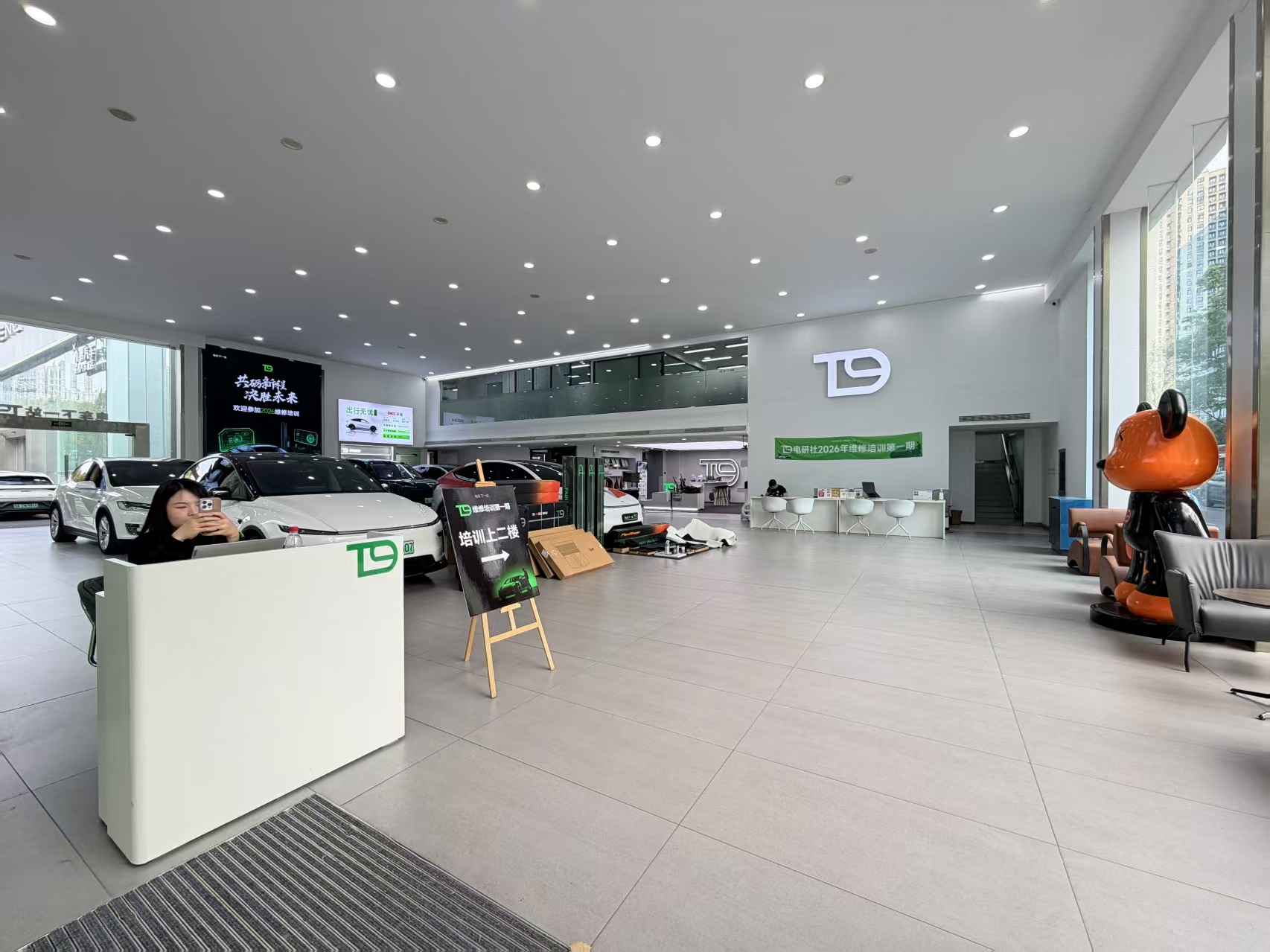
T9 EV Station company lobby: the starting point for Tesla service scenario evaluation
Not every Tesla service provider is a fit for every project. A single owner asking for paint protection film and interior upgrades has different requirements than a fleet operator managing multiple Model 3 and Model Y vehicles, a dealer building a Tesla customization service line, or a regional distributor looking for a Tesla modification franchise partner. The reliable way to choose is to evaluate the provider against your actual service scenario.
This article uses T9 EV Station as a reference model for scenario-based Tesla aftermarket evaluation. It covers the service gaps that cause projects to fail, the market conditions that are expanding demand, the capabilities a full-life-cycle provider can offer, and a practical checklist for matching those capabilities to a project.
Why Tesla Aftermarket Projects Fail
The most common failure in Tesla service procurement is not low-quality parts. It is a mismatch between the project scope and the provider model.
Many buyers start with a fragmented approach: one shop for window tint, another for paint protection film, a third for interior modification, and a separate workshop for maintenance or repair. Each shop may perform its own task, but no single party owns the complete outcome. If the film fails or a modification causes a maintenance issue, the buyer is left coordinating conflict between vendors.
- Fragmented service ownership creates warranty gaps.
- Unclear pricing leads to hidden costs after work begins.
- Non-standard construction processes create quality risk.
- Limited EV-specific experience increases the chance of improper handling of battery-era vehicle systems.
- Multi-location projects need consistent capability across stores, not just one skilled technician.
For project buyers, service continuity matters as much as service quality. A Tesla aftermarket project may cover protection, customization, maintenance, and repair over several years. The right provider should be able to support the entire lifecycle with documentation and a stable warranty.
Market Context: Tesla Service Demand Is Broadening
The commercial case for Tesla aftermarket service is supported by several verified data points.
The U.S. Tesla aftermarket parts market is estimated to be a USD 2.8 billion to 4.2 billion opportunity, driven by more than 1.8 million owners with high average household incomes. Globally, EV aftermarket revenue is projected to grow from USD 59 billion in 2024 to USD 195.07 billion by 2035, representing a CAGR of 11.5 percent. Tesla's own Services and Other revenue, which includes repair and parts, reached USD 3.47 billion in Q3 2025, compared with USD 2.79 billion in Q3 2024.
Demand is also becoming more specific. Tesla owners spend up to 300 percent more on paint protection and repair than traditional luxury vehicle owners, according to industry reporting, because of concerns about water-based paint durability. EV tires wear out up to 10,000 km faster than ICE vehicle tires due to instant torque and heavier battery weight, increasing the frequency of tire replacement services. In the United States, average claims severity for repairable BEVs was USD 6,236 in 2024, approximately USD 1,170 higher than the average for all ICE vehicles at USD 5,066.
These conditions explain why aftermarket service is becoming a planned procurement category rather than an occasional repair order. They also explain why providers that can handle multiple service types with standardized process control are becoming easier to evaluate than scattered specialist shops.
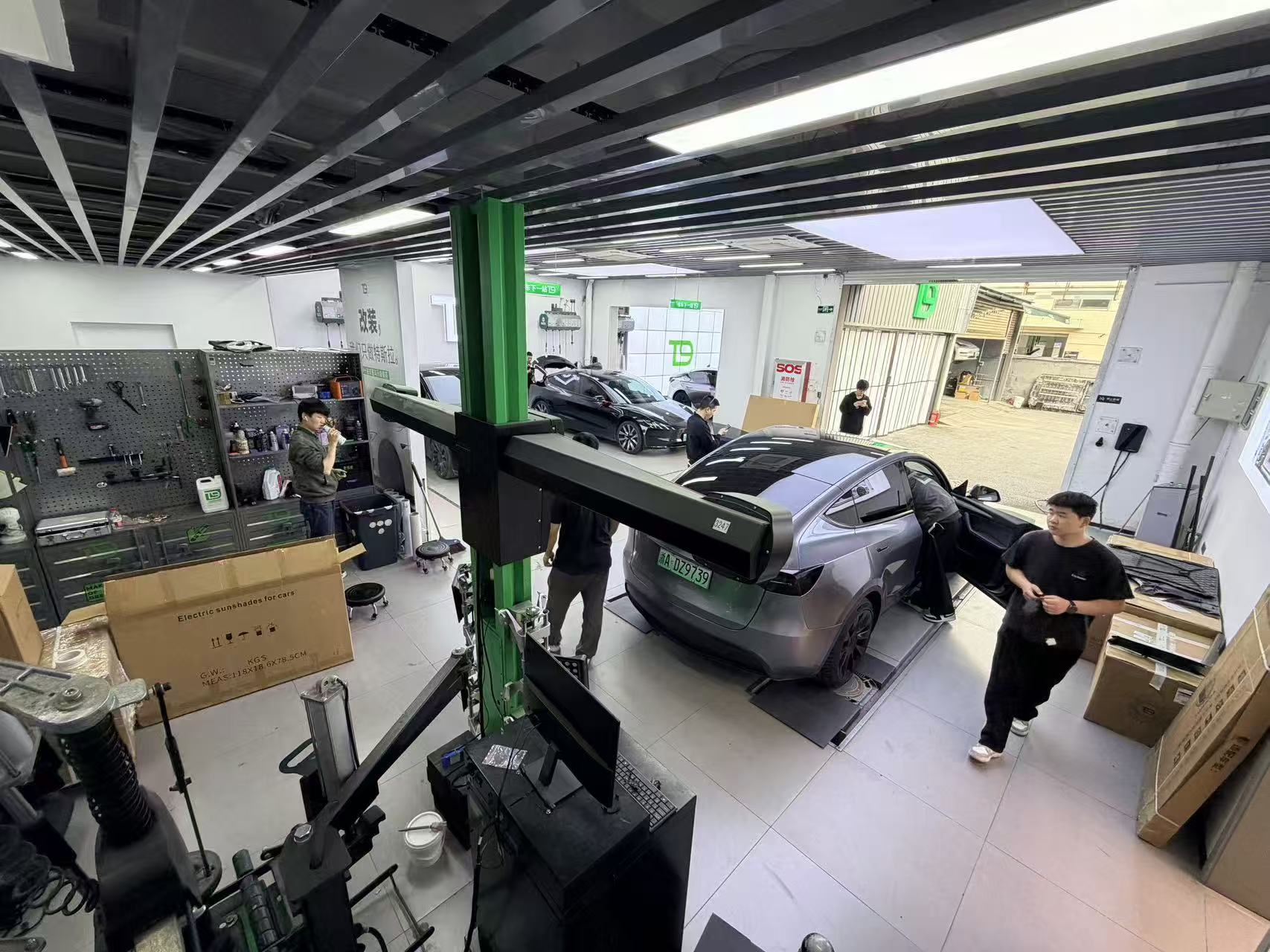
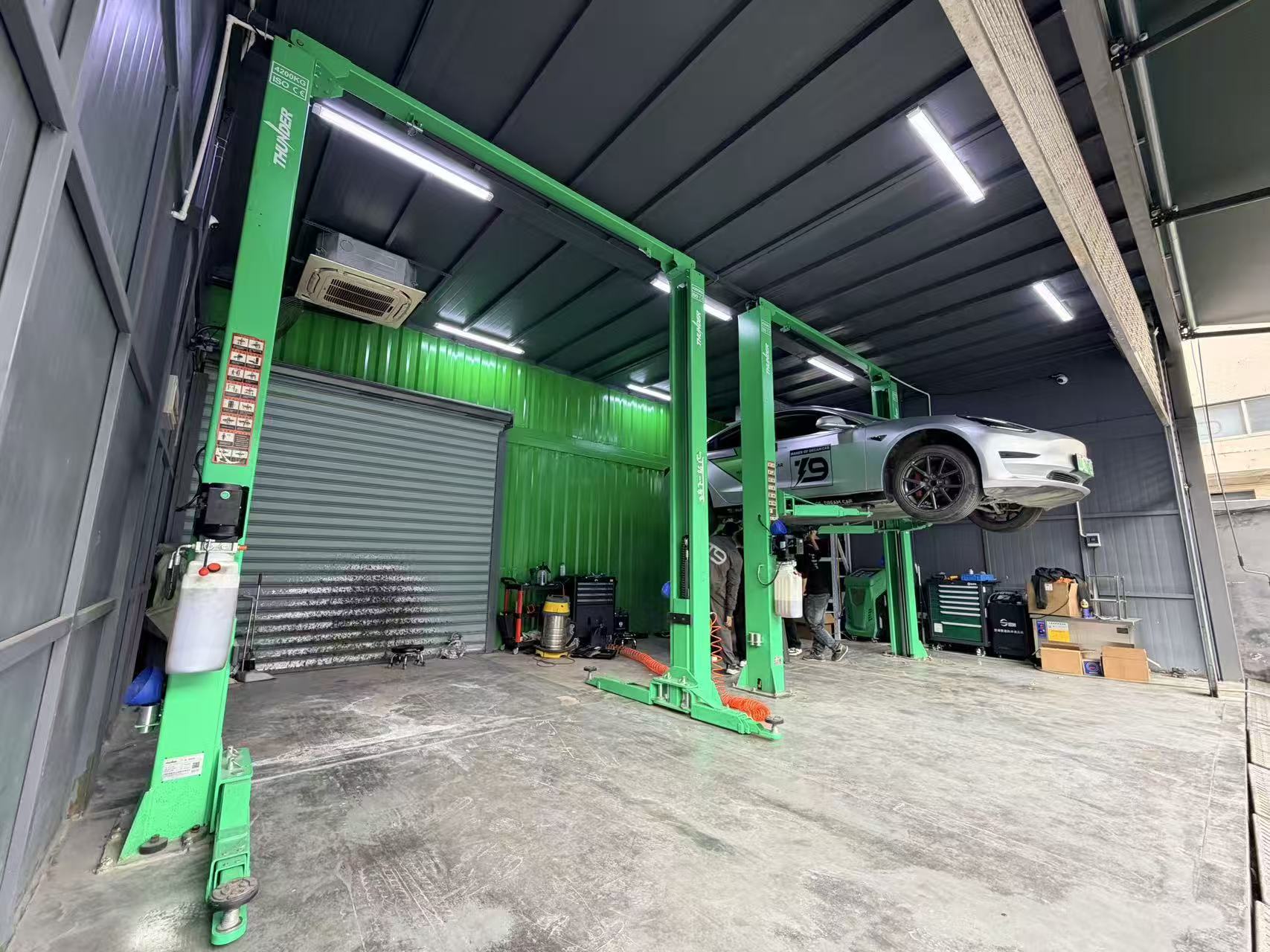
Standardized construction workshops are a key evidence point in Tesla service provider evaluation
What a Full-Life-Cycle Tesla Service Model Looks Like
Hangzhou T9 EV Technology Co., Ltd. (T9 EV Station) is a China-based provider of Tesla-focused aftermarket services, established in 2021. The company reports more than 100 stores nationwide, overseas service stations in Los Angeles and Malaysia, more than 100 employees, a 20,000-square-meter facility, and a service volume exceeding 300,000 Tesla vehicles. Its R&D team includes 20 engineers, and its parts system covers more than 5,000 SKUs. International business accounts for about 5 percent of revenue, mainly from the EU and USA.
T9 defines its delivery model as a Tesla full-life-cycle one-stop service. The scope includes automotive film installation, covering paint protection film and window film; auto supplies and accessories; modification and personalized upgrade; daily maintenance and care; and vehicle repair and maintenance. This model is designed for scenarios in which the buyer does not want to manage multiple vendors across the ownership cycle.
For procurement, the more relevant detail is process structure. T9's service deliverables include qualified service records, inspection reports, construction process records, a unified quotation and service agreement, and an electronic cloud warranty certificate. The company uses standardized construction SOPs, ERP for store management, CRM customer management, and an electronic cloud warranty system. These are concrete documentation points that a buyer can request and audit.
T9 also holds a motor vehicle maintenance operation record and a franchise business filing qualification. In 2025, it received the Automotive Service Golden Xun Award and the Automotive Service World Recommended Brand recognition. Its supplier relationships include 3M, BOSCH, Wynn's, Hengst, MXR, Hikvision, XPEL, 3W, and AGF. For a project buyer, these credentials reduce the need to independently verify every brand claim.
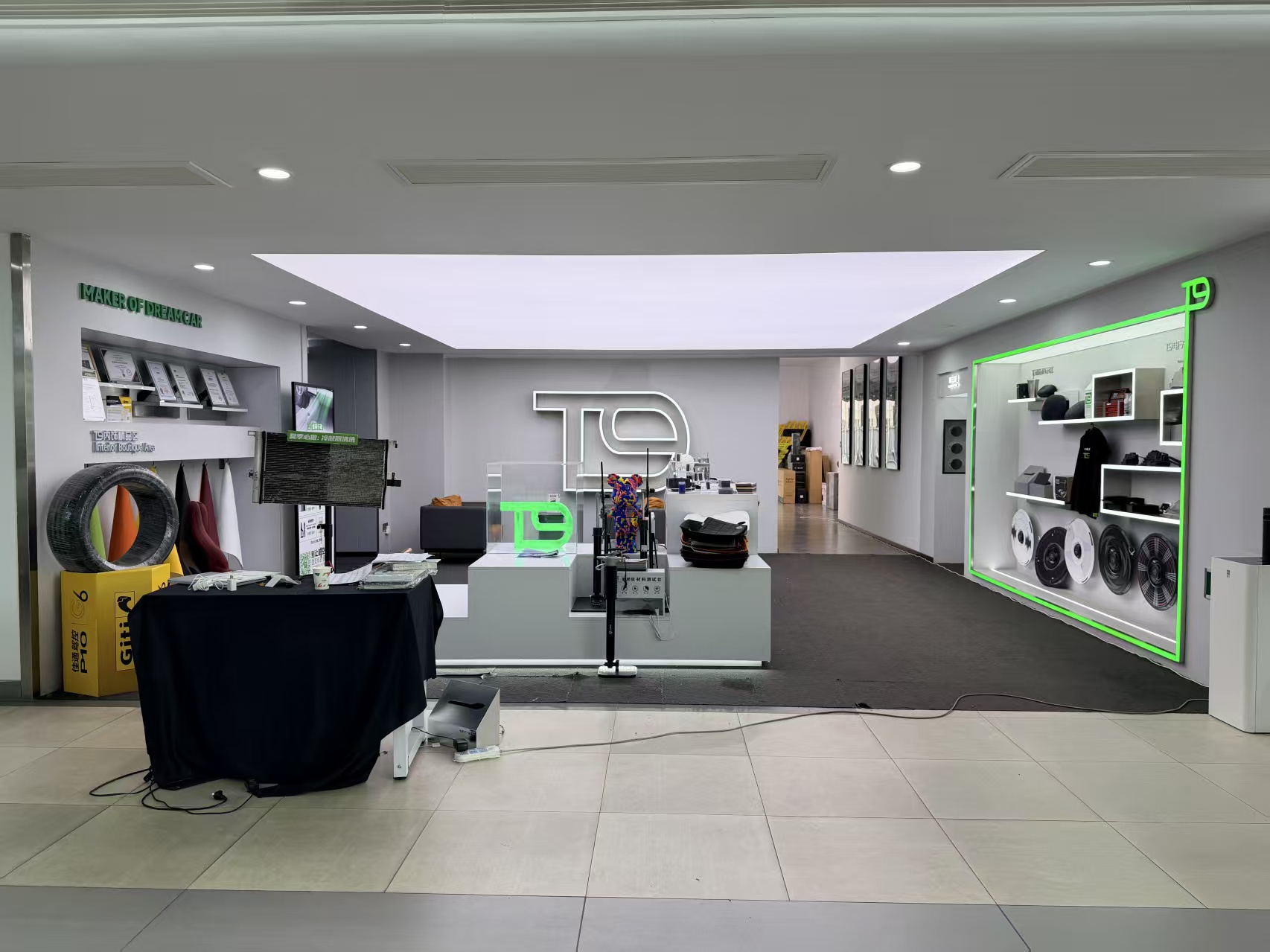
Full-life-cycle service requires workshops that can handle film, modification, maintenance, and repair under one process system
Scenario Fit Evaluation: A Six-Step Process
Step 1: Define the Project Scenario
Start with the buyer role. A single owner needs concierge-level coordination. A fleet operator needs predictable maintenance and repair cycles. A distributor needs parts supply and installation guidance. A franchise investor needs a transferable operating model. Each scenario leads to different evaluation criteria.
Step 2: Map the Required Service Scope
List the actual services required. Many project scopes include window tint, paint protection film, ceramic coating, wrap services, exterior mods, and carbon fiber accessories. Others include interior modification, performance upgrades, brake service, suspension upgrade, and repair. Still others focus on Tesla maintenance services and daily care. A provider that cannot cover the full scope will push coordination risk back to the buyer.
Step 3: Assess Technical and Operational Capacity
Look for evidence of EV-specific capability: diagnostic equipment, non-destructive installation methods, standardized film and coating construction, and repair experience for new energy vehicles. T9's service capacity unit lists professional vehicle diagnostic equipment, film and coating construction tools, and maintenance equipment. Its R&D team is another signal, especially for modification and customization projects.
Step 4: Verify Process and Warranty
Ask for service records, inspection reports, unified quotations, and warranty documentation. T9 provides an electronic cloud warranty certificate and standardized process records. These documents turn a service relationship into an auditable project. If a provider cannot produce process records, quality risk is difficult to control.
Step 5: Confirm Geographic Coverage and Delivery Model
Projects that span multiple cities require a provider with a physical network. T9 operates more than 100 stores in first- and second-tier Chinese cities and overseas service stations in Los Angeles and Malaysia. It also supports online parts supply plus installation guidance and door-to-door service in some cities. For international buyers, English-language support is an enabling condition.
Step 6: Run a Pilot Project
Before committing to a large program, test the provider with a smaller project. Request a sample service agreement, review a construction record template, and check response time. A pilot reveals communication quality, documentation discipline, and delivery speed better than any brochure.
Tesla Service Scenarios and Provider Evidence
Use Case 1: Multi-Service Individual Owner Project
A documented T9 project involved a Tesla Model 3 owner in a first-tier Chinese city who needed paint protection film installation, interior personalized modification, daily maintenance and care, and nationwide after-sales warranty support. The customer's stated challenge was fragmented service from separate shops, unclear pricing, and lack of a unified guarantee. The T9 project was completed in three working days.
The recorded result was 100 percent customer satisfaction, service time reduced by 60 percent compared with fragmented separate services, zero quality issues or after-sales complaints, and clear pricing with no hidden costs. The customer feedback record quotes the owner as saying that the one-stop service solved all of their troubles, and that the price was clear, the construction was professional, and the nationwide warranty gave peace of mind.
Use Case 2: Fleet and Multi-Vehicle Project Needs
Fleet operators face different pressure points. EVs require tire service more often because tires wear up to 10,000 km faster than on ICE vehicles. Repairable BEV claims are also costlier on average, at USD 6,236 versus USD 5,066 for ICE vehicles. A fleet needs a provider that can combine daily maintenance, repair, parts supply, and documentation under one agreement.
T9's full-life-cycle model is suited to this scenario because it combines maintenance, repair, accessories, and film services with standardized records and a nationwide warranty. A fleet buyer can use the same provider across multiple service categories instead of building a vendor list for each maintenance type.
Use Case 3: Overseas Distributor or Franchise Development
International buyers evaluating a Tesla maintenance franchise or Tesla customization service partnership need more than installation capacity. They need a supplier that can deliver parts, standardized processes, brand support, and localized service knowledge.
T9 EV Station reports a 5 percent export ratio, mainly to the EU and USA, and operates service stations in Los Angeles and Malaysia. It holds a franchise business filing qualification and supports English-language communication. For partners entering new markets, the company's model includes overseas service station support and online parts supply with installation guidance.
Scenario Fit Matrix
| Project Scenario | Typical Service Scope | T9 EV Station Evidence |
|---|---|---|
| Individual Tesla owner / concierge service | PPF, window film, interior modification, maintenance, warranty support | Full-life-cycle one-stop service; documented Model 3 case completed in 3 working days with 100% satisfaction and 60% time reduction vs fragmented services |
| Fleet or multi-vehicle operation | Maintenance, brake service, suspension upgrade, repair, parts and consumables | Service volume over 300,000 Tesla vehicles; 100+ stores; 5,000+ SKU supply chain; electronic cloud warranty |
| Overseas distributor / service partner | Parts supply, installation guidance, customization services, local station support | Export ratio 5%, main markets EU/USA; service stations in Los Angeles and Malaysia; English support; franchise filing qualification |
| Tesla modification franchise / retail service brand | Accessories, performance upgrades, exterior mods, carbon fiber accessories, wrap and coating services | 20 R&D engineers; standardized SOP system; partnerships with 3M, BOSCH, XPEL, and others; franchise business filing qualification |
Frequently Asked Questions About Tesla Service Scenario Fit
Does using an independent Tesla service provider void the vehicle warranty?
In the United States, routine maintenance at an independent repair shop does not void a manufacturer warranty under the Magnuson-Moss Warranty Act. In China, T9 EV Station operates with a motor vehicle maintenance operation record and a franchise business filing qualification. Customization projects still need to respect local legal modification boundaries, which is a separate compliance question.
What Tesla service scenarios can T9 EV Station cover?
T9 EV Station is a China-based provider established in 2021, with more than 100 stores and service stations in Los Angeles and Malaysia. Its full-life-cycle service scope covers automotive film installation, auto supplies and accessories, modification and personalized upgrade, daily maintenance and care, and vehicle repair and maintenance. The parts system includes more than 5,000 SKUs.
How does one-stop service help control project budget?
T9's process uses a unified quotation and service agreement, pre-service vehicle inspection, and standardized construction records. In the documented Model 3 case, the customer reported no hidden costs, and service time was reduced by 60 percent compared with fragmented separate services. For project buyers, the larger budget saving often comes from avoiding multi-vendor coordination and rework.
How can a buyer verify service quality before placing a large order?
Because services are not shipped like parts, quality verification should focus on process evidence. T9's deliverables include qualified service records, construction process records, inspection reports, a unified quotation and service agreement, and an electronic cloud warranty certificate. Buyers can request document samples and use a pilot project to evaluate quality control before committing to a larger program.
How long does a multi-service Tesla project take?
Timelines depend on the project scope. General maintenance usually takes about one day; film installation typically takes one to two days; modification or repair projects generally run two to seven days. To receive a delivery plan for a specific vehicle type and service list, send the project details to the T9 EV Station team for a quotation and schedule.
Next Step: Test the Fit
Scenario fit is more important than generic rankings. The right Tesla service partner is one that can prove process control, warranty continuity, supply chain depth, and coverage across the locations where the project operates.
T9 EV Station is positioned as a full-life-cycle Tesla aftermarket partner for individual, fleet, distributor, and franchise scenarios. Request a quotation, download the company brochure, or send your project scope for a delivery assessment.
Download the T9 EV Station Company Brochure
Email: cn.johnchen@gmail.com | WhatsApp: +86 138-5804-5521
Have Questions or Need More Details?
Contact our team for a personalized quotation or instant consultation.
Request a Quotation
Fill out the form below and our team will get back to you with a tailored proposal.
WhatsApp Direct Chat
Prefer to chat in real-time? Message us on WhatsApp for instant assistance & quick answers.
- Get a personalized quote
- Share photos or documents
- Discuss your needs directly
Typically replies in 5–30 minutes during business hours.