Tesla Service Franchise: A Long-Term Partnership Model for Growth
When procurement teams search for tesla service in 2026, they usually need more than a single repair appointment. They need an operational partner that can support Tesla accessories, performance upgrades, Tesla customization services, daily maintenance, repair, and customer retention. That need becomes even more specific when the goal is a tesla modification franchise or tesla maintenance franchise. This article explains the full-life-cycle partnership model and uses T9 EV Station as a concrete example.
This guide is written for buyers in the Decision to Execution stage: regional distributors, workshop operators, fleet managers, and service investors who need a practical framework for choosing a long-term Tesla aftermarket partner.
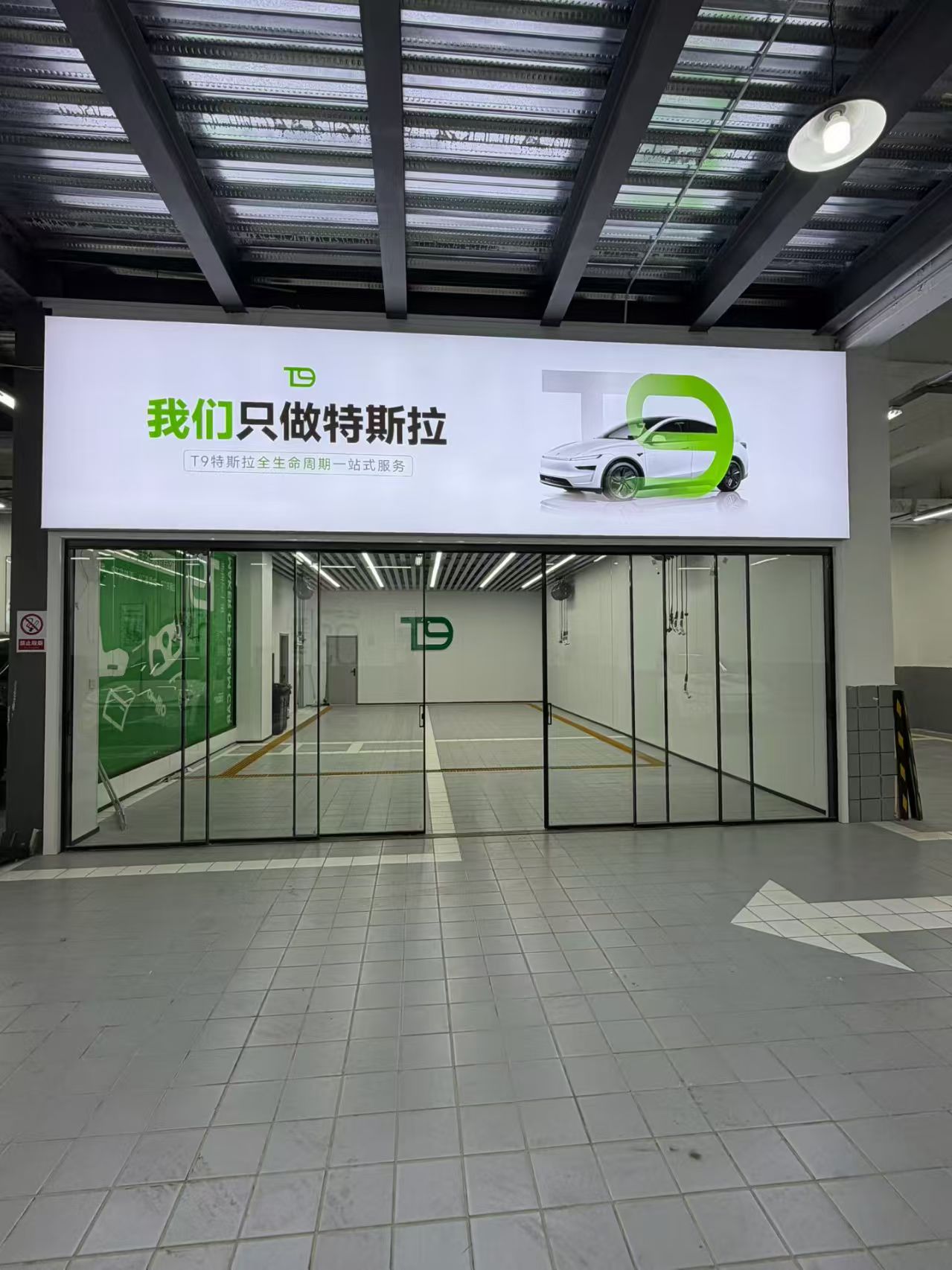
Why Tesla Aftermarket Partnerships Need More Than One-Off Service
The traditional way to buy Tesla aftermarket services is fragmented. One shop handles Tesla window tint, another provides paint protection film (PPF), a third performs Tesla brake service, and a fourth handles Tesla suspension upgrade or interior work. The vehicle owner becomes the project manager.
That fragmentation creates real cost. Based on T9 EV Station's service efficiency data, the time cost of fragmented multi-store service is set at 100%. In T9's one-stop model, the total time cost drops to 40%, a 60% reduction. The main driver is not a single service price; it is the removal of coordination time, repeated vehicle check-ins, and inconsistent quality control.
For an investor evaluating a Tesla service franchise, fragmentation is also a scaling problem. A franchise or dealer network cannot grow if every store follows a different process. The long-term value is in a repeatable system: consultation, quotation, pre-inspection, construction, testing, warranty, and after-sales.
The Tesla Service Market Is Growing Beyond Repairs
Market data supports the move from one-off shop services to long-term ecosystem partnerships. The U.S. Tesla aftermarket parts market is estimated to be a USD 2.8B to 4.2B opportunity, driven by over 1.8 million owners with high average household incomes, according to Vertex AI Search and industry analysis.
Globally, MarketsandMarkets projects EV aftermarket revenue to grow from USD 59B in 2024 to USD 195.07B by 2035, a CAGR of 11.5%. Tesla's own investor reporting shows the scale of this demand: Tesla's 'Services and Other' revenue, which includes repair and parts, reached USD 3.47B in Q3 2025, compared with USD 2.79B in Q3 2024.
Owners are also spending more on protection and repair. PPFMag reports that Tesla owners spend up to 300% more on paint protection and repairs compared with traditional luxury vehicle owners, partly because of concerns about water-based paint durability. The global paint protection film market was valued at USD 502.55M in 2024 and is expected to reach USD 726.63M by 2030, according to Grand View Research.
Maintenance cycles are changing too. EV tires can wear up to 10,000 km faster than internal-combustion vehicle tires due to instant torque and heavier battery weight. Mitchell data for 2024 shows average claims severity for repairable BEVs in the U.S. was USD 6,236, about USD 1,170 higher than the average for all ICE vehicles at USD 5,066. In the U.S., the Magnuson-Moss Warranty Act allows Tesla owners to use independent repair shops for routine maintenance and aftermarket services without automatically voiding the manufacturer warranty. That legal framework makes the independent Tesla service model, including a Tesla service center alternative, viable for long-term investment.
These numbers point in one direction: Tesla aftermarket demand is broad, recurring, and becoming more professional. A partner with full-life-cycle capability is better positioned to capture that demand than a shop dedicated to a single SKU.
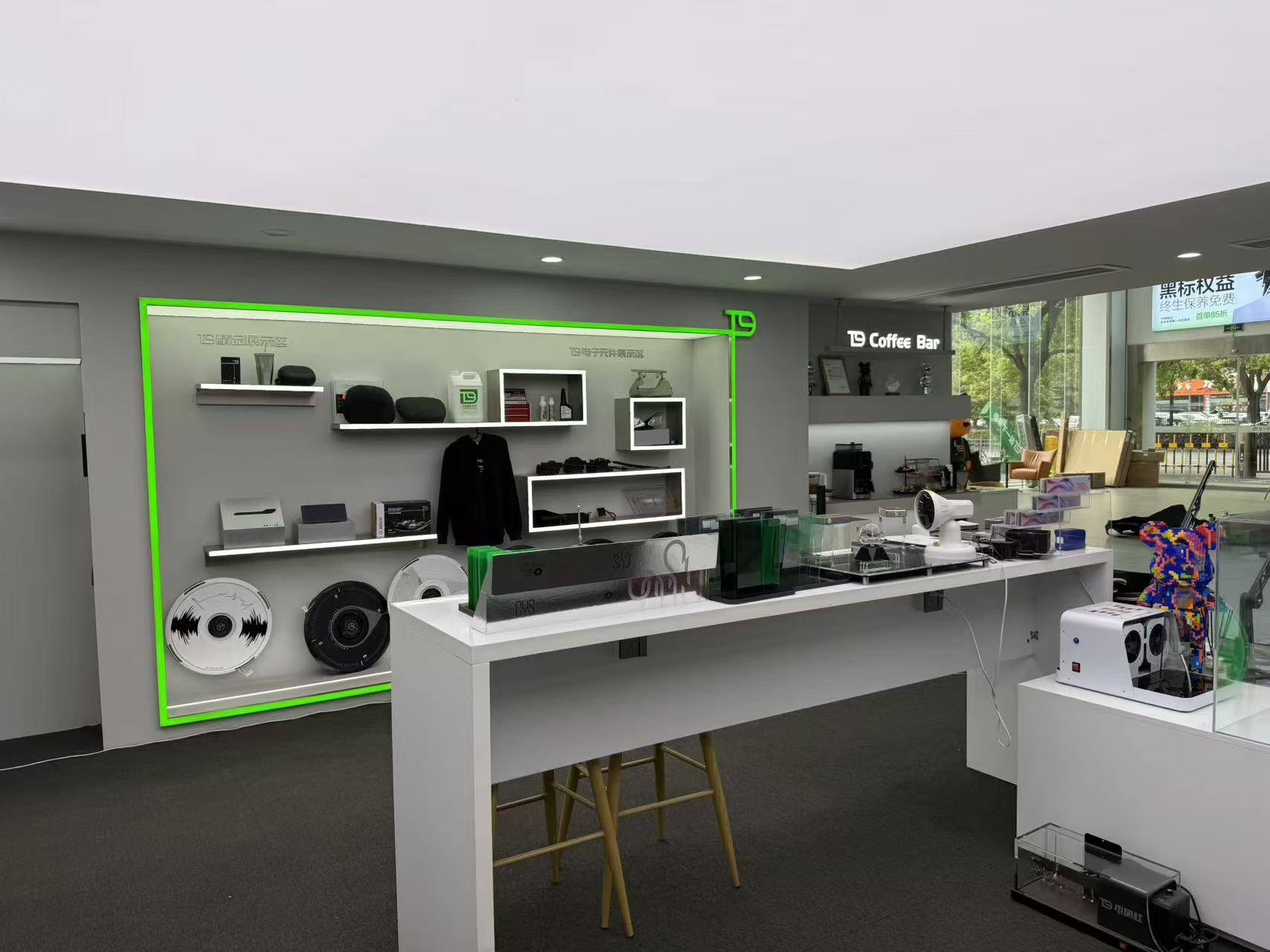
The Full-Life-Cycle Service Model Explained
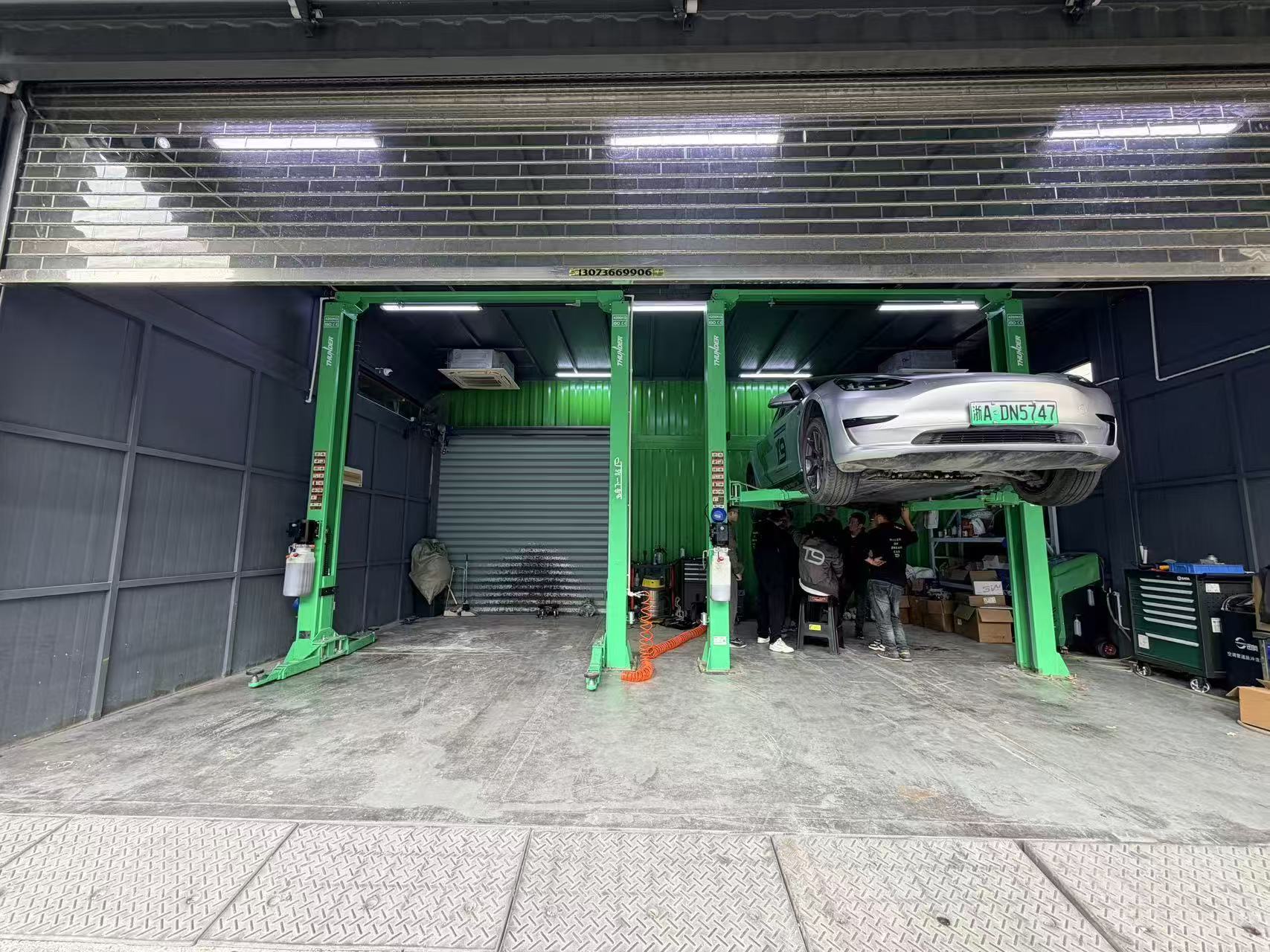
A full-life-cycle partner is different from a shop that only installs film or changes brake pads. It is a service ecosystem that stays with the vehicle from first protection to repair and maintenance. Hangzhou T9 EV Technology Co., Ltd. (T9 EV Station) is an example of this model.
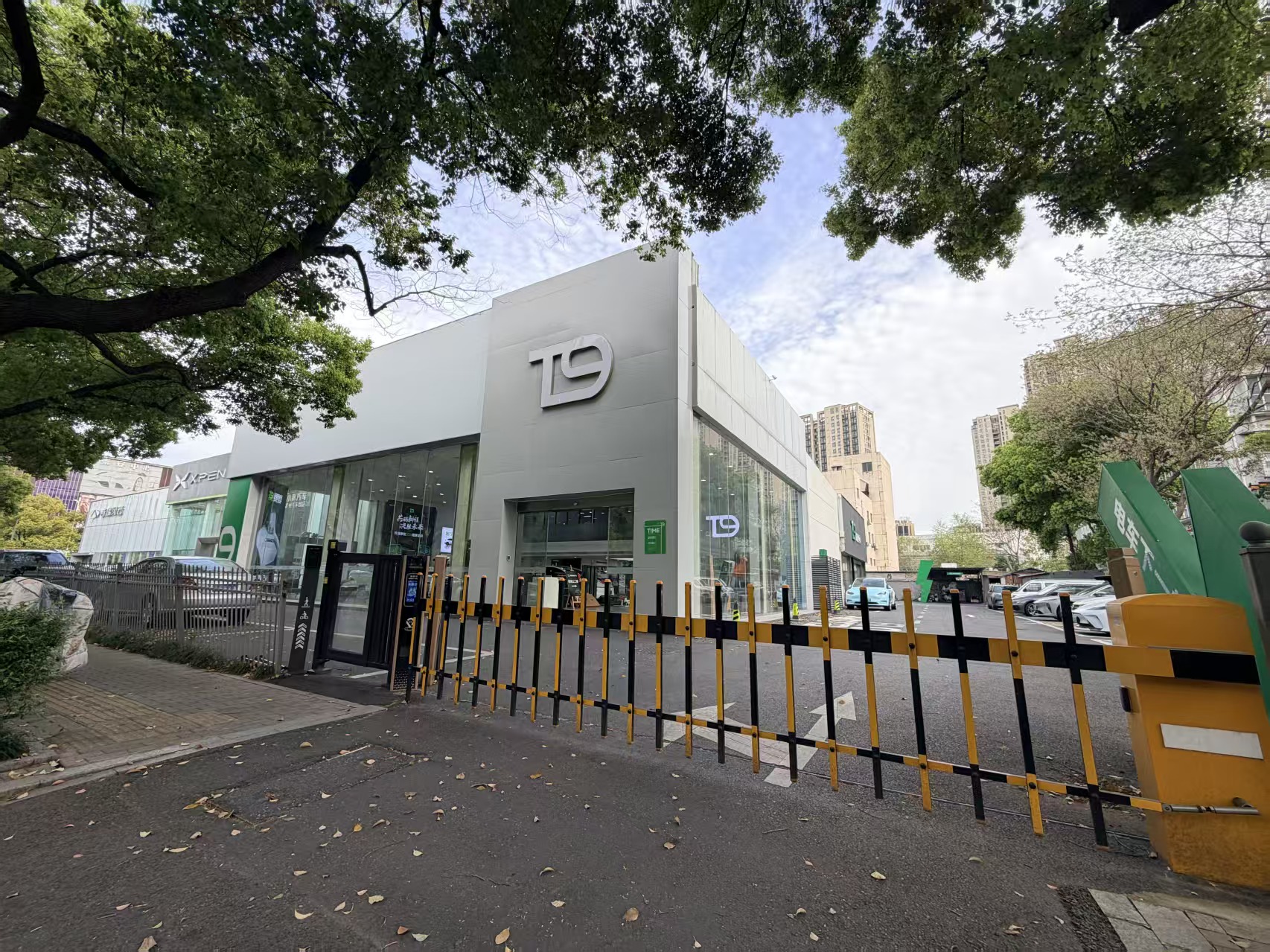
T9 EV Station was established in 2021. The company reports a 20,000 m² facility, more than 100 employees, and a 20-engineer R&D team. It currently runs over one hundred stores in China dedicated to Tesla owners and has expanded its business to Los Angeles and Malaysia. Company background data records over 300,000 Tesla vehicles served and more than 5,000 SKUs, with about 5% of business exported to EU and USA markets.
From a partnership perspective, the important part is not only the size but the structure. T9 built a full-life-cycle business model covering five core segments:
- Film installation: window tint, paint protection film, ceramic coating, wrap services, and related surface protection.
- Auto supplies and accessories: floor mats, interior accessories, carbon fiber accessories, and other Tesla-specific add-ons.
- Modification and performance upgrades: Tesla mods, exterior mods, interior modification, suspension upgrades, and performance-oriented services.
- Maintenance services: routine upkeep, fluid services, brake service, and preventive checks.
- Repair services: aftermarket repair, component replacement, and collision-adjacent work that fits the provider's service agreement.
This five-in-one structure is relevant for a Tesla modification franchise or Tesla maintenance franchise because it creates repeat consumption. A customer who starts with window film later needs accessories, then mods, then maintenance. If the same standardized provider can serve all those needs, the business relationship lasts longer.
Standardization Is the Real Product
T9's operating system is documented in the T9 Tesla Full-Life-Cycle Standardized Service Methodology v2.0. The methodology defines six steps:
- Demand consultation and solution matching.
- Quotation confirmation and service agreement signing.
- Pre-service inspection and vehicle check-in.
- Standardized construction and quality control.
- Post-service testing and delivery inspection.
- Electronic cloud warranty activation and after-sales support.
The core principles are safety first, quality standardization, transparent pricing, nationwide warranty, and user trust. The methodology also includes explicit boundaries: it does not apply to illegal modification beyond national regulations, services not covered by the quotation and agreement, or non-Tesla vehicle services.
Compared with general market practices, T9's model uses unified national standards instead of scattered local operations, electronic cloud warranty instead of paper-based local guarantees, five-in-one one-stop service instead of fragmented separate services, and full-process SOP control instead of non-standard workshop construction.
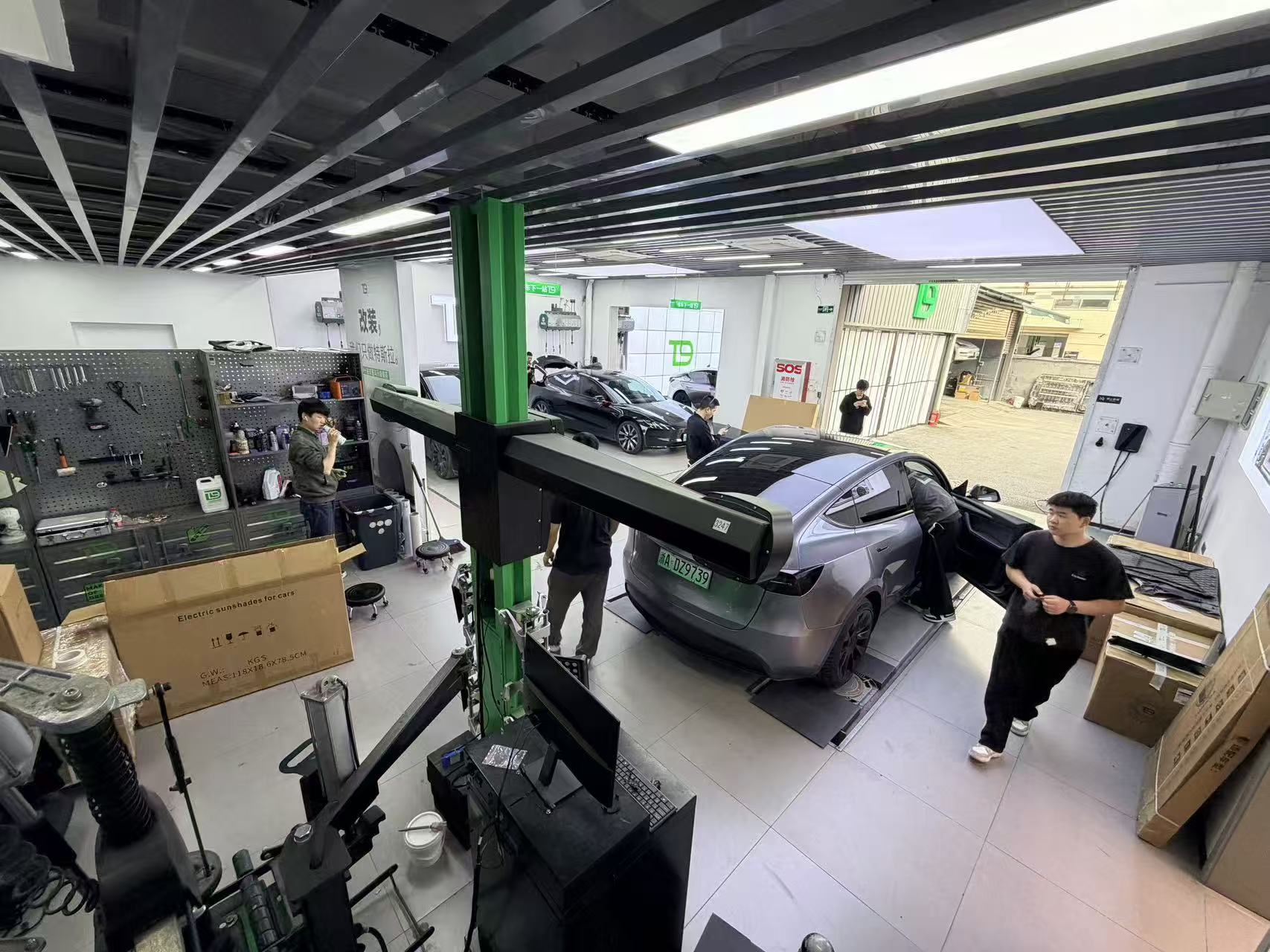
How to Evaluate a Tesla Service Franchise or Partnership Step by Step
If you are deciding whether to build a Tesla maintenance franchise, partner with a Tesla modification franchise model, or open a regional Tesla aftermarket center, use a structured evaluation sequence. The decision logic should not be based on a single price quote.
- Define the service scope. Decide whether the partnership will cover film, supplies, modification, maintenance, repair, or a single segment. For long-term value, demand a clear answer for all five segments.
- Test process rigor. Ask the provider how it handles consultation, quotation, pre-inspection, construction, testing, and warranty. T9's methodology is one example of a complete closed loop.
- Check scale evidence. Look for numbers that show repeatability. T9 reports 15 chain stores launched in 2022, 40 operating stores by 2023, and more than one hundred stores in China today, along with locations in Los Angeles and Malaysia.
- Demand traceability. A reliable partner should be able to produce a quotation sheet, service agreement, pre-inspection report, construction quality-control record, post-service testing report, and electronic warranty certificate.
- Plan the pilot. Service quality is process-based, so delay the final commitment until a pilot project has been completed. A pilot should follow the same SOP as a full production rollout.
- Review compliance boundaries. Confirm that the planned services are legal in the target market and do not depend on unauthorized modifications. T9's methodology explicitly excludes illegal modification beyond national regulations.
This approach moves the conversation from 'which shop is cheaper' to 'which operating system can be replicated.' For franchise buyers, that distinction is the difference between a small workshop and a scalable service network.
Use Cases for Tesla Aftermarket Collaboration
1. Independent Workshops Adding a Tesla Service Line
A workshop that currently handles traditional vehicles may want to add Tesla repair service, Tesla customization services, or Tesla window tint. The challenge is that Tesla owners expect consistent quality, especially for PPF, ceramic coating, and suspension upgrades. Using a full-life-cycle model as a benchmark helps the workshop avoid fragmented service and reduce the customer's time cost.
2. Regional Investors Evaluating a Tesla Modification Franchise
Investors looking for a Tesla modification franchise need evidence that the provider can support a store network, not just one location. T9 EV Station's history is useful as a reference: the company started with 15 chain stores, reached 40 operating stores in 2023, and now reports over one hundred stores in China. Its partnerships with 3M, BOSCH, Wynn's, Hengst, and MXR, plus strategic relationships with XPEL, 3W, and AGF, show a supply-chain oriented model.
3. Fleet Owners and Project-Based Buyers
Fleet buyers face different pressure. EV tires wear faster, repairable BEV claims are more expensive, and vehicle downtime has a direct cost. A one-stop partner reduces the number of vendors a fleet manager must coordinate. For U.S. fleets, the Magnuson-Moss Warranty Act supports using independent service providers for routine maintenance without automatically voiding the manufacturer warranty.
Full-Life-Cycle vs. Niche vs. Fragmented Models
| Provider Model | Service Scope | Process Consistency | Warranty | Pricing | Best Fit for Long-Term Growth |
|---|---|---|---|---|---|
| Full-life-cycle one-stop provider such as T9 EV Station | Film, supplies, modification, maintenance, repair | Unified SOP, six-step closed loop, pre/post inspection | Electronic cloud warranty with nationwide after-sales support | Transparent, unified quotation with formal agreement | Franchise, partnership, distribution, fleet projects |
| Niche specialist | Single category, such as PPF, tint, or suspension | Shop-dependent, no cross-service integration | Usually local or paper-based | Varies by shop | Specific one-off needs, not full ecosystem ownership |
| Fragmented multi-store approach | Customer coordinates multiple vendors | No unified process | Often unclear | Multiple separate quotes | Emergencies or simple single-service tasks |
The comparison rows for T9 EV Station come from the company's documented methodology and service process. The niche and fragmented rows describe common aftermarket patterns and are not based on named providers.
FAQ
Does using an independent Tesla service center void the vehicle warranty?
Under the Magnuson-Moss Warranty Act in the U.S., Tesla owners can use independent repair shops for routine maintenance and many aftermarket services without automatically voiding the manufacturer warranty. The key condition is that the work must not be negligent and must not involve illegal or improper modifications. T9's methodology also states that services beyond national regulations are not applicable.
What should a Tesla service franchise partner be able to deliver?
A long-term partner should ideally cover five core needs: film installation, auto supplies, modification, maintenance, and repair. T9 EV Station organizes this as a full-life-cycle model with more than 5,000 SKUs, a 20-engineer R&D team, and partnerships with brands such as 3M, BOSCH, Wynn's, Hengst, and MXR. For an investor, these capabilities indicate whether a provider can support a store network rather than only a single service.
How should buyers evaluate budget and cost for Tesla aftermarket service?
Budget control should start with transparent quotation and a signed service agreement before construction. T9's standardized process uses unified pricing and a formal agreement, followed by pre-service inspection and SOP-based construction. T9's documented result is a 60% reduction in user time cost compared with fragmented multi-store service, moving from a 100% baseline to 40%. This time saving should be included in the cost evaluation, not only the service price.
Can I request a sample or pilot before committing to a Tesla service partnership?
Because service quality is process-based, the equivalent of a sample is a pilot project. Buyers can request the same deliverables used in T9's standard process: a pre-inspection report, construction quality-control records, post-service testing report, and an electronic cloud warranty certificate. A consultation and quotation for a small batch of services can be completed before any long-term commitment.
What lead time should a buyer expect for Tesla service projects?
T9's documented process estimates 1-2 working days for general services and 2-7 working days for modification or repair projects. For a franchise or partnership launch, lead time also depends on location, local approvals, staffing, and store setup, so that part should be confirmed directly with the provider rather than estimated.
Conclusion and Next Step
The Tesla aftermarket is moving from isolated transactions to long-term service ecosystems. Buyers evaluating a Tesla service partner should look for a provider that can deliver film installation, supplies, modification, maintenance, and repair under one standardized process. This is especially important for franchise and distribution decisions, where repeatable quality matters more than a single discount.
T9 EV Station is one reference model for this approach. Its full-life-cycle methodology, electronic cloud warranty, chain-store history, and brand partnerships give buyers a concrete standard to compare against other suppliers. No provider should be selected on claims alone; the process, deliverables, and pilot results must be verified before execution.
Next step
Download the T9 EV Station brochure to review the full-life-cycle service model and company background: T9 EV Station company brochure (PDF).
For quotation, pilot project, or partnership discussions, contact John at cn.johnchen@gmail.com or WhatsApp +86 138-5804-5521. Official website: www.t9evparts.com.
Have Questions or Need More Details?
Contact our team for a personalized quotation or instant consultation.
Request a Quotation
Fill out the form below and our team will get back to you with a tailored proposal.
WhatsApp Direct Chat
Prefer to chat in real-time? Message us on WhatsApp for instant assistance & quick answers.
- Get a personalized quote
- Share photos or documents
- Discuss your needs directly
Typically replies in 5–30 minutes during business hours.