Complete Tesla Protection Package: Paint Film, Interior Care, and Repair
A climate-by-climate application guide for Tesla Model Y, Model 3, New Y and New 3 owners — and the service model that has to deliver it.
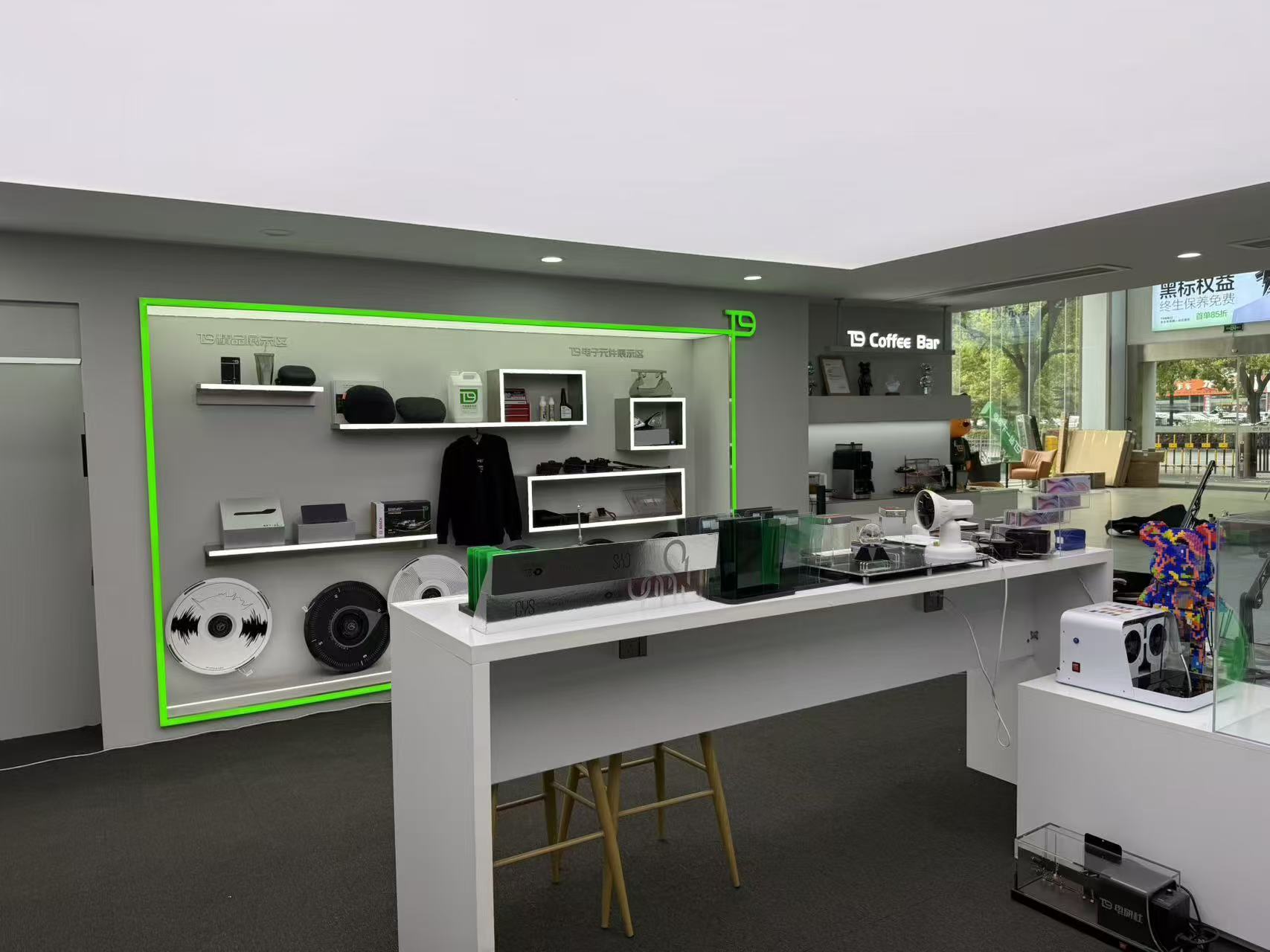
T9 EV Station plans film, interior protection and repair as one package rather than three separate purchases.
The Short Answer: What a Complete Tesla Protection Package Contains
A complete Tesla protection package combines three layers that are decided together: an exterior layer (paint protection film and window film), an interior layer (floor mats, organizers and screen protection), and a maintenance-and-repair layer that keeps the first two working over the ownership period. Buying the three layers from one accountable provider removes the largest hidden cost — coordinating separate stores — while assembling them from unrelated sellers usually leaves no single party responsible for fit, installation quality, or follow-up repair.
T9 EV Station is the Tesla-focused aftermarket service brand operated by Hangzhou T9 EV Technology Co., Ltd., a company founded in 2021 that delivers film installation, auto supplies, modification, maintenance and repair as a one-stop, five-in-one service. Its network consists of more than one hundred stores in China and has been extended to Los Angeles and Malaysia, and it has cumulatively served more than 200,000 Tesla owners. This guide explains how to configure that package for different climates and driving conditions, what to verify inside each layer, and how to compare the service models competing for the same job.
Problem Definition: Why Protection Bought in Pieces Underperforms
Protection fails less often because a single product is poor and more often because the layers were never designed to work together. Three failure patterns are common among Tesla owners building a package piece by piece.
The climate mismatch. A configuration chosen for a dry inland climate rarely performs the same way in a humid coastal environment or on salted winter roads. Floor mats chosen for appearance rather than for meltwater containment, or film applied without considering rock exposure on the lower panels, are decisions that only reveal themselves after a season of driving.
The accountability gap. When paint film, interior products and repair come from three different vendors, no single party owns the finished result. If film edges lift after a mat installation removed door trim, or if a repaired panel does not match the protected finish, the owner becomes the coordinator between suppliers.
The channel disconnect. Tesla accessory buying is heavily digitized: 78% of transactions occur online, well above the 23% automotive industry average (Shopify / Hedges Company, 2025). Paint film and window film, however, still require physical installation in a controlled environment. The research phase and the execution phase therefore sit in different places, and the owner absorbs the difference in time.
Time is the measurable cost. T9 EV Station reports a 60% reduction in total user time cost for its one-stop service compared with fragmented multi-store servicing, where the traditional model is treated as the 100% baseline and the T9 one-stop result as 40% of that baseline. Industry average time-cost reduction is reported at 20–30%, and the one-stop service efficiency metric carries a 220% ROI value. In practical terms: the package itself is not the expensive part; the coordination around it is.
Industry Background: The Market Behind Tesla Protection Demand
Protection spending is predictable in this segment. The Tesla aftermarket parts market is projected to surpass USD 850 million globally in 2025, with Tesla models accounting for the majority of sales in the EV segment (Tesstudio / industry reports). In the United States alone, the opportunity is estimated between USD 2.8 billion and USD 4.2 billion, supported by a base of more than 1.8 million owners (Hedges Company / Technavio).
Two behavioral facts explain why protection packages are assembled early rather than gradually. Approximately 72% of Tesla owners purchase at least one aftermarket accessory within the first six months of vehicle delivery (Tesstudio), and US Tesla owners spend an average of USD 800 to USD 1,200 per year on aftermarket accessories — roughly 40% higher than owners of typical luxury vehicles (Hedges Company).
By category, interior accessories — floor mats, organizers and screen protectors — hold the largest share of the Tesla aftermarket by volume, with Tesla Model Y identified as the highest-growth segment (Dataintelo / Accio). That matters for package design: the interior layer is usually the first purchase and the exterior layer the most consequential one, which is exactly the order in which a package should be planned, not the order in which it is usually bought.
Regulation now sits alongside market growth. The EU General Product Safety Regulation (GPSR), Regulation (EU) 2023/988, has applied since 13 December 2024 and introduces mandatory safety requirements for all consumer products sold in the EU, including Tesla aftermarket accessories (European Commission). For owners and distributors building cross-border packages, product safety responsibility is now a purchasing question, not an administrative afterthought.
The Full-Life-Cycle Solution: How T9 EV Station Assembles the Package
T9 EV Station's answer to the fragmented model is a full-life-cycle business structure rather than a product catalog. The company was established in 2021 and now operates from a 20,000 m² facility with more than 100 employees, including a 20-engineer team, and a catalog exceeding 5,000 SKUs. Its main markets are the EU and the USA. Its service scope covers five connected segments: film installation, auto supplies, modification, maintenance, and repair.
The network grew in stages. In 2022 T9 launched 15 T9 chain stores and formed an exclusive strategic partnership with Hikvision. In 2023 the brand expanded into window film installation and automotive accessories, reaching 40 operating stores, and established exclusive cooperative relationships with Bosch and 3M alongside strategic partnerships with XPEL, 3W and AGF. Its wider partner roster includes 3M, BOSCH, Wynn's, Hengst and MXR. These partnerships matter to a package decision because the exterior and interior layers are built from branded materials rather than unbranded stock.
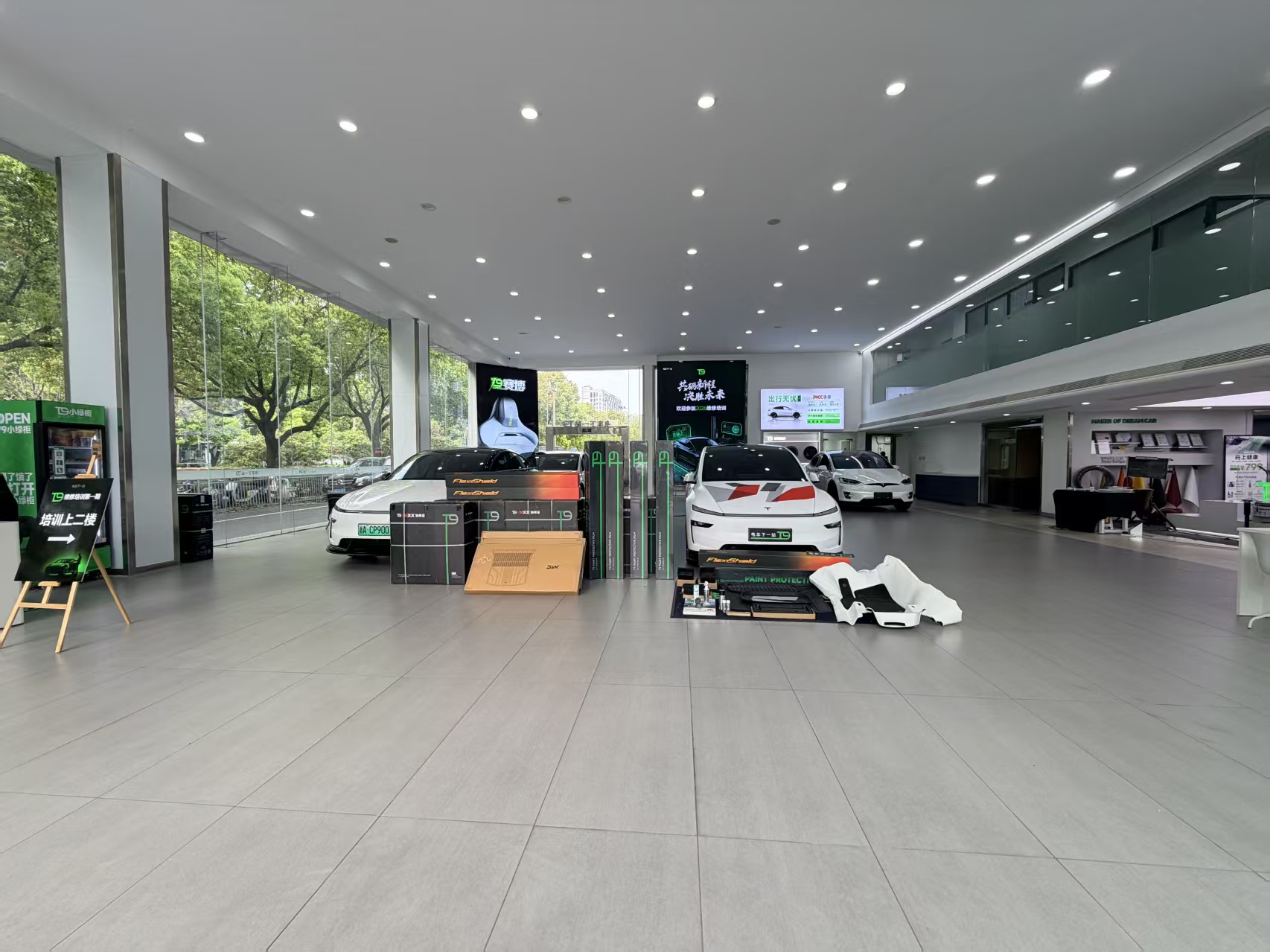
One location, five service segments: film installation, auto supplies, modification, maintenance and repair.
What holds the package together is process rather than products. The T9 Tesla Full-Life-Cycle Standardized Service Methodology (v2.0) is an end-to-end framework that integrates the five segments under one consultation-to-after-sales process, supported by SOP systems, digital management and nationwide quality control. Its stated goals are standardization of all Tesla aftermarket services, transparent pricing, unified quality control, and traceable, guaranteed service with reduced user risk and time cost.
Its core principles are safety first, quality standardization, transparent pricing, nationwide warranty and user trust. Four structural commitments distinguish it from workshop-based practice: nationwide unified pricing and construction standards; an electronic cloud warranty with traceability; a “no inspection, no delivery” closed-loop quality control rule; and an independent ERP/CRM system. The model is explicitly bounded — illegal modification beyond national regulations, services not covered by the quotation and agreement, and non-Tesla vehicles fall outside its scope.
Comparison of the Three Protection Layers
| Layer | What it addresses | Typical trigger to add it | What to verify before buying |
|---|---|---|---|
| Exterior — paint protection film | Factory paint exposed to stone chips, road debris and repeated washing | New delivery, highway commuting, gravel or construction routes | Who performs installation, whether the environment is controlled, and how warranty coverage is registered |
| Exterior — window film | Cabin heat and glare management on large glass surfaces | Hot climates, long daily drives, parked-outdoor use | Film sourcing and whether installation and warranty sit with the same provider |
| Interior — floor mats, organizers, screen protection | Cabin surfaces, cargo area and touchscreen wear; largest aftermarket share by volume (Dataintelo / Accio) | Immediately after delivery; 72% of owners buy within six months (Tesstudio) | Model-year fit (Model Y, New Y, Model 3, New 3) and material suitability for your climate |
| Maintenance | Daily upkeep and consumables such as cabin air filter replacement | First scheduled service; seasonal change of conditions | Whether the provider performs upkeep itself or only installs products |
| Repair | Scratches, curb damage and film or panel damage after incidents | After any impact or visible film failure | Whether repair reuses the same material standard as the original package |
Step-by-Step: Building Your Package in Six Steps
The sequence below follows the order that prevents rework: define exposure first, then the exterior layer, then the interior layer, then the maintenance rhythm, then repair readiness, and finally lock the service process.
Step 1 — Map your exposure before choosing any product
Write down three things: the climate you park and drive in, the surfaces your car meets (highway debris, salted roads, coastal air, unpaved access), and how long you intend to keep the vehicle. These three answers determine the coverage priority of every later layer, and they are the same inputs a consultation should capture.
Step 2 — Set the exterior layer and its order
Paint protection film comes first, because window film installation and interior work both involve handling the vehicle around finished surfaces. Decide coverage by impact probability rather than by symmetry: front fascia and lower panels carry the highest exposure, while full-body coverage is a choice driven by ownership length and resale expectations. Because installation quality drives the result, confirm that the work is performed under standardized construction and quality control rather than ad hoc workshop practice.
Step 3 — Build the interior layer around conditions, not appearance
Floor mats are the interior foundation; organizers and screen protection follow. Match materials to climate: meltwater containment and easy removal where winters are salted, moisture tolerance in humid coastal conditions, and UV-stable materials where sun exposure is continuous. Fit must match the exact model and year — Model Y, New Y, Model 3 and New 3 differ, and a mat that does not match the floor geometry will move underfoot.
Step 4 — Set the maintenance rhythm
Protection is a maintenance commitment. Daily upkeep, seasonal inspection of film edges, and consumables such as cabin air filter replacement belong on a schedule rather than on a complaint. Ask whether the provider that installed your film also performs upkeep — if not, you will be maintaining a package that no single party understands end to end.
Step 5 — Pre-plan repair before you need it
Repair is the layer owners forget until an incident. Establish in advance who handles film damage, panel repair and replacement of interior components, and whether the repair uses the same material standard as the original installation. T9 EV Station treats repair and maintenance as two of its five service segments, which means the party that installed the package is also the party that repairs it.
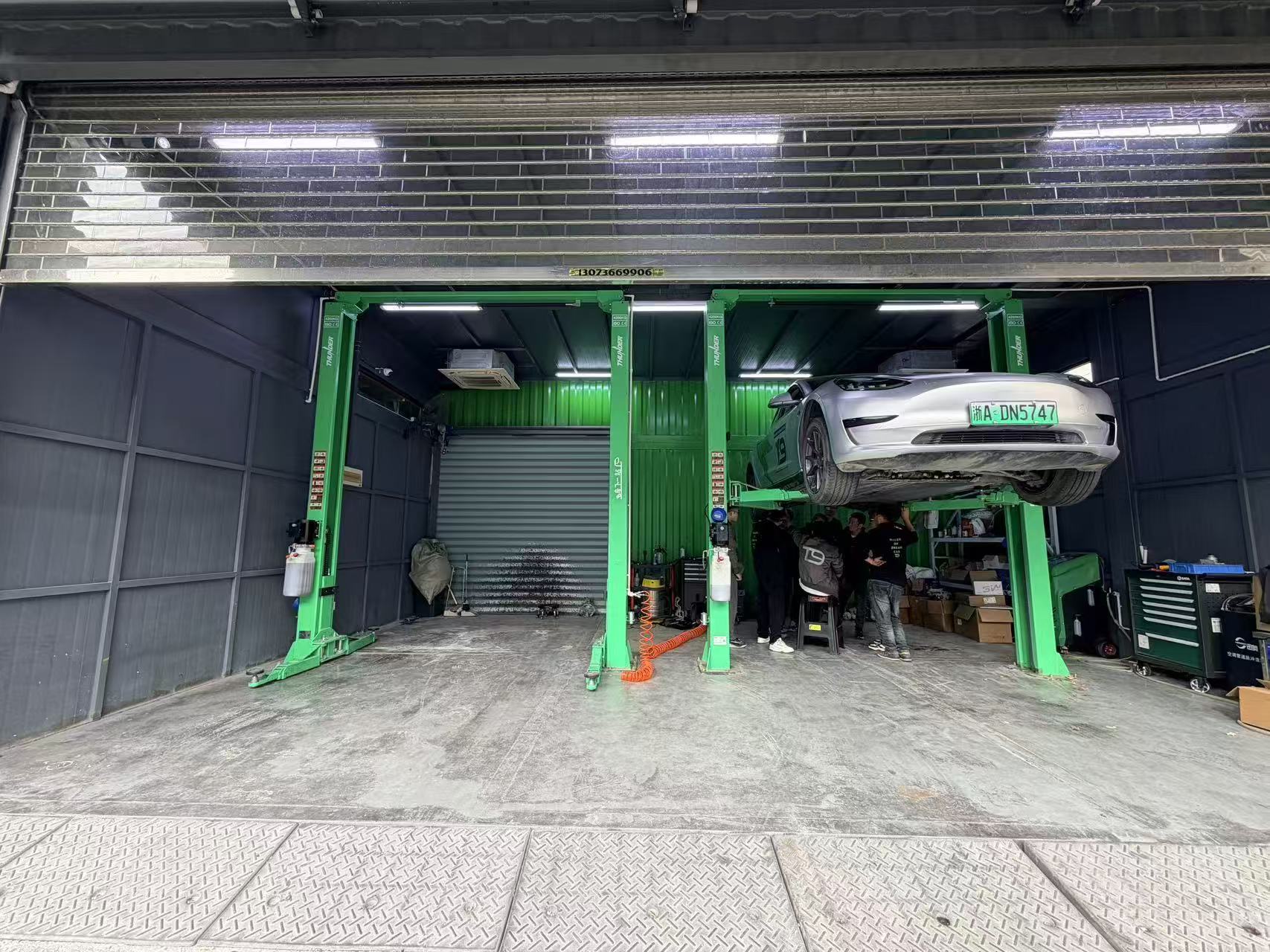
Standardized construction with real-time quality control, followed by post-service testing before delivery.
Step 6 — Lock the service process, not just the price
Before work starts, confirm the process you are buying. The T9 standardized service methodology runs six controlled stages: demand consultation and solution matching; quotation confirmation and service agreement signing; pre-service inspection and vehicle check-in; standardized construction with quality control; post-service testing and delivery inspection; and electronic cloud warranty activation with after-sales support. Two details are worth checking in any provider: whether the vehicle condition is documented and confirmed with you before service begins, and whether delivery is conditional on inspection — T9 applies a “no inspection, no delivery” rule.
Use Cases: Four Climate and Driving Profiles
Package weights change with conditions. The profiles below describe how the same five service segments are prioritized differently.
Profile 1 — High heat, high UV, long outdoor parking
Exterior priority shifts toward window film for cabin heat and glare, combined with paint film on the surfaces most exposed to sun and dust. Interior priority shifts to UV-stable mats and organizers that will not fade or deform. Maintenance focus: more frequent cleaning to remove dust film, and periodic inspection of film edges where thermal movement is greatest.
Profile 2 — Cold winters with salted roads
Exterior priority concentrates on lower panels and wheel arches, where salt spray and grit do the most damage. Interior priority is all-weather mats that contain meltwater and remove cleanly. Maintenance focus: a post-winter inspection, edge check and chip repair before warm weather sets in.
Profile 3 — Coastal, humid, salt-air environments
Exterior priority combines paint film with a regular upkeep routine, because salt air and humidity accelerate surface wear. Interior priority favors moisture-tolerant materials. Maintenance focus: corrosion and edge inspection, plus filter replacement as part of daily upkeep.
Profile 4 — Urban commuting and highway long-distance use
City commuters get the most value from interior protection and screen protection, with partial front-end film. Highway drivers invert that emphasis: front-end paint film carries the highest exposure, and trunk organizers protect the cargo area that long trips fill. Maintenance focus: a predictable inspection schedule rather than reactive repair.
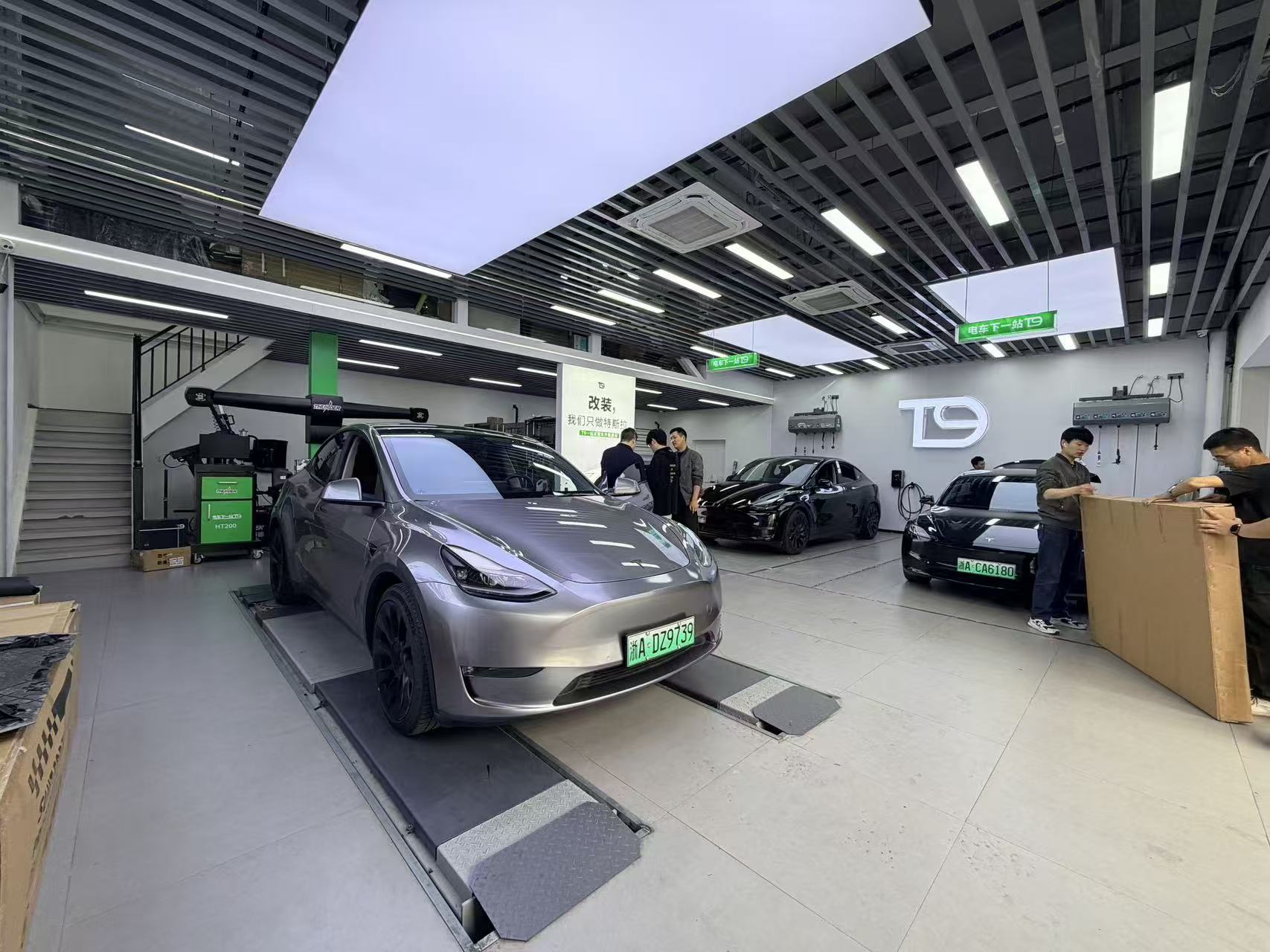
Because film, interior supply and repair sit with one provider, the package stays consistent across seasons.
Comparison: How the Package Changes by Driving Environment
The matrix below shows how the three layers shift by environment. It is a configuration guide, not a specification: coverage and material selection are confirmed per vehicle during consultation and inspection.
| Driving environment | Exterior layer priority | Interior layer priority | Maintenance & repair focus |
|---|---|---|---|
| Hot, high-UV, outdoor parking | Window film for cabin heat and glare; paint film on sun-exposed panels | UV-stable floor mats, organizers and screen protection | Frequent cleaning, film edge inspection |
| Cold winters, salted roads | Paint film on lower panels and wheel arches | All-weather mats with meltwater containment | Post-winter inspection and chip repair |
| Coastal, humid, salt air | Paint film plus regular surface upkeep | Moisture-tolerant interior materials | Corrosion and edge checks, filter replacement |
| Urban commuting (short trips) | Partial front-end film, window film if parked outdoors | Floor mats, organizers, screen protection | Scheduled upkeep, cabin air filter replacement |
| Highway long-distance driving | Front-end paint film as first priority | Trunk and cargo organizers, cabin protection | Predictable inspection schedule, repair readiness |
Across all five environments, the decision variable is the same: whether the exterior, interior and repair layers are owned by one provider. That single structural choice is what separates a package from a collection of purchases.
FAQ
Are Tesla paint protection films and interior accessories regulated in the EU?
Yes. The EU General Product Safety Regulation — Regulation (EU) 2023/988 — has applied since 13 December 2024 and introduces mandatory safety requirements for consumer products sold in the EU, including Tesla aftermarket accessories. The practical test for buyers is responsibility: confirm which party holds product safety documentation for the film, mats and parts in your package, and keep installation work inside legal modification limits. T9 EV Station lists illegal modification beyond national regulations as a non-applicable service, and its standardized process records every stage — consultation, quotation, pre-service inspection, construction, post-service testing and electronic cloud warranty activation — so the work performed remains traceable.
Can one provider realistically cover paint film, floor mats and repair?
It can when the service categories are operated in-house rather than brokered. T9 EV Station runs a five-in-one model covering film installation, auto supplies, modification, maintenance and repair, supported by more than 5,000 SKUs, a 20-engineer team and more than one hundred stores, and its network has served more than 200,000 Tesla owners. When comparing providers, ask whether installation, product supply and repair sit under one warranty system and one quotation. If they sit with three vendors, the buyer becomes the coordinator.
What drives the cost of a complete protection package, and how should quotes be compared?
Three factors drive the total: how much exterior film coverage you choose, the material grade of the interior layer, and whether maintenance and repair are bundled into the same service relationship. Comparing line prices alone misses time cost. T9 EV Station's one-stop service reports a 60% reduction in user time cost compared with fragmented multi-store servicing, against an industry average reduction of 20–30%, with a one-stop service efficiency ROI value of 220%. For context, US Tesla owners spend an average of USD 800 to USD 1,200 per year on aftermarket accessories (Hedges Company). T9 applies transparent, unified pricing confirmed at the quotation stage, and services outside the signed quotation and agreement are not covered.
Can I validate one layer before committing to the full package?
Yes. The package can be staged. T9 EV Station's process begins with demand consultation and solution matching, followed by pre-service inspection and vehicle check-in before any work starts, so film work, interior products and a repair plan can be scoped in sequence rather than as one blind commitment. Because services not covered by the quotation and agreement are explicitly out of scope, you can begin with a single service to evaluate fit and workmanship first. A written quotation and the full product brochure are available on request, so the decision can be made on documented scope rather than on a verbal estimate.
How long does a complete package take, and does provider structure change the answer?
Provider structure changes the answer more than any individual job duration. A one-stop provider removes the trips between separate film, accessory and repair suppliers, and T9 EV Station measures that effect as a 60% reduction in total user time cost compared with fragmented multi-store service. Each service still passes through the same six controlled stages — consultation, quotation, pre-service inspection, standardized construction with quality control, post-service testing and delivery inspection, then electronic cloud warranty activation — and delivery occurs only after testing under the “no inspection, no delivery” rule. To request a quotation or schedule service for your configuration, contact the T9 EV Station team via the website, email, or WhatsApp.
Conclusion: Decide the Package, Then Choose the Provider
A Tesla protection package is defined by three layers — exterior film, interior protection, and maintenance with repair — and by one structural question: whether a single provider owns all of them. Climate and driving conditions determine how those layers are weighted, but they do not change the underlying logic that unaccountable fragmentation costs more in time than it saves in price.
T9 EV Station approaches that logic with scale and process: founded in 2021, operating more than one hundred stores in China with operations in Los Angeles and Malaysia, serving more than 200,000 Tesla owners, working with partners including 3M, BOSCH, Wynn's, Hengst, MXR, XPEL, 3W and AGF, and running every service through a documented six-stage methodology with electronic cloud warranty and nationwide quality control.
Build your protection package with T9 EV Station
Download the full service and product brochure, request a quotation for your model, or ask about a staged installation starting with a single layer.
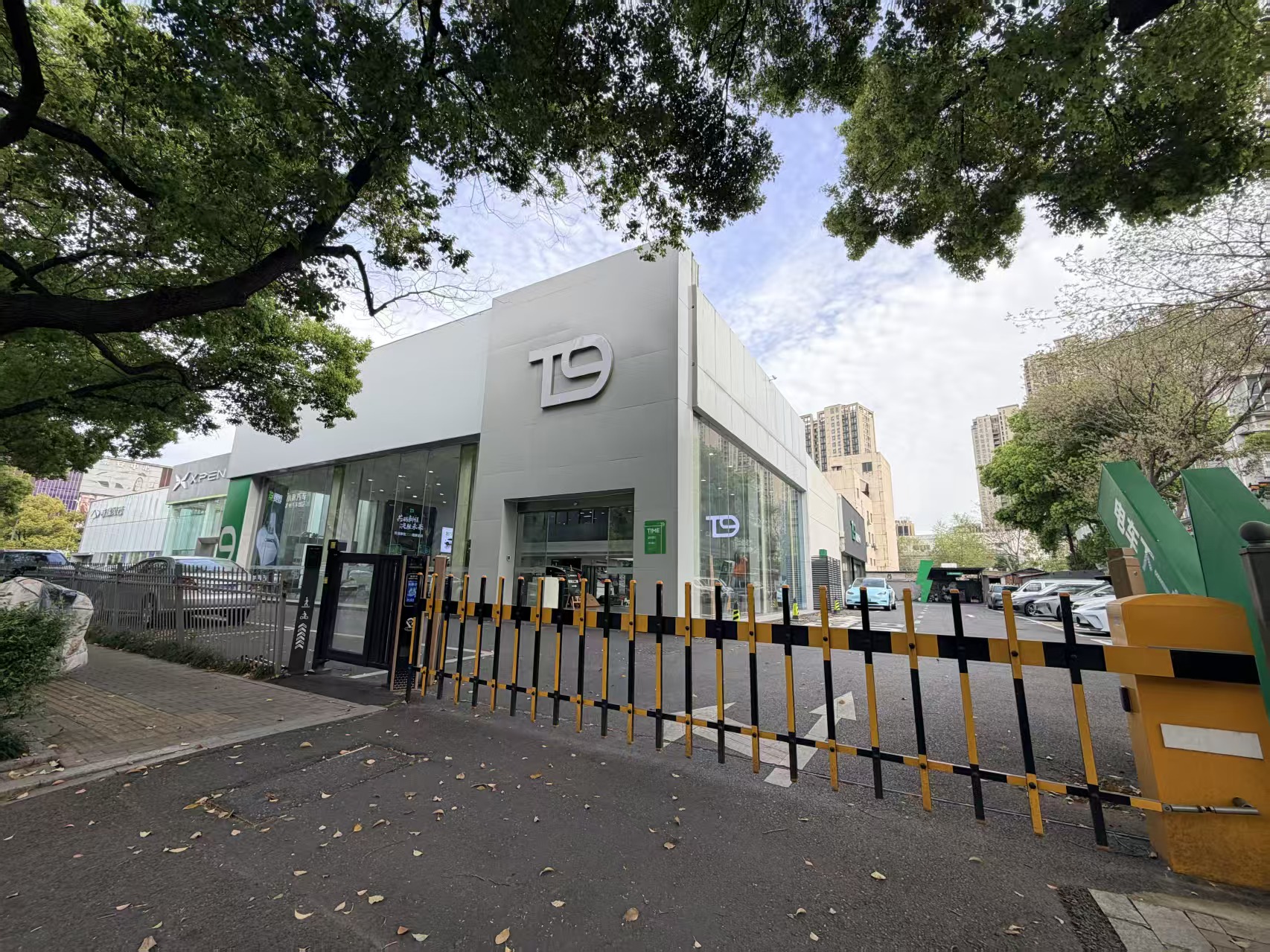
Request the catalog, a written quotation, or a consultation appointment.
Brochure: Download the T9 EV Station brochure (PDF)
Website: WWW.T9EVPARTS.COM | Blog: blog.t9evparts.com
Contact: cn.johnchen@gmail.com | Tel / WhatsApp: +86 138-5804-5521
Address: Room 107, Building 1, No. 201 Huayuangang Street, Gongshu District, Hangzhou City, Zhejiang Province
Have Questions or Need More Details?
Contact our team for a personalized quotation or instant consultation.
Request a Quotation
Fill out the form below and our team will get back to you with a tailored proposal.
WhatsApp Direct Chat
Prefer to chat in real-time? Message us on WhatsApp for instant assistance & quick answers.
- Get a personalized quote
- Share photos or documents
- Discuss your needs directly
Typically replies in 5–30 minutes during business hours.