Tesla Accessories Technical Guide: Material, Fitment, and Installation Parameters
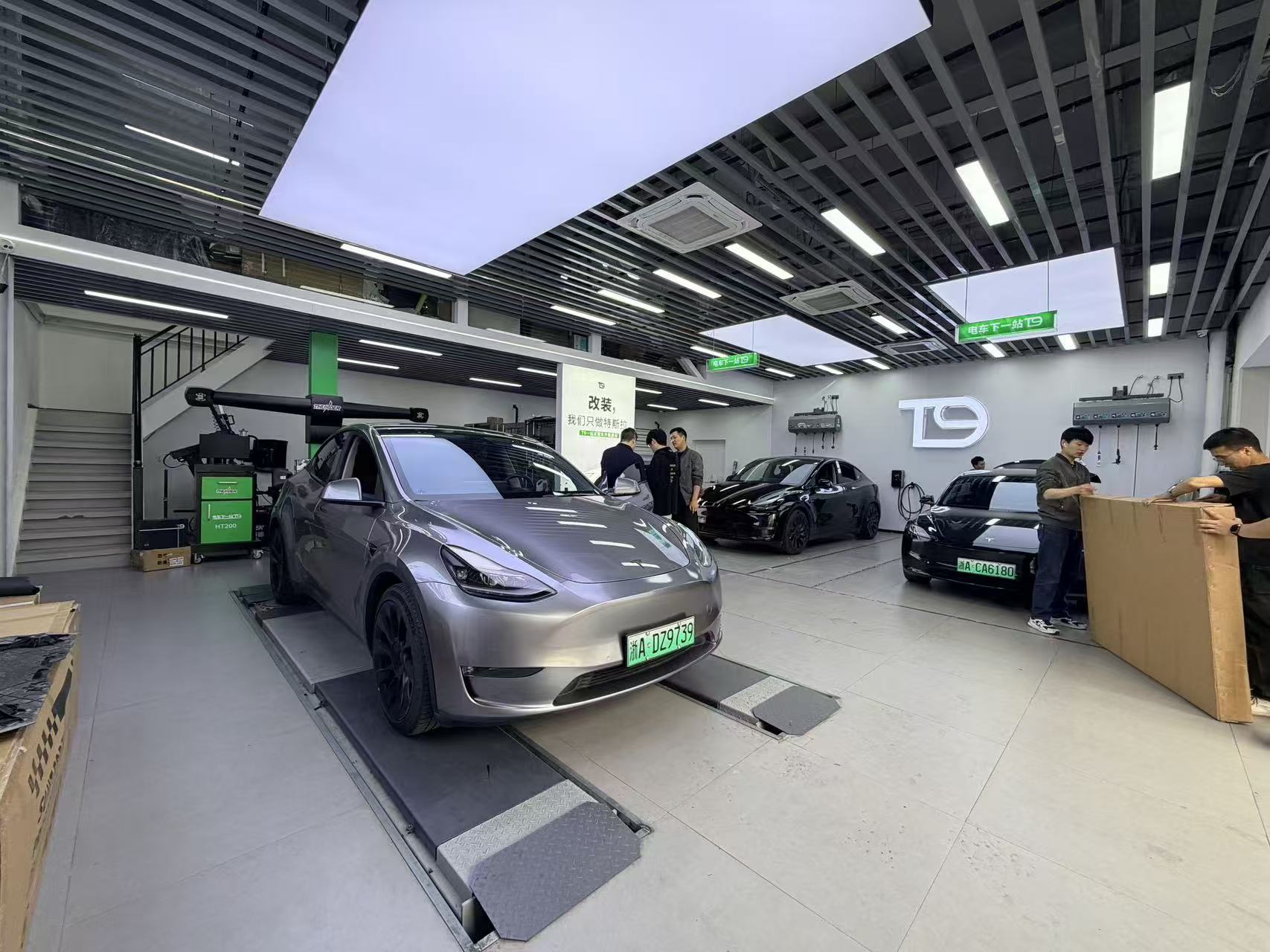
A Tesla accessories installation workshop: material handling, fitment verification, and construction parameters are executed inside one standardized process.
Two Tesla Model Y floor mats can look identical in a product photo and behave completely differently after a year of daily use. On a Tesla, that difference is rarely cosmetic - it is technical. Accessory performance is decided by three variables: material composition, fitment tolerance, and installation parameters. When all three are specified before purchase, the most common accessory problems - lifting paint protection film, curling mats, rattling trim, and prematurely clogged cabin filters - largely stop occurring.
This guide is written for Tesla owners, installers, distributors, and aftermarket buyers who need to judge accessories on evidence rather than appearance. It applies one evaluation framework across window film, floor mats, and modification parts, and it shows how T9 EV Station - the operating brand of Hangzhou T9 EV Technology Co., Ltd., a Tesla-focused aftermarket company established in 2021 - applies the same three axes across a 20-engineer R&D team, more than 5,000 SKUs, and a 20,000-square-meter manufacturing facility.
Why Tesla Accessory Problems Are Technical, Not Cosmetic
A repeat accessory failure almost always traces back to one of three specification gaps: a material that was not matched to the environment it operates in, a fitment measured against a generic template instead of one specific model variant, or an installation executed without a defined process and a written record.
The Tesla aftermarket makes those gaps more visible than they are in a conventional vehicle segment. Owners routinely buy film from one provider, modification parts from another, and maintenance from a third. Because construction standards vary between providers and after-sales responsibility is split, a buyer cannot easily tell whether a failure came from the part, the material, or the installation.
A second structural issue is data scarcity. Tesla operates a comparatively closed ecosystem, and publicly available performance comparisons between original equipment and aftermarket accessories are limited - for example, on cabin air filter efficiency or on the long-term durability of paint protection film. A large part of accessory evaluation therefore has to be done through documentation and physical test fitting rather than through published third-party benchmarks.
The practical consequence: buyers who evaluate accessories as a technical product specification, not as a styling purchase, make fewer and cheaper mistakes.
Industry Background: A Large Market With Thin Public Data
Demand is not the constraint - specification quality is. US market research on Tesla aftermarket parts estimates the 2025 US market for Tesla aftermarket parts and accessories at approximately USD 2.8-4.2 billion, supported by a US Tesla owner base that exceeds 1.8 million vehicles. Globally, Fortune Business Insights projects the electric vehicle aftermarket to reach USD 103.67 billion by 2026.
What sells is also reasonably well understood. For the Model Y, published analysis of accessory demand points to two dominant categories: protection, led by floor mats, and climate comfort, driven by sunshades because of the vehicle's glass roof heat load. Those are exactly the categories where material choice and fitment geometry determine whether the product still works in year three.
Maintenance accessories follow a similar pattern. The tesla air filter replacement market is split between HEPA-grade aftermarket filters and standard OEM filters, and published service data puts DIY replacement on the Model 3 and Model Y at roughly one to two hours - a job that is simple in concept but easy to get wrong on filter seating and housing seal.
Taken together, the 2026 picture is a large, technically demanding category in which public performance data is thin. That is the gap a documented, specification-led evaluation process is designed to close.
Axis 1 - Material Composition: What the Product Is Actually Made Of
Material composition is the first filter, because no amount of careful installation compensates for the wrong material. The useful question is not "is this good quality?" but "which material layer is doing which job, and does that job match my use case?"
Window film and paint protection film
Film is a layered product, and each layer has a function: a hard coat that resists abrasion, a base film that carries the optical and thermal properties, and an adhesive system that determines how the film bonds and how it behaves if it ever needs to be removed. When comparing Tesla window film or Tesla paint protection film, request the construction datasheet, the adhesive type, and the film thickness, then match the construction to the requirement. Heat rejection on a large glass roof is a different requirement from impact protection on a front bumper.
Film performance figures should be read as test conditions rather than absolute properties. Heat-rejection or clarity numbers are only comparable when they were measured under the same test method, on the same substrate, at the same thickness.
Interior and comfort accessories
For Tesla interior accessories - floor mats, trunk accessories, organizers, and comfort items - material composition is mostly about dimensional stability and edge geometry. All-weather floor mats are commonly molded from TPE-type elastomers rather than carpet or plain rubber, because the material has to hold its shape across a wide temperature range, resist deformation under foot pressure, and return to its molded geometry instead of curling. Ask whether the mat is molded against a variant-specific template, and whether the raised edges are part of the molding or attached afterward.
Modification and upgrade parts
For Tesla modification accessories, Tesla customization accessories, and Tesla performance accessories, the two material questions that matter are the base material of the component and the surface finish process. A part built from an appropriate base material with a properly specified finish holds its appearance and its mounting geometry; a part built to a generic specification may fit loosely, discolor, or introduce noise. Request the material designation and the finish process, not only the color.
Cabin air filter replacement
For tesla air filter replacement, the material question is the filtration grade of the media. The market is divided between HEPA-grade aftermarket filters and standard OEM-specification filters, and the two are not interchangeable in performance terms. Confirm the filtration grade and the exact part number rather than relying on a general "fits Model 3 and Model Y" statement.
Axis 2 - Fitment Tolerance: Model Variant Beats Generic Fitment Claims
Fitment tolerance is where most returns originate, and it is the axis buyers check least. Tesla Model Y accessories, Tesla New Y accessories, Tesla New 3 accessories, and Tesla Model 3 accessories are not interchangeable by name. Body panels, interior trim, mounting clips, and footwell geometry differ between variants and between model years, so a product marketed for "Tesla Model Y" may still not seat correctly on a specific vehicle.
The tolerance chain to examine is short and concrete:
- Clip and mounting points - retention clips must engage at the correct positions; a clip molded slightly off produces rattles and eventually loose panels.
- Panel gaps and edge coverage - film templates and trim parts need to cover the intended area without overhanging into seals or hinges.
- Interference zones - mats, trunk accessories, and organizers must clear pedal travel, seat rails, and trunk floor geometry.
- Serviceability - a part should be removable and refittable without permanently deforming the surrounding trim.
Two verification practices reduce fitment risk substantially. First, confirm vehicle identity - variant and model year - before ordering; this is the same logic an official parts channel uses when it asks for a vehicle identifier to check catalog selection. Second, treat a physical test fit as part of procurement rather than an optional extra. A test fit on the exact variant answers in minutes what a specification sheet cannot answer at all.
When a supplier develops its own tooling instead of reselling a generic catalog, fitment becomes a controllable process rather than a fixed constraint. That is why the size and function of a supplier's engineering team is a legitimate fitment question, not a marketing one.
Axis 3 - Installation Parameters: The Part of the Specification Buyers Forget
Installation is part of the product specification. Film installed in a dusty environment or without appropriate surface preparation will lift at the edges regardless of its material grade, and a filter seated without a proper housing seal will not deliver its rated filtration performance. The installation parameters to confirm before purchase are method, environment, time window, and documentation.
Time is the easiest parameter to plan with, because it maps directly onto vehicle downtime. In T9 EV Station's full-life-cycle service model, general maintenance is scheduled as a roughly one-day service item, film installation as a one-to-two-day item, and modification or repair projects as two-to-seven-day items. For comparison, published service data puts DIY cabin air filter replacement on the Model 3 and Model Y at approximately one to two hours.
The environment parameter is less visible but equally important: a controlled, dust-managed installation bay, defined surface preparation steps, and a specified curing period before the vehicle returns to normal use. The documentation parameter closes the loop - a standardized construction record, a post-service inspection report, and a warranty certificate are what allow a buyer to prove what was installed, when, and by whom.
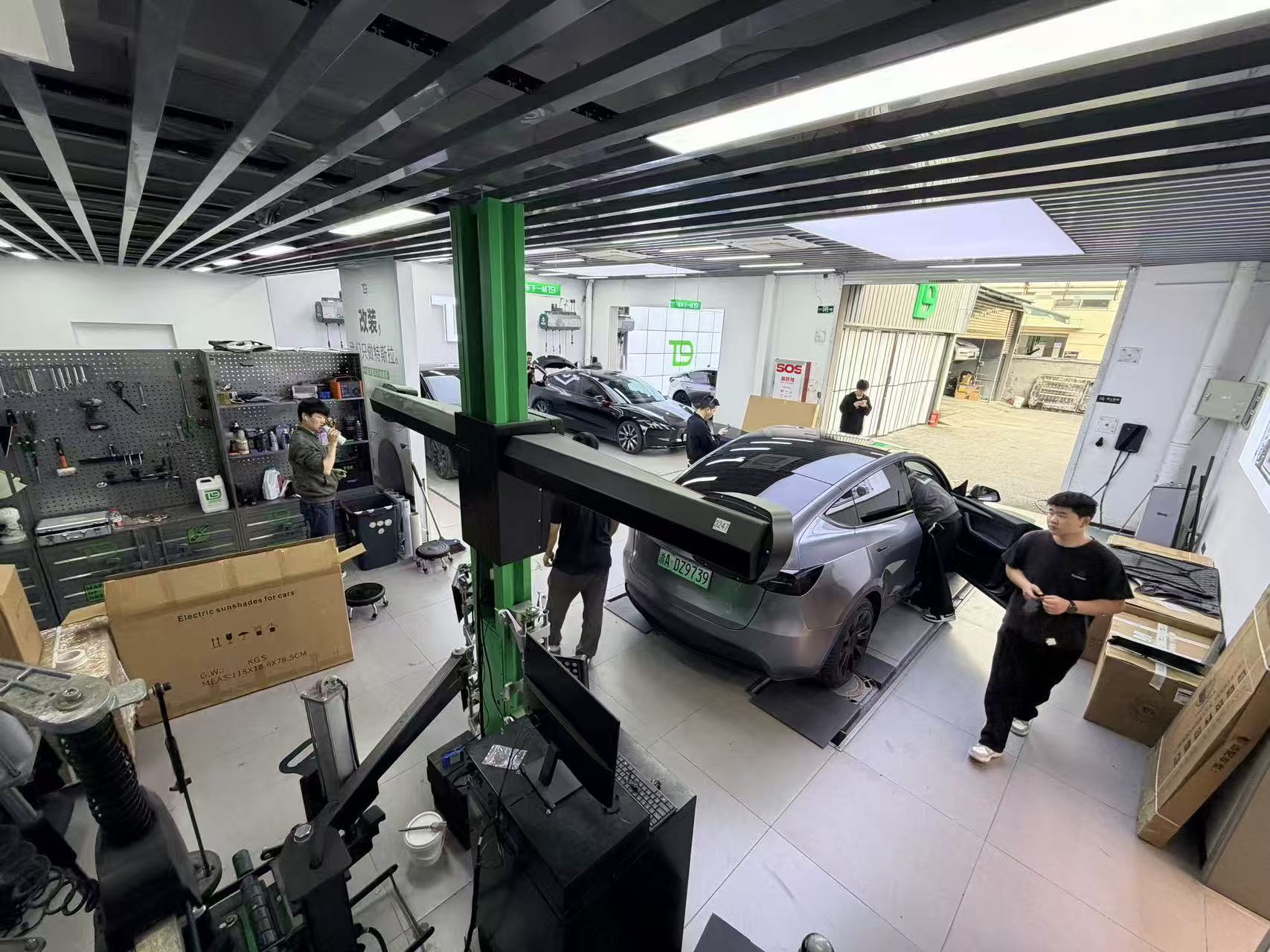
Installation bay: film, mat, and modification work is planned around defined construction steps and inspection checkpoints.
How T9 EV Station Applies These Three Axes
T9 EV Station (Hangzhou T9 EV Technology Co., Ltd.) was established in 2021 and is structured around a full-life-cycle service model for Tesla vehicles: window film, floor mats, modification, daily upkeep, and repair, supplied across more than 5,000 SKUs. The company operates a 20,000-square-meter manufacturing facility with more than 100 employees, and its annual production capacity serves over 300,000 Tesla vehicles. Its R&D team includes 20 engineers dedicated to Tesla accessories and services.
Three of those figures map directly onto the evaluation framework above.
- The 20-engineer R&D team is Axis 2 in organizational form. Variant-specific geometry has to be developed, tooled, and retested as Tesla revises model variants; an in-house team makes that a repeating process rather than a one-off purchase.
- More than 5,000 SKUs is Axis 1 in operational form. A catalog of that breadth only stays coherent if material specifications are sourced consistently across floor mats, film, modification parts, and maintenance items.
- The 20,000-square-meter facility and service capacity of over 300,000 vehicles per year is Axis 3. Standardized construction, quality control, and post-service inspection require physical space and repeatable process, not only trained installers.
Material sourcing is supported by exclusive strategic partnerships with 3M, BOSCH, Wynn's, Hengst, and MXR. For a buyer, a named material partner is a traceability advantage: it identifies where the underlying material comes from instead of leaving the specification entirely to a generic supply chain.
The company operates more than one hundred stores across China exclusively for Tesla owners and has cumulatively served more than 200,000 Tesla owners. Its main markets are the EU and the USA, with expansion to Los Angeles and Malaysia, and export business accounts for 5% of total sales. Across the store network, the operating model combines unified pricing and nationwide warranty support with standardized construction records and post-service inspection - the structure that makes installation documentation verifiable rather than verbal.
Full product and service details are published on T9 EV Station's official website.
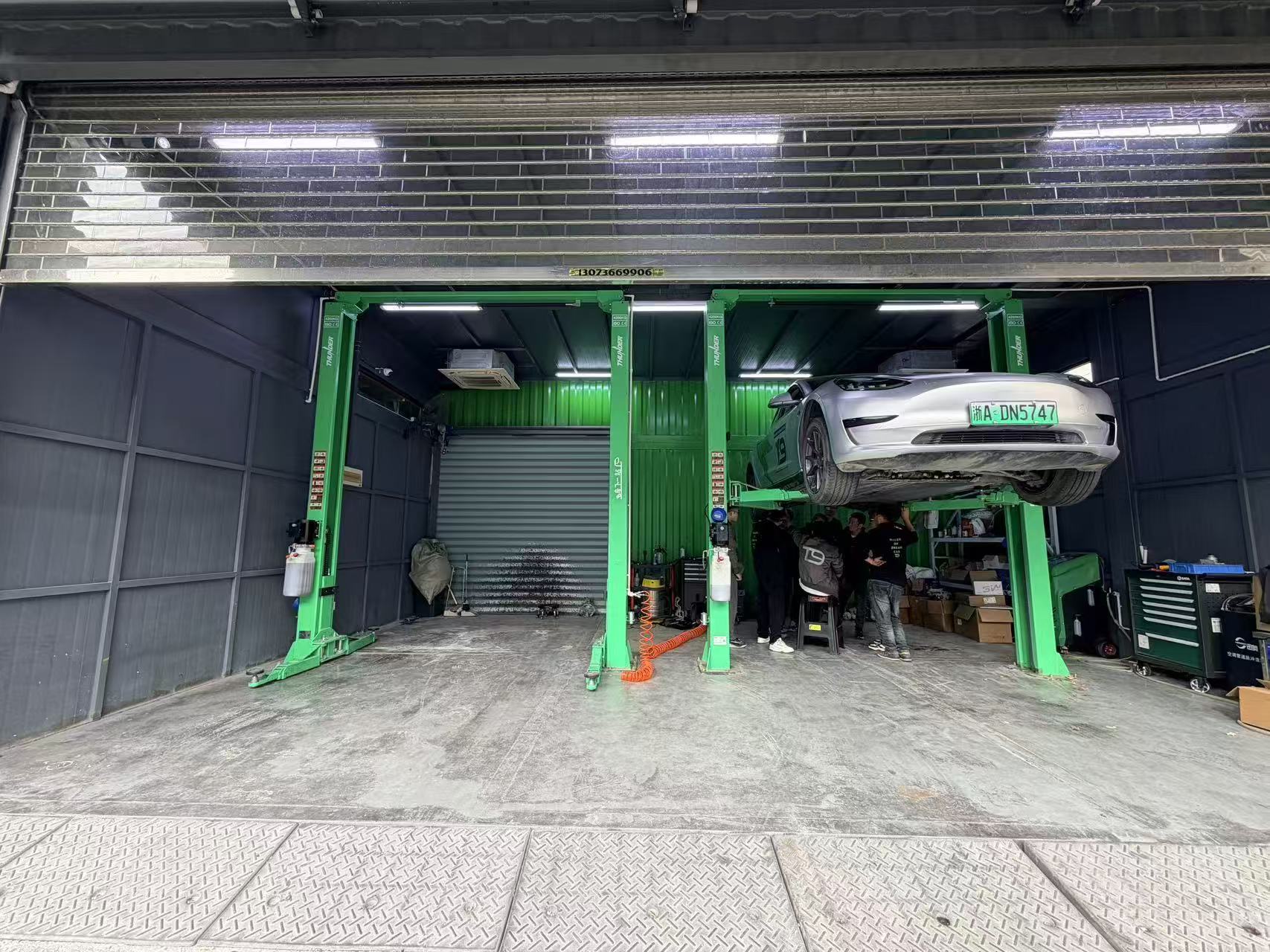
Standardized construction workshop: film installation, floor mat fitting, and modification work follow documented steps and inspection checkpoints.
Step-by-Step: A Six-Step Evaluation Workflow Before You Buy
The framework above compresses into a repeatable purchasing sequence that works for a single owner or for a distributor planning a project-scale order.
- Step 1 - Fix the vehicle identity. Record the variant (Model Y, New Y, Model 3, New 3) and the model year. Every subsequent check depends on this.
- Step 2 - Request the material specification. Composition datasheet for film, base material and finish for hard parts, filtration grade for filters.
- Step 3 - Verify fitment against the exact variant. Use a physical test fit or a sample on the target vehicle rather than a template drawing alone.
- Step 4 - Confirm the installation parameters. Method, environment, and the required time window for each item.
- Step 5 - Confirm the documentation and warranty trail. Construction record, inspection report, and warranty certificate.
- Step 6 - Sequence the work into one visit. Group film, mats, and maintenance items so the vehicle is out of service once rather than three times.
Use Cases: Applying the Framework to Real Tesla Projects
New Model Y delivery protection
A new Model Y typically needs paint protection film, window film, and all-weather floor mats in the first weeks of ownership. Material composition decides durability, fitment decides edge coverage, and installation decides whether the film cures correctly. All three should be confirmed before the vehicle is booked in, since film installation is a one-to-two-day service item.
Cabin air filter replacement
Filter replacement is the clearest example of a low-cost job with a high specification risk. Confirm whether the replacement media is HEPA-grade aftermarket or standard OEM specification, confirm the part number, and plan for a job that runs roughly one to two hours on the Model 3 and Model Y if handled as DIY work.
Interior comfort and trunk organization on New Y and New 3
Comfort accessories and trunk accessories are judged almost entirely on fitment tolerance. Because New Y and New 3 geometry differs from earlier variants, organizers, mats, and liners should be selected against the specific year and variant rather than a general model name.
Modification and upgrade projects
Modification accessories combine all three axes: the base material and finish determine appearance retention, the mounting geometry determines noise and security, and the installation process determines whether surrounding trim is damaged. Projects of this type are scheduled as two-to-seven-day service items in T9 EV Station's service model.
Distributor and project-scale supply
For distributors, the same three axes become procurement criteria applied across a catalog instead of a single vehicle: consistent material sourcing, variant-indexed fitment data, and a documented installation standard that a downstream installer can follow.
Comparison Table: Material, Fitment, and Installation by Accessory Category
| Accessory category | Primary material consideration | Fitment risk | Installation parameter | What to verify before buying |
|---|---|---|---|---|
| Window film / paint protection film | Layered construction: hard coat, base film, adhesive system | Film cut to the wrong variant leaves exposed edges or lifting corners | Film installation is scheduled as a one-to-two-day service item | Construction datasheet, adhesive type, variant-specific template |
| Floor mats (interior protection) | Dimensional stability across temperature ranges; TPE-type elastomers are the common all-weather choice | Mats that do not match footwell geometry can shift or interfere with pedal travel | Owner-installed; no fixed service window in the service model | Variant-specific template, raised-edge design, retention points |
| Cabin air filter | Filtration grade: HEPA-grade aftermarket vs standard OEM | Filter housing fit and seal on Model 3 / Model Y | DIY replacement estimated at roughly one to two hours | Filtration grade and exact part number |
| Modification / upgrade parts | Base material and surface finish process | Mounting points and clip geometry differ across Model Y, New Y, Model 3, New 3 | Modification and repair projects are scheduled as two-to-seven-day service items | Installation instructions, mounting documentation, physical test fit |
Installation windows reflect T9 EV Station's full-life-cycle service model; the cabin filter DIY estimate reflects published aftermarket service data.
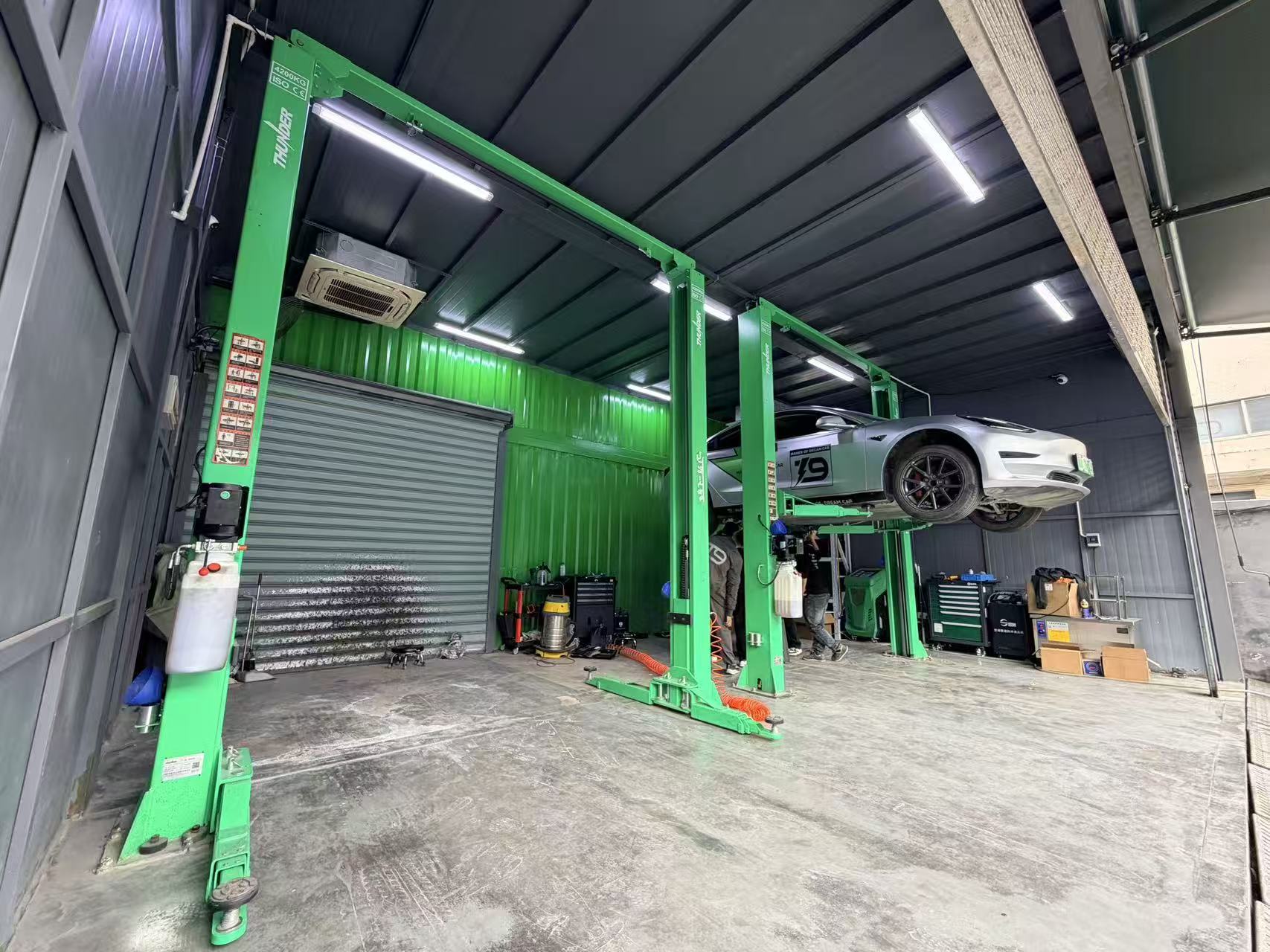
In practice: installation parameters are only meaningful when the working environment, preparation steps, and inspection records are defined in advance.
FAQ
What documentation should a buyer request before importing Tesla accessories?
Compliance requirements for accessories differ by product category and by target market: window film, electrical modification parts, and interior trim are not treated the same way. Because of that, the practical rule is to request documentation per SKU rather than per supplier - a material composition sheet, any available third-party test reports for the materials used, and confirmation of which market the product was developed for. Material traceability is easier when a supplier works with named material partners; T9 EV Station holds exclusive strategic partnerships with 3M, BOSCH, Wynn's, Hengst, and MXR.
How much engineering actually goes into accessory fitment?
More than most buyers assume. Fitment is a tooling and measurement problem, and each Tesla variant needs its own geometry. T9 EV Station's R&D team includes 20 engineers dedicated to Tesla accessories and services, working across more than 5,000 SKUs and a 20,000-square-meter manufacturing facility with more than 100 employees. A 20-engineer team is relevant to buyers because it makes variant-specific retooling a repeatable process instead of a one-time purchase.
Why do two visually identical accessories have very different prices?
Cost differences between visually similar Tesla accessories usually come from four places: the grade and sourcing of the base material, the tooling required for a variant-specific fit, the fitment testing performed before release, and the installation and warranty service attached to the product. A cheaper item typically removes one or more of those layers. The evaluation question is therefore not "which is cheaper?" but "which of these four layers has been reduced, and can I live with that reduction?"
Can fitment and material be validated before committing to a bulk order?
Yes, and it should be treated as a standard procurement step. Validation means three things: a physical test fit on the exact variant and model year, confirmation of the material specification in writing, and confirmation of the installation method the downstream installer is expected to follow. Sample and specification requests can be directed to T9 EV Station at cn.johnchen@gmail.com or +86 138-5804-5521, and the product range is documented in the downloadable brochure linked at the end of this guide.
How long do Tesla accessory installations take, and how should that be planned?
In T9 EV Station's full-life-cycle service model, general maintenance is scheduled as a roughly one-day item, film installation as a one-to-two-day item, and modification or repair projects as two-to-seven-day items. For reference, published service data puts DIY cabin air filter replacement on the Model 3 and Model Y at approximately one to two hours. The planning implication is simple: group film, mats, and maintenance work into a single visit so the vehicle is out of service once.
Conclusion: Specify the Accessory, Then Choose the Supplier
Tesla accessories are not a styling category with a technical side - they are a technical category with a styling side. Material composition decides how the product behaves over time, fitment tolerance decides whether it belongs on a specific variant, and installation parameters decide whether the first two ever perform as specified. Buyers who ask for those three things in writing before ordering spend less time on returns and more time driving.
T9 EV Station applies the same three-axis logic across its own operation: a 20-engineer R&D team for variant fitment, more than 5,000 SKUs sourced through exclusive partnerships with 3M, BOSCH, Wynn's, Hengst, and MXR, and a full-life-cycle service model in which construction records, inspection reports, and warranty documentation are part of the deliverable rather than an afterthought.
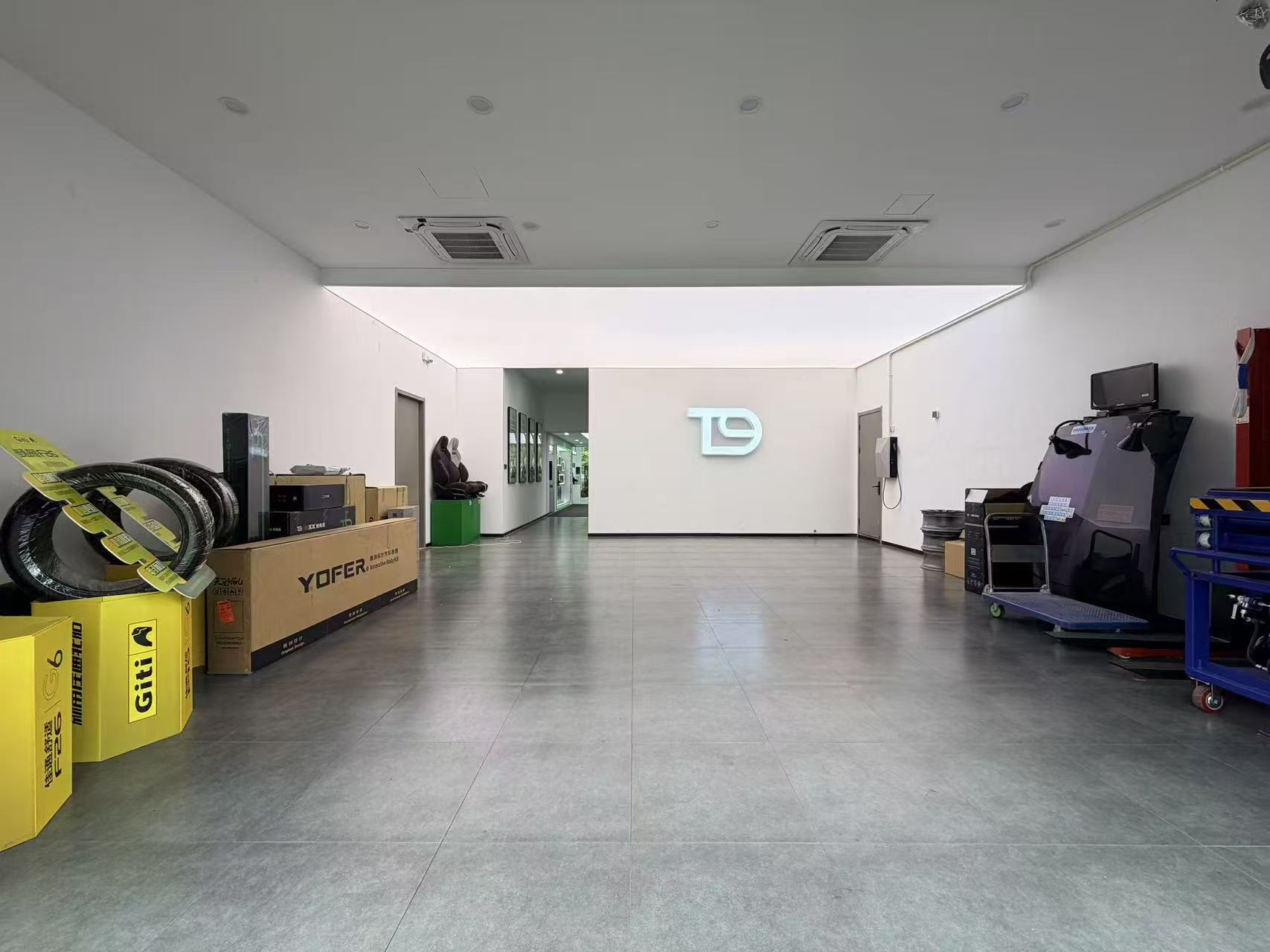
T9 EV Station operates more than one hundred stores in China exclusively for Tesla owners, with main markets in the EU and the USA.
Next step: if you are evaluating Tesla accessories for a vehicle or for a distribution project, request the material specification, a variant-specific sample, or a quotation from the T9 EV Station team. Share your model variant, model year, and target categories and the team can respond with the corresponding specification set.
Email: cn.johnchen@gmail.com | Tel / WhatsApp: +86 138-5804-5521
Address: Room 107, Building 1, No. 201 Huayuangang Street, Gongshu District, Hangzhou City, Zhejiang Province
Download the full T9 EV Station product brochure (PDF): T9 EV Station brochure
Have Questions or Need More Details?
Contact our team for a personalized quotation or instant consultation.
Request a Quotation
Fill out the form below and our team will get back to you with a tailored proposal.
WhatsApp Direct Chat
Prefer to chat in real-time? Message us on WhatsApp for instant assistance & quick answers.
- Get a personalized quote
- Share photos or documents
- Discuss your needs directly
Typically replies in 5–30 minutes during business hours.