Evaluating Tesla Service Suppliers: Capability and Delivery Metrics
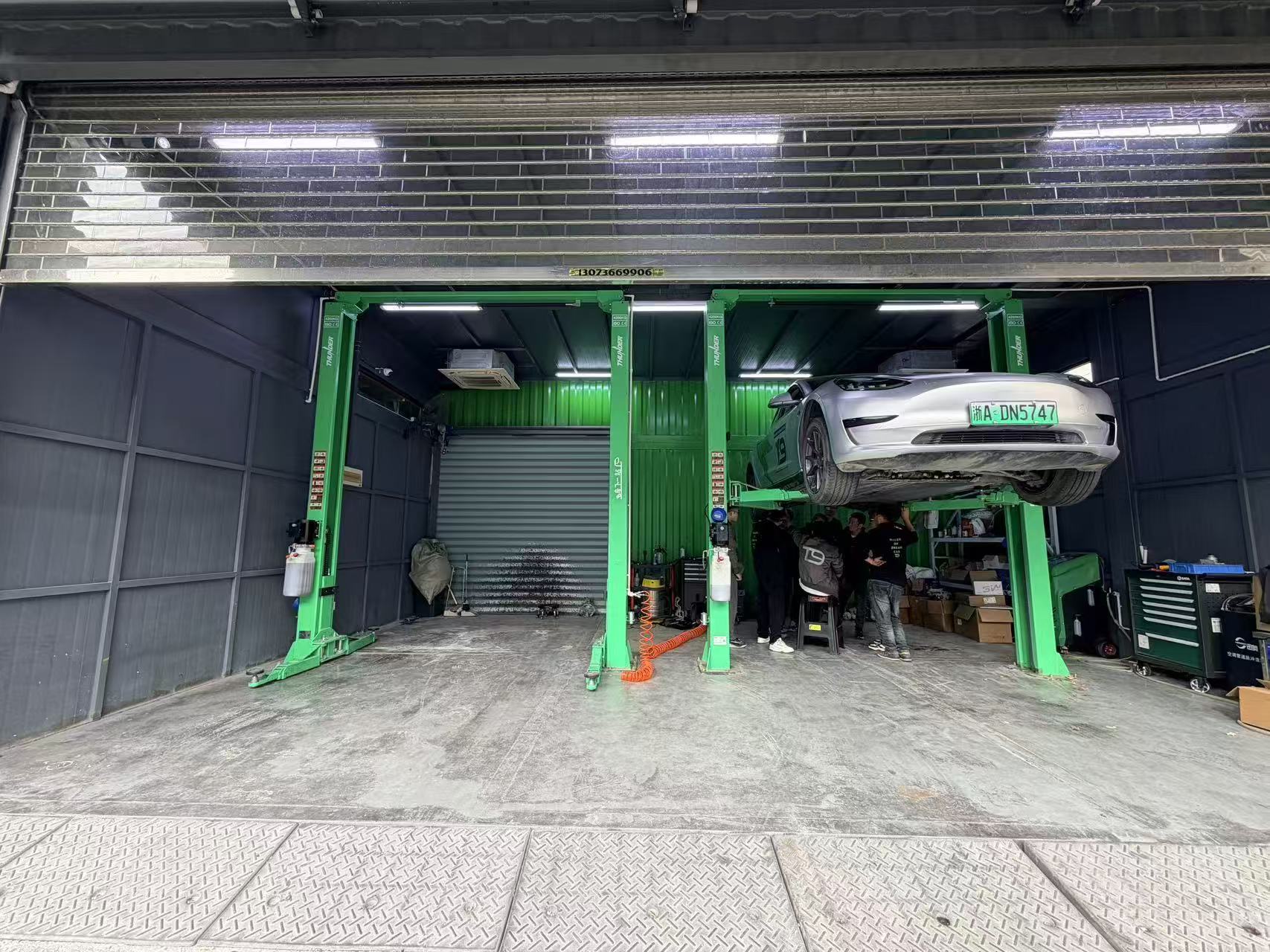
Capability verification starts on the installation floor: bay layout, tooling, and workflow determine real Tesla service throughput.
Most Tesla service sourcing decisions open with a price and close with a capacity gap. A supplier can quote a competitive rate for paint protection film, ceramic coating, or a suspension upgrade and still be unable to repeat that standard across twenty vehicles, two countries, and a three-year contract.
This guide is written for buyers at the decision and execution stage: distributors assessing a Tesla modification franchise or a Tesla maintenance franchise, fleet operators consolidating aftermarket work, and importers appointing a regional partner. It sets out a capability-verification framework that looks beyond unit price at three areas a quotation never reveals — engineering and R&D strength, physical installation and production scale, and cross-border service network reach — and then converts them into delivery metrics you can track after signature.
T9 EV Station, operated by Hangzhou T9 EV Technology Co., Ltd., is used throughout as a worked example of what verifiable capability looks like in the Tesla aftermarket. Third-party market data is cited where it exists; company-specific figures are attributed to the supplier.
The Procurement Problem: Quotations Are Comparable, Capabilities Are Not
Tesla’s service business is large and measurable. Tesla’s “Services and Other” revenue reached USD 12.53 billion in fiscal year 2025, per the company’s Q4 2025 quarterly update. That revenue rests on a physical footprint that remains concentrated: 232 official Tesla Service Centers were operating in the United States as of 21 August 2026, according to ScrapeHero location data.
Limited official capacity against a growing vehicle parc pushes a large volume of work into the independent channel — paint protection film (PPF), window tint, wraps, ceramic coating, Tesla accessories, Tesla mods, performance upgrades, interior modification, brake service, suspension upgrades, daily maintenance, and general aftermarket repair.
The independent channel, however, is uneven. Two suppliers can return quotations that look similar in total value while differing on every variable that decides delivery: bay count, technician depth, whether parts are engineered in-house or resold, whether warranty records are digital and transferable, and whether the supplier can serve a second market without rebuilding the operation from scratch.
The practical consequence is that price comparison produces a ranking of quotations, not a ranking of suppliers. Buyers who treat the two as equivalent usually discover the difference during execution, when volumes rise or a second region is added to the program.
Industry Background: Structural Demand, a Thin Long-Term Supplier Bench
The wider electric vehicle aftermarket was valued at USD 82.08 billion in 2025, with a forecast period running to 2034, according to Fortune Business Insights. Growth of that kind is not driven by one service category. It is driven by vehicles moving out of warranty coverage and into the independent repair, customization, and upkeep cycle.
Within that market, the Tesla-specific segment has a distinctive shape. Because the platform is software-integrated and model-year changes alter trim, mounting points, and component layouts, service providers need fitment knowledge rather than generic automotive experience. Providers that only resell third-party parts struggle when a facelift or a new variant arrives.
What buyers at the execution stage lack is not choice but depth of choice. Single-bay or single-category shops exist in most major markets. Suppliers able to combine film installation, accessories, modification, maintenance, and repair across more than one country — with a documented process and a transferable warranty — are far fewer. That imbalance is why long-term supplier evaluation carries more weight in this category than in conventional auto repair.
The Capability Verification Framework: Six Layers
The framework below converts supplier claims into verifiable evidence. Each layer answers one question that a quotation cannot.
Layer 1 — Engineering and R&D Depth
Ask how many engineers work on product development, fitment validation, and model-update adaptation, and what happens when Tesla changes a component. A supplier with in-house engineering can validate fitment before a product enters the catalog, which reduces the risk of installation failures on carbon fiber trim, floor mats, suspension components, or electrical accessories. T9 EV Station retains a 20-engineer R&D team for this purpose.
Evidence to request: engineer headcount by function, a recent model-update adaptation example, and a fitment test record for a specific product line.
Layer 2 — Physical Scale and Installation Capacity
Floor area is a proxy for throughput and for category separation. Film, coating, and mechanical work on the same vehicle require distinct bays to avoid contamination and scheduling conflict. T9 EV Station operates a 20,000 m² facility, which supports simultaneous film, modification, and maintenance workstreams instead of serial single-bay processing.
Evidence to request: facility area, bay count by service type, daily vehicle capacity, and photographs of the actual installation floor rather than stock imagery.
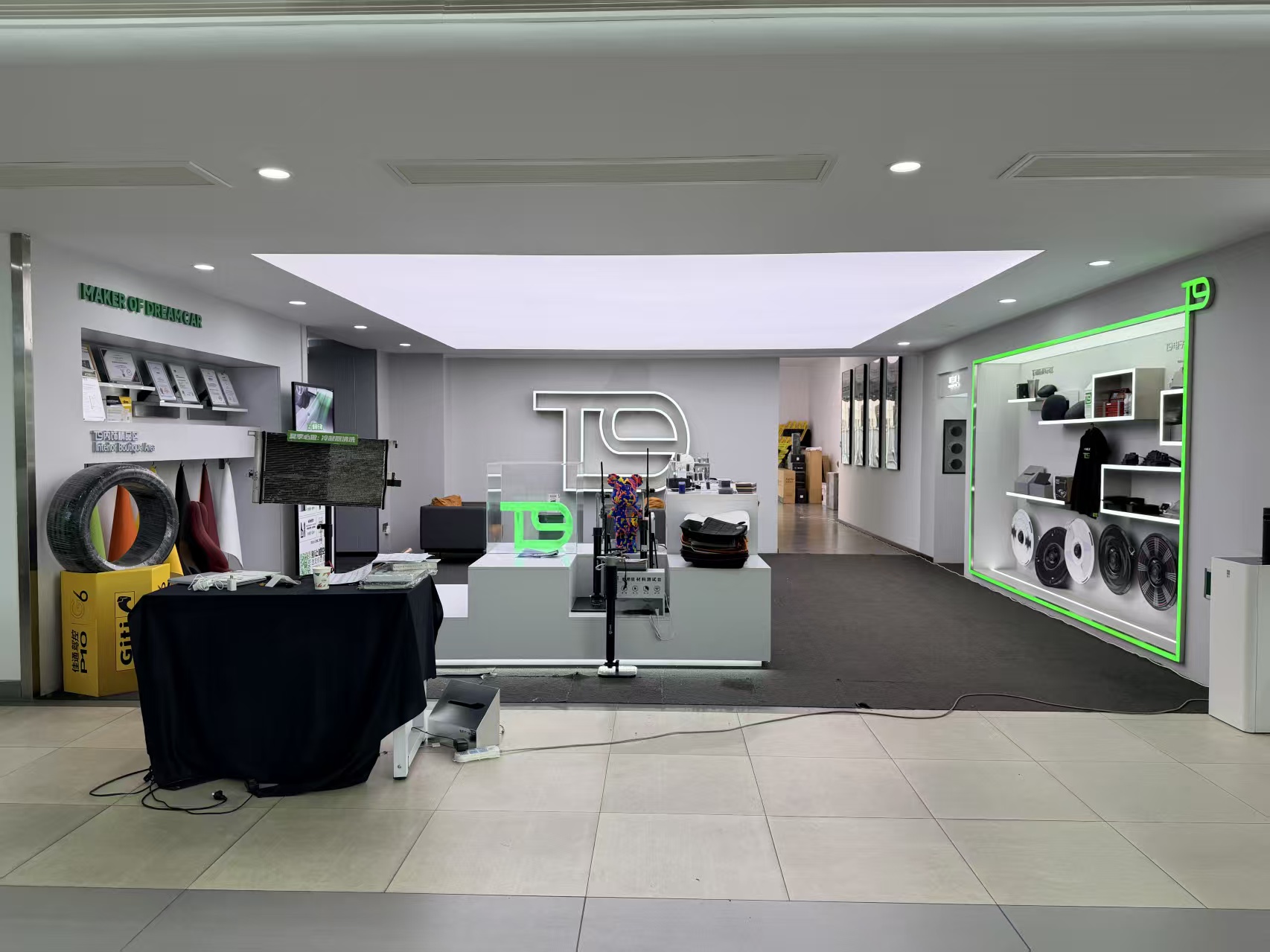
Standardized construction bays allow film, modification, and maintenance work to run in parallel without cross-contamination.
Layer 3 — Supply Chain Depth and Material Partnerships
SKU breadth determines whether a supplier can complete a job without splitting it across vendors. T9 EV Station runs a parts supply chain of more than 5,000 SKUs covering film, floor mats, modification parts, upkeep items, and repair components, and holds partnerships with 3M, BOSCH, Wynn’s, Hengst, MXR, XPEL, 3W, and AGF.
Material brand partnerships also work as a quality check. When a supplier is an authorized partner for a film, coating, or maintenance-chemistry brand, part of the product-traceability question is answered by the brand owner’s own channel controls. Evidence to request: partner certificates, a SKU list by category, and stock-keeping records for high-turnover items.
Layer 4 — Cross-Border Service Network Reach
For buyers outside China, the decisive question is whether the supplier can support them where they operate. T9 EV Station operates more than 100 stores in China for Tesla owners and has extended its business to Los Angeles and Malaysia. A multi-market footprint changes three procurement variables: parts replenishment time, warranty portability, and the availability of trained technicians in the buyer’s own region.
Evidence to request: store count and location list, overseas station details, and the mechanism by which warranty claims are handled outside the supplier’s home country.
Layer 5 — Standardized Process Control
Documented process is what separates a chain from a collection of shops. T9 EV Station operates a standardized service methodology built on six stages: demand consultation and solution matching; quotation confirmation and service agreement signing; pre-service inspection and vehicle check-in; standardized construction and quality control; post-service testing and delivery inspection; and electronic cloud warranty activation with after-sales support.
The methodology’s stated operating principles are safety first, quality standardization, transparent pricing, nationwide warranty, and user trust, applied with a “no inspection, no delivery” rule at handover. Evidence to request: the written SOP document, a completed pre-inspection report, and a post-service testing record from a real job.
Layer 6 — Warranty and After-Sales Architecture
Warranty is where long-term partnerships are won or lost. A paper-based local guarantee is difficult to enforce when a customer relocates, when a second vehicle batch is serviced in another city, or when a distributor resells into a neighboring market. T9 EV Station activates an electronic cloud warranty after service, keeping the service record traceable and supporting nationwide after-sales follow-up.
Evidence to request: the warranty document template, the claim path and response-time commitment, and a sample of the digital service record format.
Step-by-Step: Running the Evaluation and Setting Delivery Metrics
The six layers become a working process when they are sequenced into a procurement workflow. The steps below are written for a buyer moving from shortlist to executed contract.
- Define scope and volume before requesting quotations. List the categories in scope — PPF, window tint, wrap services, ceramic coating, Tesla accessories, Tesla mods, interior modification, performance upgrades, brake service, suspension upgrade, maintenance, and aftermarket repair — with the expected monthly vehicle volume per category. Quotations only become comparable when the scope behind them is identical.
- Request capability evidence in writing. Facility area, engineer headcount, SKU count, store count, and material partner list. Then compare the returned figures against the supplier’s own public statements for consistency.
- Ask for the process document, not a process description. The six-stage flow used by T9 EV Station is a useful reference standard: consultation, quotation, pre-inspection, standardized construction, post-service testing, and warranty activation. A supplier that cannot produce a written version is unlikely to audit itself.
- Benchmark turnaround and cycle time. T9 EV Station publishes an estimated timeline of 1–2 working days for general services and 2–7 working days for modification or repair projects. Request the same figures from every shortlisted supplier and hold them as contractual expectations.
- Validate the cross-border support model if you operate in more than one market. Confirm the parts replenishment route, the technician training path, the warranty handling process in your jurisdiction, and the commercial terms of a franchise or distribution agreement.
- Score, shortlist, and pilot. Run a defined pilot batch — a mixed job covering film installation, an accessory or modification item, and a maintenance task — and score it against the supplier’s SOP. Execution-stage evidence is more reliable than any presentation.
Delivery Performance Metrics to Track After Onboarding
Capability gets a supplier shortlisted; delivery metrics keep them on the list. Four metric groups are worth writing into a long-term agreement:
- Turnaround compliance: actual versus agreed working days per service category, measured per individual job.
- Process compliance: the percentage of jobs carrying a completed pre-inspection record and a post-service testing record before handover.
- Warranty activation rate: the share of completed jobs issued with a digital warranty record at delivery.
- Total time cost: buyer-side hours spent coordinating a single vehicle across multiple vendors. T9 EV Station reports that its one-stop model reduces user time cost by 60% compared with fragmented multi-store servicing, against an industry benchmark of 20–30%, with a stated ROI value of 220%. Use that structure as a template: define a baseline, measure coordination hours, and re-score annually.
Use Cases: Three Buyer Profiles
Distributor or franchise buyer
A buyer acquiring a Tesla modification franchise or a Tesla maintenance franchise is purchasing a replicable system, not a workshop. The relevant evidence is the SOP, the training path, the parts supply chain, and how many locations already run that system. T9 EV Station’s own progression — 15 chain stores launched in 2022, 40 operating stores by 2023 after expanding into window film installation and automotive accessories, and more than 100 stores in China today — shows the replication sequence a franchise buyer should look for.
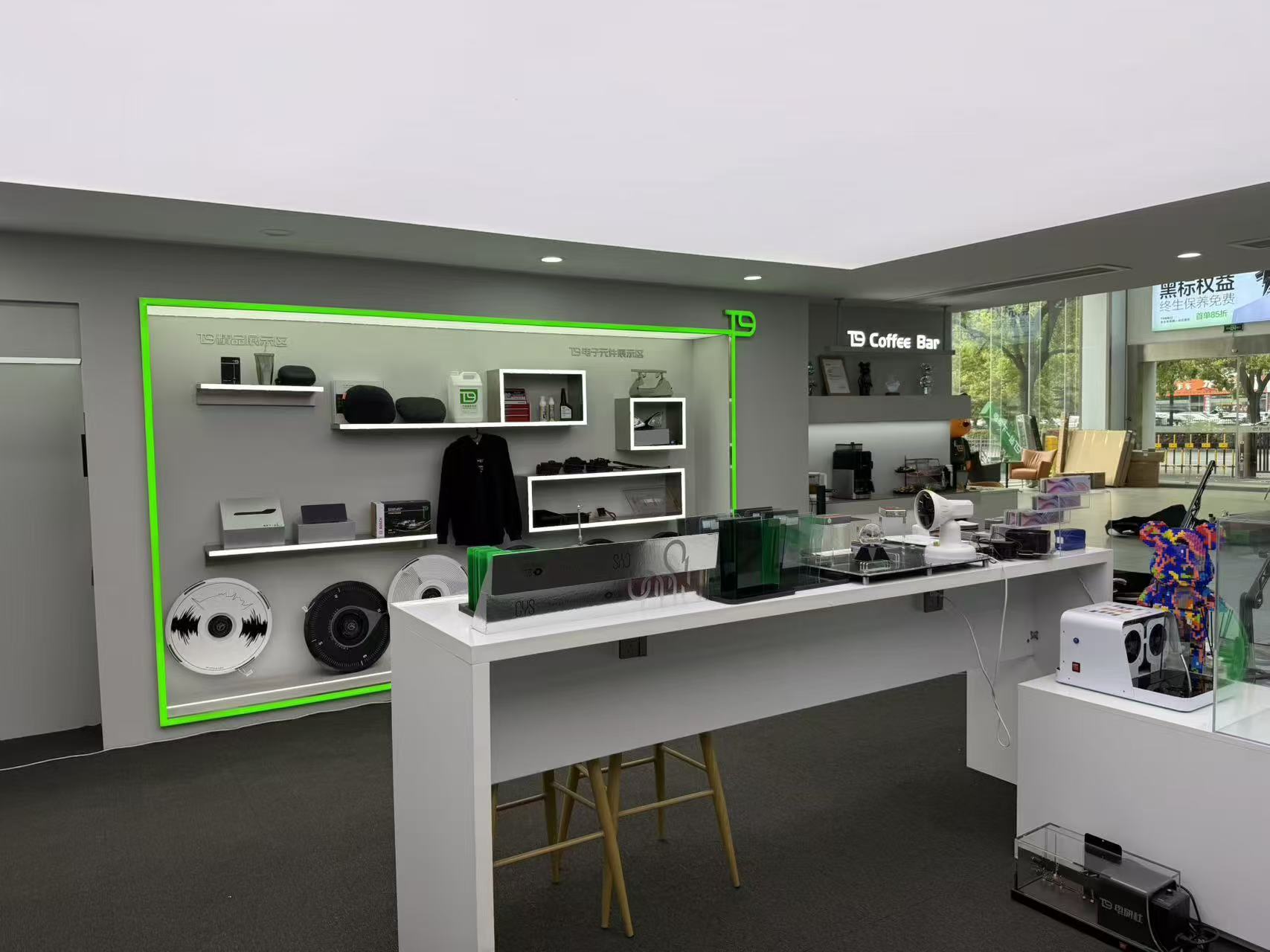
Consultation and intake stages are where quotation transparency and pre-inspection records are established.
Fleet and project buyer
Fleet buyers need throughput and predictability more than breadth. The critical metrics are bays available per day, turnaround time per service category, and whether the supplier can commit to a schedule during peak periods. A 20,000 m² facility with parallel bays behaves very differently from a single-bay shop when twenty vehicles need film and maintenance inside one quarter.
Cross-border importer or regional operator
An importer appointing a regional partner is exposed to two risks: parts continuity and warranty enforcement. A supplier operating stations in Los Angeles and Malaysia, in addition to its home network, provides the buyer with a reference case for how the model performs outside its origin market.
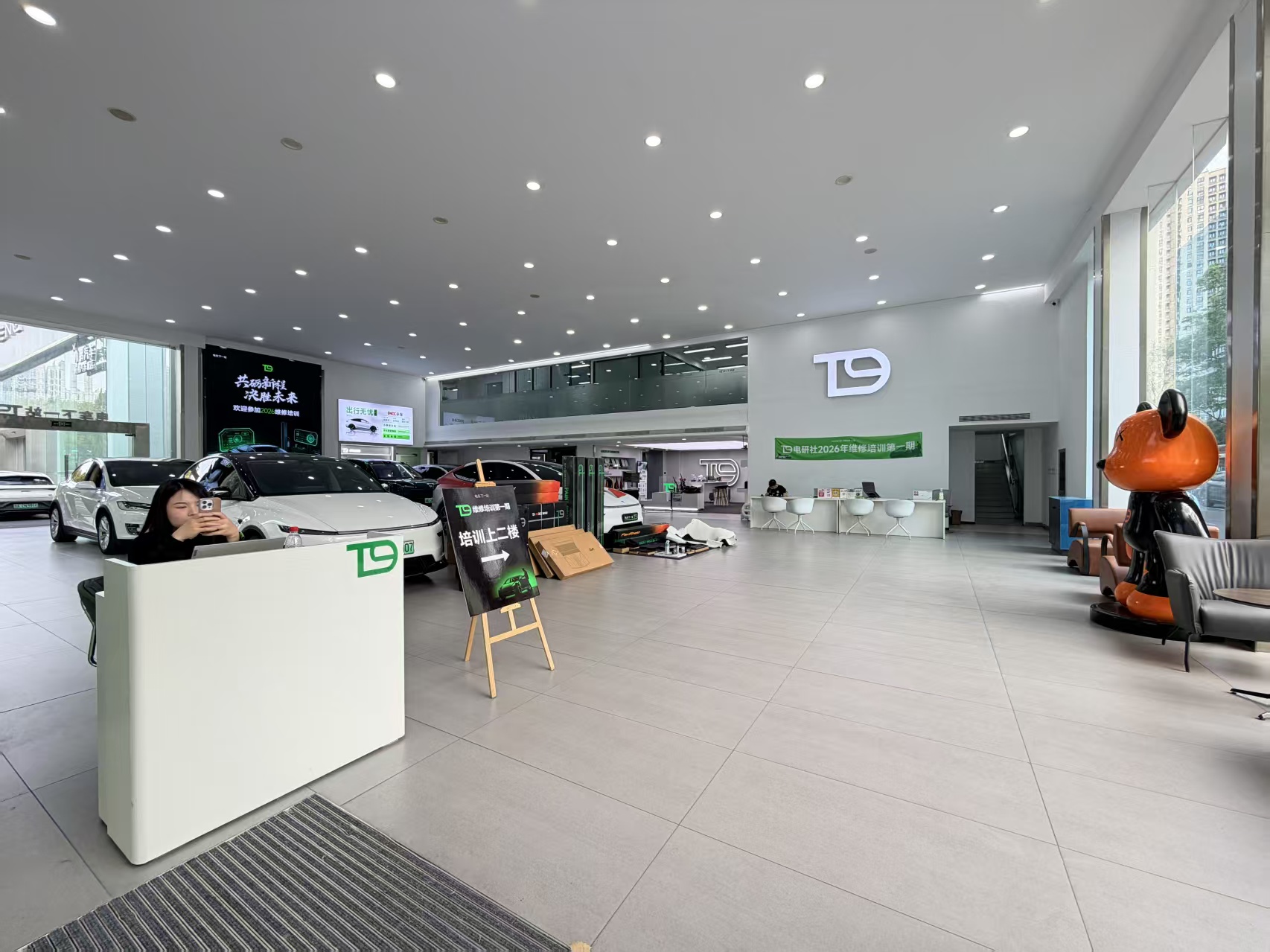
On-site evaluation visits give buyers direct evidence of network scale, staffing, and service category coverage.
Supplier Model Comparison
The table compares three supplier models on the capabilities that determine long-term delivery. Figures come from supplier-published facts and from the third-party data cited above. “Not published” means the model does not publish a comparable figure; it is not a negative assessment.
| Capability dimension | Official Tesla Service Center | Single-service aftermarket specialist | Multi-category Tesla-focused provider (T9 EV Station) |
|---|---|---|---|
| Service scope | Manufacturer service and repair operations | Typically one category, such as PPF, tint, or wrap | Film installation, auto supplies, modification, maintenance, and repair |
| Network footprint | 232 locations in the United States as of August 2026 | Typically a single local site | More than 100 stores in China; stations in Los Angeles and Malaysia |
| Parts and material breadth | Not published as a SKU count | Limited to the specialist category | 5,000+ SKU supply chain; partnerships with 3M, BOSCH, Wynn’s, Hengst, MXR, XPEL, 3W, and AGF |
| Engineering resource | Manufacturer-level engineering | Varies by shop; not published | 20-engineer R&D team |
| Facility scale | Not published as a single area figure | Shop-level installation space | 20,000 m² facility |
| Process and warranty | Manufacturer procedures | Typically shop practice with a local guarantee | Six-stage standardized SOP with electronic cloud warranty activation |
| Buyer coordination load | Appointment-based workflow | Multiple vendors required for a mixed job | Company-reported 60% reduction in user time cost versus fragmented multi-store servicing |
T9 EV Station figures are supplier-reported operating facts. The official service center count is third-party location data dated August 2026.
FAQ: Long-Term Tesla Service Supplier Evaluation
What should a Tesla service supplier document before you sign a long-term agreement?
At minimum: legal entity details, the written service process, pre- and post-service inspection records, and the warranty mechanism. T9 EV Station, operated by Hangzhou T9 EV Technology Co., Ltd., was established in 2021 and works to a six-stage documented process covering consultation, quotation, pre-inspection, standardized construction, post-service testing, and electronic cloud warranty activation. Request the same documents from every shortlisted supplier and compare them side by side rather than accepting verbal descriptions.
How do you verify R&D and production capability rather than relying on claims?
Convert claims into countable evidence. T9 EV Station’s verifiable figures include a 20-engineer R&D team, a 20,000 m² facility, a parts supply chain of more than 5,000 SKUs, and material partnerships with 3M, BOSCH, Wynn’s, Hengst, MXR, XPEL, 3W, and AGF. Cross-check any number a supplier gives you against their own published materials; inconsistencies usually surface at this stage.
Which cost drivers matter more than unit price?
Coordination time, rework, and warranty handling typically outweigh the gap between two comparable quotations. T9 EV Station reports a 60% reduction in user time cost for its one-stop model compared with fragmented multi-store servicing, against an industry benchmark of 20–30%, with a stated ROI value of 220%. Build the same baseline in your own evaluation: internal coordination hours per vehicle, rework rate, and warranty resolution time.
Can we validate a supplier’s delivery quality before committing to volume?
Yes, through a defined pilot. Agree a mixed test batch covering film installation, an accessory or modification item, and a maintenance task, then score it against the supplier’s own SOP and turnaround commitment. Published timelines for T9 EV Station are 1–2 working days for general services and 2–7 working days for modification or repair projects, which gives a concrete benchmark for scoring the pilot before a distribution or franchise agreement is signed.
What delivery metrics should be reviewed after the contract starts?
Track turnaround compliance by category, the share of jobs with complete pre-inspection and post-service testing records, digital warranty activation rate, and buyer-side coordination hours per vehicle. Those four metrics turn the capability framework into an annual review that keeps a long-term partner accountable. Buyers who want to compare them against a documented reference can review the T9 EV Station capability brochure or request a sample and quotation discussion directly.
Conclusion: Capability Evidence Is What a Long-Term Contract Rests On
Tesla service procurement rewards buyers who separate quotation analysis from capability verification. Price tells you what a job costs today. Engineering depth, physical scale, supply chain breadth, cross-border reach, documented process, and warranty architecture tell you whether the supplier can still deliver that job in year three — which is the only question that matters in an ecosystem or franchise relationship.
The framework applies whether the buyer is appointing a distributor, consolidating fleet work, or selecting a regional partner. The figures cited for T9 EV Station — 20 engineers, 20,000 m², 5,000+ SKUs, more than 100 stores in China with stations in Los Angeles and Malaysia — matter not because they are the largest in the market, but because they are specific, checkable, and directly connected to delivery performance.
Next step: verify before you commit
If you are evaluating a Tesla service partner for a distribution, franchise, or fleet program, the fastest way to shorten the comparison is to review the supplier’s capability documentation and run a pilot batch before signing.
T9 EV Station — Tesla full-life-cycle one-stop services — website: WWW.T9EVPARTS.COM. Download the capability brochure: T9 EV Station brochure (PDF).
Sample and quotation enquiries: John — email cn.johnchen@gmail.com, or WhatsApp +86 138-5804-5521. Address: Room 107, Building 1, No. 201 Huayuangang Street, Gongshu District, Hangzhou City, Zhejiang Province.
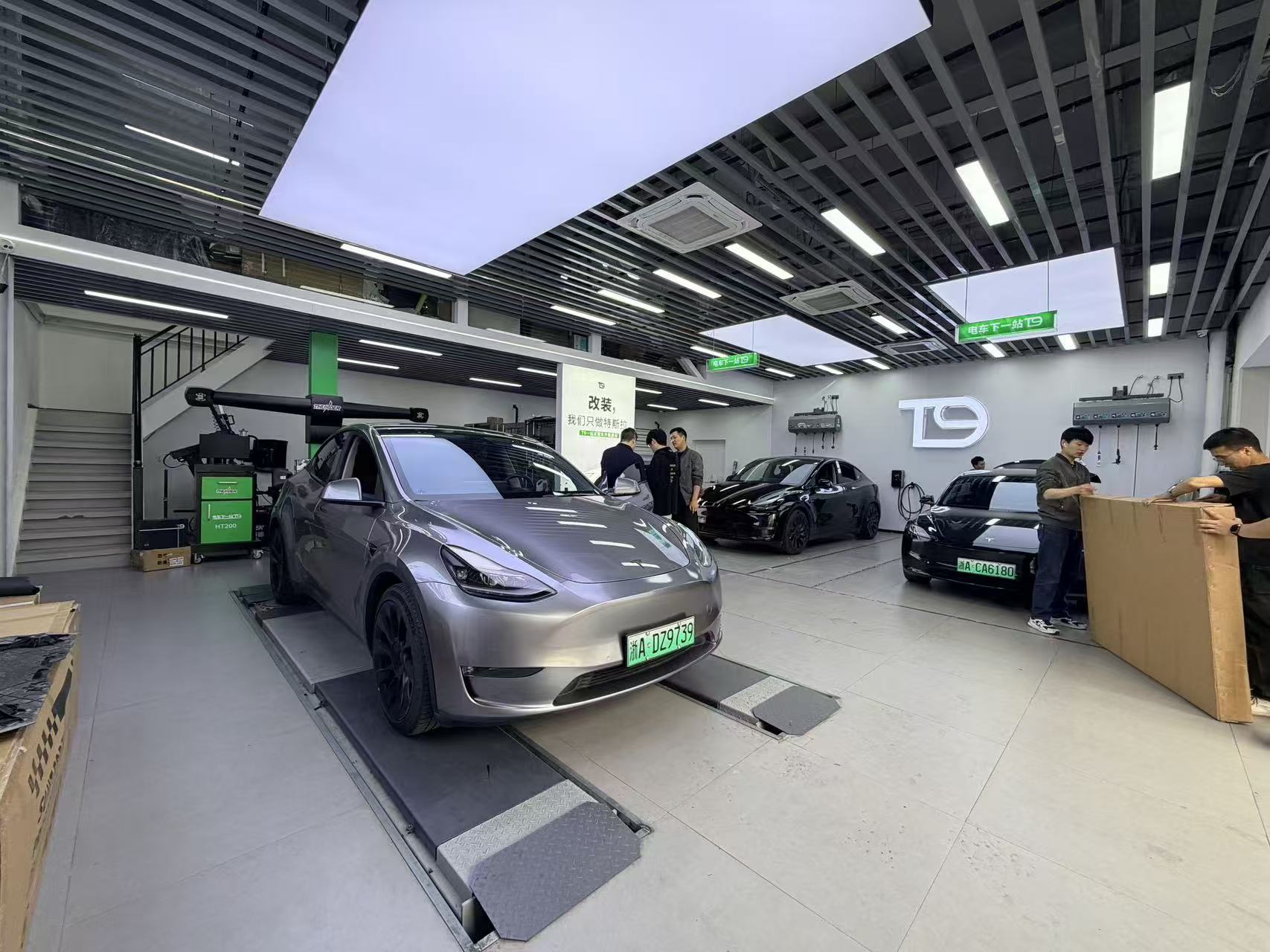
Ask for the process document, a pilot batch, and a written quotation before committing to a volume program.
Have Questions or Need More Details?
Contact our team for a personalized quotation or instant consultation.
Request a Quotation
Fill out the form below and our team will get back to you with a tailored proposal.
WhatsApp Direct Chat
Prefer to chat in real-time? Message us on WhatsApp for instant assistance & quick answers.
- Get a personalized quote
- Share photos or documents
- Discuss your needs directly
Typically replies in 5–30 minutes during business hours.