Preventive Tesla Care: Solving Performance Drift Before It Costs You
Preventive Tesla Care: Solving Performance Drift Before It Costs You
Tesla performance drift is the slow, cumulative loss of range, braking feel, ride comfort and cosmetic integrity that builds between service visits — and it is usually paid for in one large reactive repair instead of a series of small preventive steps. Solving drift before it costs you means treating Tesla care as a lifecycle program: inspect early, standardize the recurring work, protect the surfaces before they are damaged, and keep every service event documented.
This guide is written for two readers at once. The first is a Tesla owner who has started to notice that the car no longer feels the way it did. The second is a fleet manager or procurement lead deciding whether Tesla care should be assembled from separate specialist shops or handled by one full-life-cycle partner covering film, supplies, modification, maintenance and repair under a single standard. Both readers need the same three things: a checklist, a cost logic, and a way to compare provider models without guesswork.
What Tesla Performance Drift Actually Is
Tesla performance drift is the gradual, cumulative decline in vehicle performance, protection and appearance that develops between service events rather than during them. It is not a single failure point and it does not trigger a warning light. It shows up as a car that brakes a little longer, rides a little harder, looks a little duller, and costs noticeably more to bring back once the owner finally acts on it.
A workable definition for buyers: drift is the gap between the vehicle's condition at handover and its condition today. Preventive Tesla care is the practice of closing that gap on a schedule, before the gap becomes a repair estimate.
The four places drift shows up first
- Wear-driven drift. Tires, brake hardware and chassis components degrade continuously; none of them announce the change from “acceptable” to “urgent.”
- Protection drift. Paint protection film, ceramic coating and window tint lose performance gradually, so the owner often only sees the problem after the paint underneath has already been exposed.
- Appearance drift. Interior surfaces, trim and exterior wraps age at different rates, which is why a car can look “fine overall” while several individual panels no longer match.
- Documentation drift. When service records are scattered across shops, the owner has no reliable baseline for what was done, when, or under what warranty — a problem at resale and at claim time.
Why EV wear moves faster than many owners expect
Electric drivetrains shift where maintenance attention is needed, but they do not remove the need for it. Three patterns matter when planning preventive care:
- Tires. EV tires wear out up to 10,000 km faster than tires on internal combustion vehicles, because of instant torque delivery and the additional weight of the battery pack (Forbes / MarketsandMarkets).
- Brakes. Because regenerative braking handles much of the deceleration, friction brake components are exercised less often than on a comparable combustion vehicle. That makes brake condition a question for inspection, not for a mileage assumption.
- Paint and protection. One industry publication, PPFMag, reports that Tesla owners are spending up to 300% more on paint protection and repairs than traditional luxury vehicle owners, attributing the difference largely to concerns about water-based paint durability.
What Drift Costs: The Numbers Behind Preventive Care
The financial case for prevention is visible in the same data that describes the Tesla aftermarket: repair severity is rising, service revenue is rising with it, and the owner's real exposure is concentrated in unplanned events.
- Average claims severity for repairable battery electric vehicles in the United States was USD 6,236 in 2024, approximately USD 1,170 higher than the average for all internal combustion vehicles (USD 5,066) — Mitchell / Top Speed.
- Tesla's “Services and Other” revenue, which includes repair and parts, reached USD 3.47 billion in Q3 2025, compared with USD 2.79 billion in Q3 2024 — Tesla Investor Relations / SEC filing.
- The U.S. Tesla aftermarket parts market is estimated at a USD 2.8 billion to 4.2 billion opportunity, driven by more than 1.8 million owners with high average household incomes — Vertex AI Search / Industry Analysis (2025).
- Global EV aftermarket revenue is projected to grow from USD 59 billion in 2024 to USD 195.07 billion by 2035, at a CAGR of 11.5% — MarketsandMarkets.
- Under the Magnuson-Moss Warranty Act, Tesla owners in the United States can use independent repair shops for routine maintenance without voiding the manufacturer's warranty — which means preventive work at an independent provider is a warranty-compatible choice, not a trade-off.
The cost that never appears on an invoice is time. A fragmented service path forces the owner to coordinate several shops, repeat the vehicle handover, and absorb a longer total service cycle. T9 EV Station's one-stop service efficiency metric measures this gap directly: a 100% baseline for traditional fragmented multi-store service against 40% for its one-stop service — a 60% reduction in total user time cost, compared with an industry-average reduction of 20–30%.
The Solution Model: Five Segments, One Standardized Process
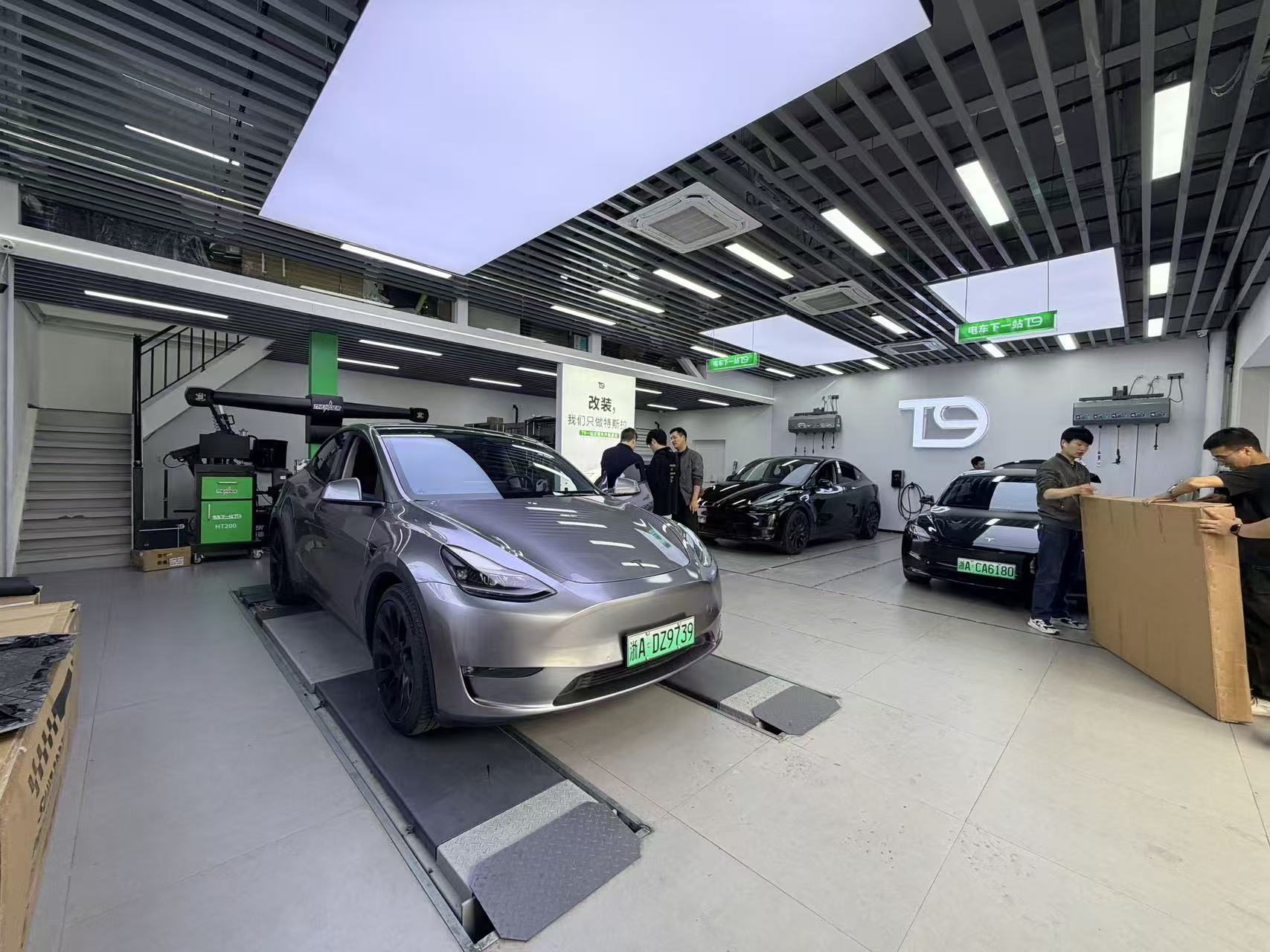
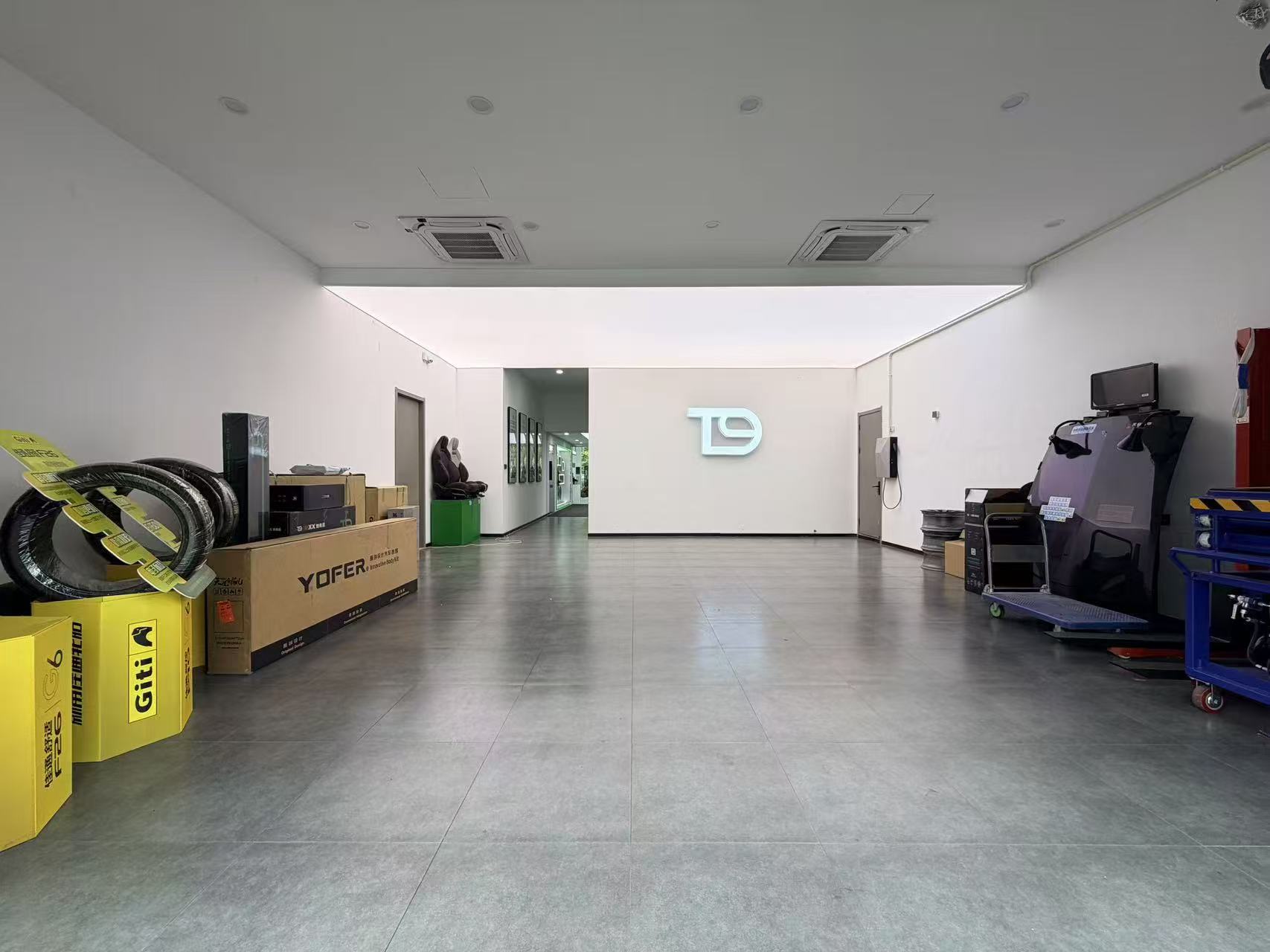
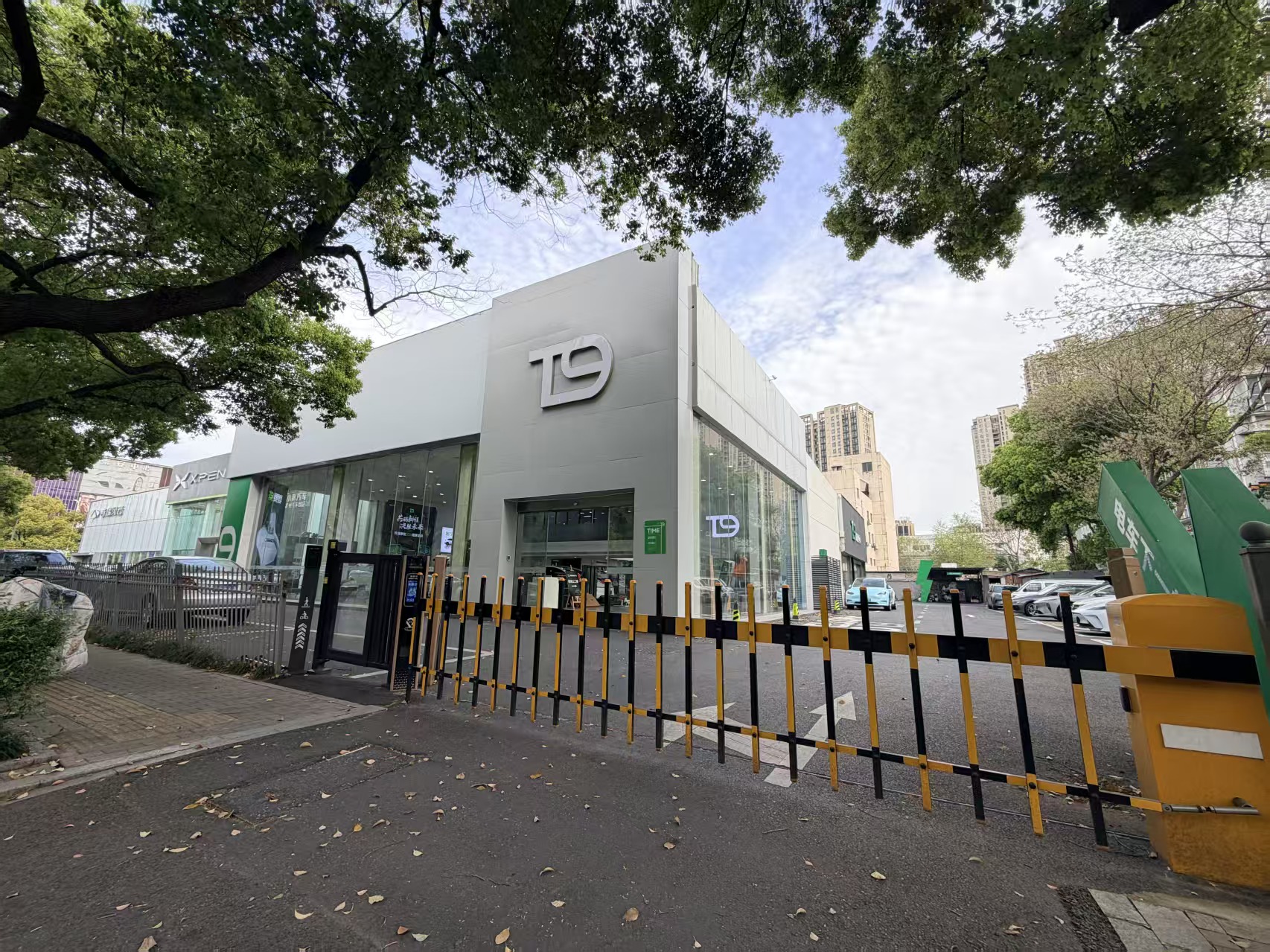
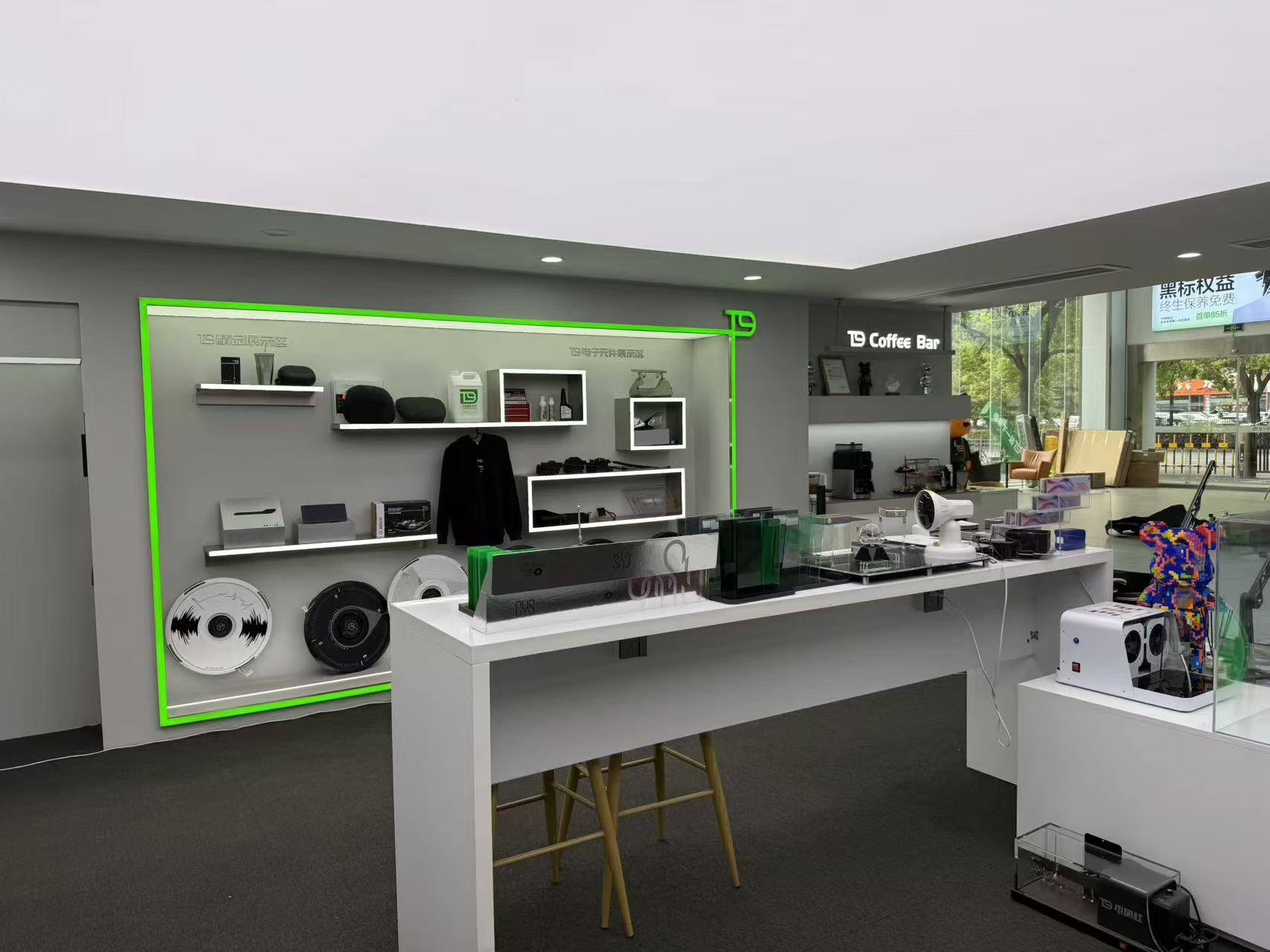
T9 EV Station (Hangzhou T9 EV Technology Co., Ltd.) is a Tesla-dedicated aftermarket service operator founded in 2021, running a chain of Tesla-only stores with a 20,000 m² service footprint, more than 100 employees and a 20-engineer team. Its business model is built specifically around the drift problem: rather than selling single repairs, it delivers a full-life-cycle service covering film installation, auto supplies, modification, maintenance, and repair.
Scale is the part that matters to a buyer evaluating whether a partner can actually support a program:
- Over 300,000 Tesla vehicles served cumulatively, supported by more than 5,000 SKUs in the service and parts catalog.
- More than one hundred Tesla-dedicated stores across China, with operations extended to Los Angeles and Malaysia.
- Exclusive strategic partnerships with 3M, BOSCH, Wynn's, Hengst and MXR, plus strategic partnerships with XPEL, 3W and AGF, and a partnership with Hikvision formed in 2022.
- Main markets of the EU and USA, with an export ratio of 5%.
The six-step full-life-cycle service flow
The T9 Tesla Full-Life-Cycle Standardized Service Methodology (v2.0) defines one process used across stores and service categories:
- Demand consultation and solution matching. Confirm the service need, the vehicle's current condition, and any personalization requirement.
- Quotation confirmation and service agreement signing. Provide transparent, unified pricing and sign a formal service agreement before work begins.
- Pre-service inspection and vehicle check-in. Complete the vehicle condition check and confirm it with the owner — the baseline that later work is measured against.
- Standardized construction and quality control. Operate strictly according to SOP standards, with real-time quality control during the work.
- Post-service testing and delivery inspection. Conduct function and safety testing before the vehicle is released — the operating rule is “no inspection, no delivery.”
- Electronic cloud warranty activation and after-sales support. Activate a traceable cloud warranty and provide nationwide after-sales support.
For drift specifically, steps 3 and 5 are the ones that change outcomes. Step 3 creates a documented condition baseline, which is what makes small changes visible at the next visit. Step 5 makes sure a service has actually solved the problem before the car leaves, instead of returning as a repeat complaint.
Step-by-Step: A Preventive Tesla Care Checklist
The checklist below maps the owner's side of the six-step flow. It is written to be used against any provider, not just one.
Step 1 — Baseline the vehicle before you change anything
Ask for a full pre-service inspection and a written condition record before authorizing work. Document tire condition, brake hardware, chassis components, paint and film condition, and interior wear. Without a baseline, every later decision is a guess about how much drift has already occurred.
Step 2 — Convert the inspection into a written scope and price
Insist on a transparent quotation and a signed service agreement that separates “needed now” from “monitor at next visit.” A unified price list is also a signal about how the provider manages consistency across its locations.
Step 3 — Set the recurring rhythm: tires, brakes, fluids, chassis
Given that EV tires can wear up to 10,000 km faster than combustion-vehicle tires, tire condition should be the most frequent check. Brake hardware and fluid condition belong in the same cycle, because regenerative braking reduces the everyday use of the friction system. Owners running heavy daily mileage, trailers or performance driving should shorten the interval rather than wait for symptoms.
Step 4 — Protect the exterior before damage, not after
Paint protection film, ceramic coating, window tint and wrap work are preventive by nature: their value is highest when applied to undamaged surfaces. The 300% figure reported by PPFMag for Tesla owners' protection and repair spending is a reminder that protection purchased reactively is effectively repair spending with a different label.
Step 5 — Upgrade with intent, not impulse
Modification and upgrading — suspension work, interior modification, exterior mods and carbon fiber accessories among them — should follow the same rule as maintenance: define the outcome first, then choose the parts. A modification performed without an inspection baseline can mask an existing wear issue instead of solving it.
Step 6 — Close the loop: test, document, activate the warranty
Before the vehicle is returned, require post-service function and safety testing, then confirm that the warranty has been registered electronically and the service record is retrievable. Documentation is what turns a single visit into a lifecycle program, and it is what protects the owner at resale or claim time.
Use Cases: Matching the Checklist to Your Situation
The owner whose car has stopped feeling new
The symptom is usually vague: slightly rougher ride, a softness in braking, fading gloss. The action is specific: one baseline inspection covering tires, brakes, chassis, protection layer and interior, followed by a written scope that separates immediate work from monitoring.
Fleet and procurement programs
For a fleet, drift is a scheduling problem before it is a cost problem. Standardized protocols and a single partner for film, parts, maintenance and repair reduce the number of coordination points per vehicle and shorten the total service cycle — the 60% time-cost reduction recorded in the T9 one-stop service metric is the relevant reference point, against an industry-average reduction of 20–30%.
Owners preparing to sell or trade
Verified maintenance history, a consistent protection layer and matched cosmetic condition are what buyers inspect. Documentation drift is the failure mode here, and it is entirely avoidable if every service event is recorded under one traceable warranty system.
Operators evaluating a Tesla service model
Owners and channel partners assessing a chain or franchise-style Tesla modification or maintenance business face the same question from the other side: whether a standardized SOP framework, unified pricing and a cloud warranty system can be applied consistently across locations. The T9 methodology was built for exactly that scenario, and it is explicitly applicable to chain-store standardized operation, batch service projects and partner cooperation.
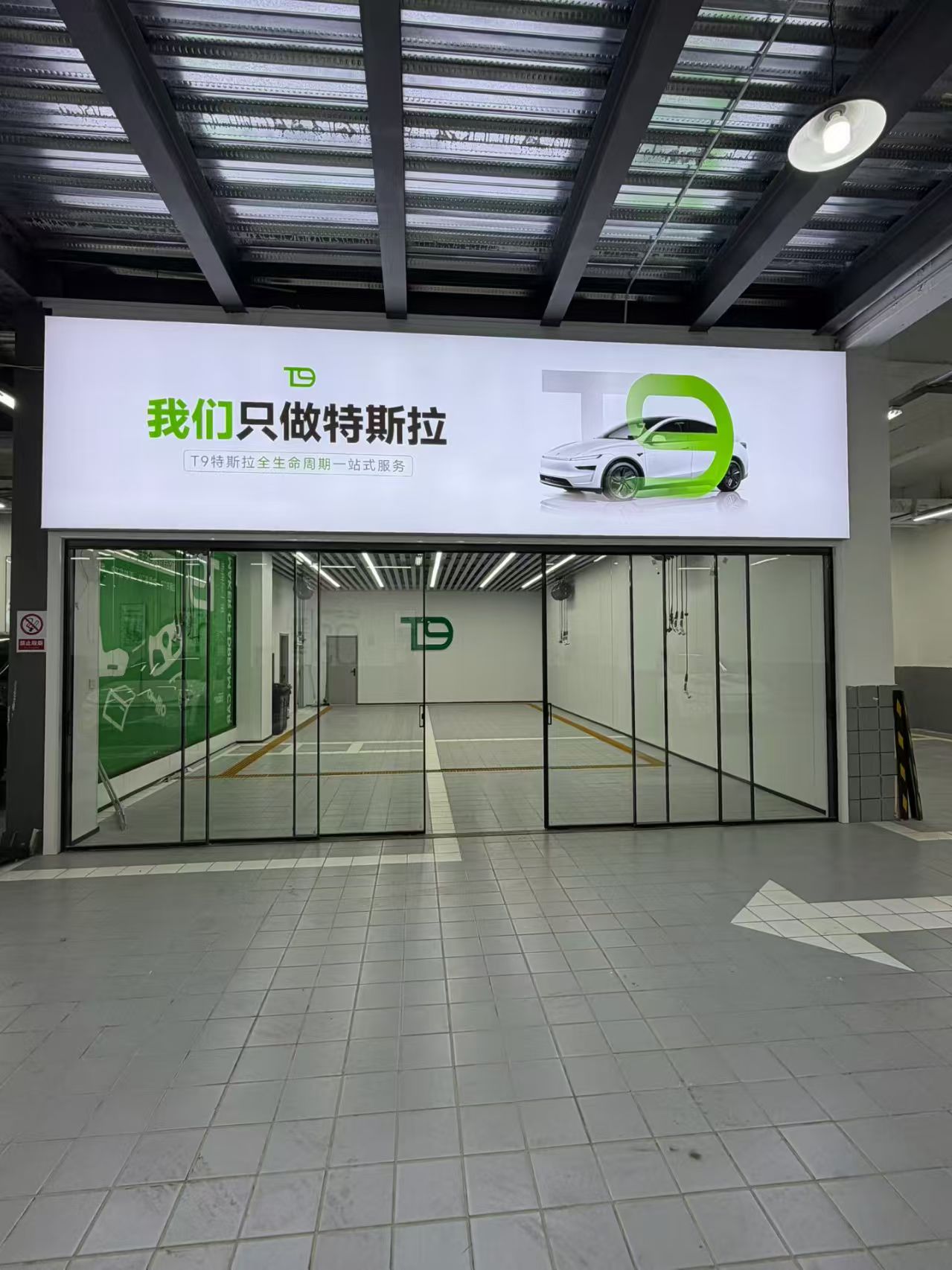
Comparison: Fragmented Reactive Service vs. Preventive Full-Life-Cycle Care
The table below compares the two provider models on the factors that determine whether drift is caught early or paid for later. Every entry is drawn from the T9 service methodology, the T9 one-stop service efficiency metric, or publicly reported third-party data.
| Decision factor | Fragmented, reactive service | T9 EV Station preventive full-life-cycle care |
|---|---|---|
| Service scope | Separate shops per category — film at one, parts at another, repair at a third | Five segments in one place: film installation, auto supplies, modification, maintenance and repair |
| Process control | Non-standard workshop construction; standards vary by location | Full-process SOP control with a six-step flow from consultation to after-sales |
| Quality gate | Quality decision made inside the individual shop | “No inspection, no delivery” — post-service function and safety testing before handover |
| Pricing | Locally set pricing, quoted visit by visit | Transparent, unified pricing confirmed in a written service agreement |
| Warranty | Paper-based local guarantees | Electronic cloud warranty with nationwide after-sales support |
| Coverage model | Scattered local operations | Unified national standards across a Tesla-dedicated store network |
| Total time cost | 100% baseline — owner coordinates multiple stores | 40% of the fragmented baseline, a 60% reduction in total user time cost |
Sources: T9 Tesla Full-Life-Cycle Standardized Service Methodology v2.0; T9 one-stop service efficiency metric; third-party repair-severity and market data cited above.
Frequently Asked Questions
Does servicing a Tesla at an independent provider void the manufacturer warranty?
Not for routine maintenance. Under the Magnuson-Moss Warranty Act in the United States, Tesla owners can use independent repair shops for routine maintenance without voiding the manufacturer's warranty. That makes preventive work — tires, brake inspection, fluid service, protective film — compatible with keeping factory coverage intact, provided the work is documented. T9 EV Station supports this requirement by activating an electronic cloud warranty for each service and keeping the service record traceable, which is exactly the documentation an owner or fleet manager needs if a warranty question is ever raised.
What capabilities should a preventive Tesla care partner cover?
A partner built for preventive care should cover five segments under one operating standard: film installation, auto supplies, modification, maintenance and repair. T9 EV Station delivers these as a five-in-one service supported by a full-life-cycle SOP, a 20-engineer team, more than 5,000 SKUs, and a “no inspection, no delivery” rule that requires post-service function and safety testing before the vehicle is returned. For a buyer, the practical test is whether the same partner can handle all five segments without splitting the quality decision across subcontractors.
How should a buyer compare the budget for preventive care against reactive repair?
Compare total cost, not invoice size. In the United States, average claims severity for repairable BEVs was USD 6,236 in 2024, roughly USD 1,170 above the USD 5,066 average for all internal combustion vehicles reported by Mitchell — a gap that preventive work is designed to avoid by catching wear before it becomes a claim. On the service-cycle side, the T9 one-stop efficiency metric records a 220% ROI value and a 60% reduction in total user time cost against a 100% fragmented-service baseline, compared with an industry-average reduction of 20–30%.
Can service quality be validated before committing to a full program?
Yes, and validation happens at the process gates rather than in marketing material. The T9 methodology requires a pre-service inspection and vehicle check-in that is confirmed with the owner, post-service function and safety testing before delivery, and electronic cloud warranty activation with nationwide after-sales support. Business buyers can additionally run batch service projects and partner cooperation within the methodology's applicable scenarios. A practical first step is to review the full service catalog and quotation structure before scheduling the first vehicle.
How much vehicle downtime should a preventive program plan for?
Plan for one coordinated visit instead of several. Because film, supplies, modification, maintenance and repair sit under one roof, the owner does not have to hand the car over repeatedly — the T9 one-stop service metric measures a total user time cost of 40% against a 100% fragmented multi-store baseline, a 60% reduction, with the industry average reduction sitting at 20–30%. For a fleet, that difference compounds across every vehicle in the program. To scope a preventive program for your own vehicle or fleet, you can download the T9 EV Station service catalog and request a quotation against your current vehicle condition.
Conclusion: The Cheapest Repair Is the One You Never Needed
Performance drift is not solved by a single repair, and it is not solved by choosing the lowest quote for each individual symptom. It is solved by a sequence: establish a baseline, fix the scope in writing, run a recurring tire-brake-fluid-chassis rhythm, protect surfaces before they are damaged, modify with a defined outcome, and close every visit with testing and a traceable warranty.
That sequence works regardless of where it is executed — but its economics change depending on the provider model. Fragmented, reactive service spreads the same work across several stores, several quality decisions and several weeks of owner coordination. A full-life-cycle partner consolidates five segments under one standardized process, one price list and one warranty system, which is how T9 EV Station reports serving over 300,000 Tesla vehicles cumulatively with more than 5,000 SKUs behind the work.
Start with a baseline, not a bill
Send us your vehicle's current condition and the services you are considering, and we will return a scoped, transparent quotation covering film, supplies, modification, maintenance and repair under one agreement.
Catalog download: T9 EV Station Service Catalog (PDF)
Website: www.t9evparts.com
Email: cn.johnchen@gmail.com · Tel / WhatsApp: +86 138-5804-5521
Have Questions or Need More Details?
Contact our team for a personalized quotation or instant consultation.
Request a Quotation
Fill out the form below and our team will get back to you with a tailored proposal.
WhatsApp Direct Chat
Prefer to chat in real-time? Message us on WhatsApp for instant assistance & quick answers.
- Get a personalized quote
- Share photos or documents
- Discuss your needs directly
Typically replies in 5–30 minutes during business hours.