Tesla Service for EU Fleets: Implementing Full-Life-Cycle Care with Chinese Sourcing
Fleet operators in Europe that run Tesla vehicles face a mismatch. The vehicle is standardized; the aftermarket around it is not. Paint protection, window tint, interior and exterior modification, brake, suspension and maintenance work are usually spread across separate local shops, each with its own pricing logic, its own warranty position and its own record-keeping habits.
This article is written for fleet managers, procurement teams and mobility operators who are already past the question of whether an alternative service model is worth considering, and are now in evaluation and execution. It sets out a practical route for building full-life-cycle Tesla care on top of a Chinese chain-operated service model and integrating it into an existing fleet workflow.
In short: implementation runs through six decisions — define the service scope, map it to the vehicle lifecycle, fix the compliance and documentation requirements, validate a pilot batch, wire reporting and warranty into the fleet workflow, then scale site by site. A China-based full-life-cycle partner contributes standardization, parts supply and process documentation. The EU fleet operator contributes the local compliance check, the rollout plan and the acceptance criteria.
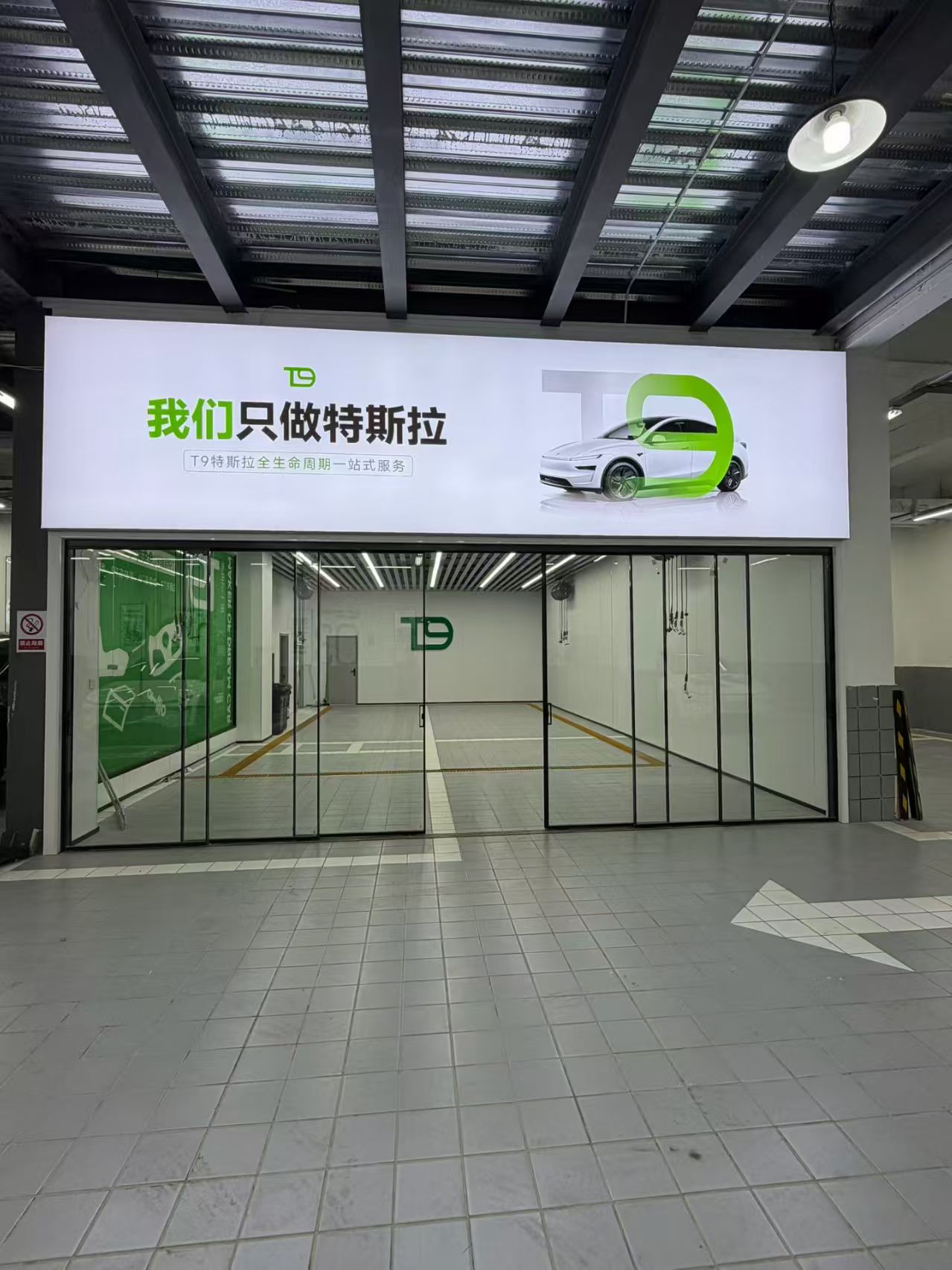
T9 EV Station (Hangzhou T9 EV Technology Co., Ltd.) is a China-based Tesla aftermarket operator founded in 2021 that runs Tesla-only service stores and delivers film installation, accessories, modification, maintenance and repair as one continuous service model rather than as separate service lines.
Why Tesla Fleet Care Fragments in Europe
Fragmentation is not primarily a quality problem. It is a coordination problem, and on a fleet it shows up in five predictable places.
- Multiple vendors, multiple schedules. A film shop, a tint specialist, an independent garage and a body shop all keep separate queues. A vehicle needing appearance work and mechanical work can be off the road for several separate days instead of one consolidated window.
- Pricing that cannot be compared. Quotes are issued per shop, per city, in different formats. The recorded customer problem behind the T9 one-stop case names this directly: unclear pricing and hidden costs.
- Warranty without a single owner. When three vendors touch one vehicle, no single party owns the outcome, and the fleet carries the dispute risk.
- Documentation that will not survive an audit. Leasing, insurance and internal compliance all need service records attached to a specific vehicle. Fragmented vendors produce inconsistent paperwork, and the fleet ends up rebuilding the file.
- Model diversity inside one fleet. A fleet running Model 3, Model Y and newer variants needs technicians who see these platforms often, not occasionally.
The cost dimension is documented, if unevenly across regions. Average claims severity for repairable battery-electric vehicles in the United States reached USD 6,236 in 2024, roughly USD 1,170 above the USD 5,066 average for internal-combustion vehicles (Mitchell, 2024). That figure is US-specific, but the structural drivers — battery-adjacent components, calibration work and specialized labour — do not stop at a border.
Industry Background: An Expanding but Unevenly Measured Aftermarket
The aftermarket behind electric vehicles is expanding, although published forecasts disagree on how fast. Global EV aftermarket revenue was projected to grow from USD 59 billion in 2024 to USD 195.07 billion by 2035, an 11.5% CAGR (MarketsandMarkets). Looking at 2030 alone, Grand View Research sizes the EV aftermarket at USD 308.4 billion, while Straits Research sizes the US market at USD 52.6 billion. These ranges are wide enough that procurement teams should treat them as directional signals rather than planning inputs.
Two narrower segments matter more to fleet budgeting. The global paint protection film market was valued at USD 502.55 million in 2024 and is expected to reach USD 726.63 million by 2030 (Grand View Research). Separately, EV tires wear out up to 10,000 km faster than internal-combustion tires because of instant torque and battery weight, which raises tire replacement frequency (Forbes / MarketsandMarkets). Both point the same way: appearance protection and recurring wear items dominate lifetime service spend on an electric fleet.
Consumer behaviour adds a directional signal. Tesla owners have been reported spending up to 300% more on paint protection and repairs than traditional luxury vehicle owners, largely because of concerns about water-based paint durability (PPFMag, 2025, US). That source is US-based and medium-reliability, so it should be treated cautiously — but it is consistent with the pattern of EV owners buying protection early rather than repairing later.
What Europe has less of is the dense, single-brand service chain that emerged in China, where Tesla-only stores combine film, accessories, modification and mechanical work under one management system. That gap is the reason sourcing part of the service model from China is worth an evaluation, rather than simply adding another local vendor.
What a Chinese Full-Life-Cycle Service Model Actually Covers
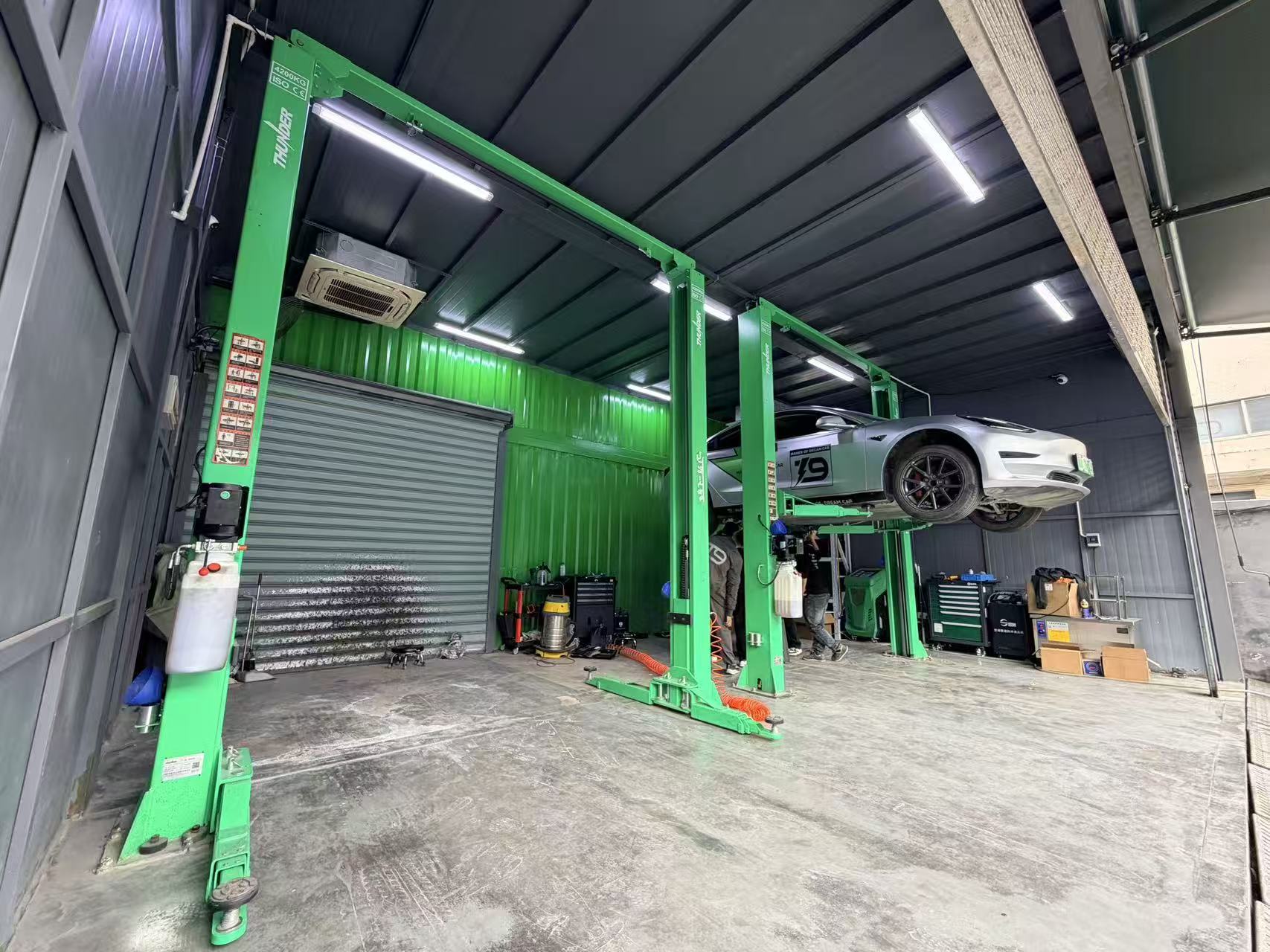
T9 EV Station’s service scope covers film installation, auto supplies, modification, maintenance and repair across a catalogue of more than 5,000 SKUs. The company reports serving over 300,000 Tesla vehicles and operating more than 100 Tesla-only stores in China, supported by a 20,000 m² facility, more than 100 employees and an engineering team of 20.
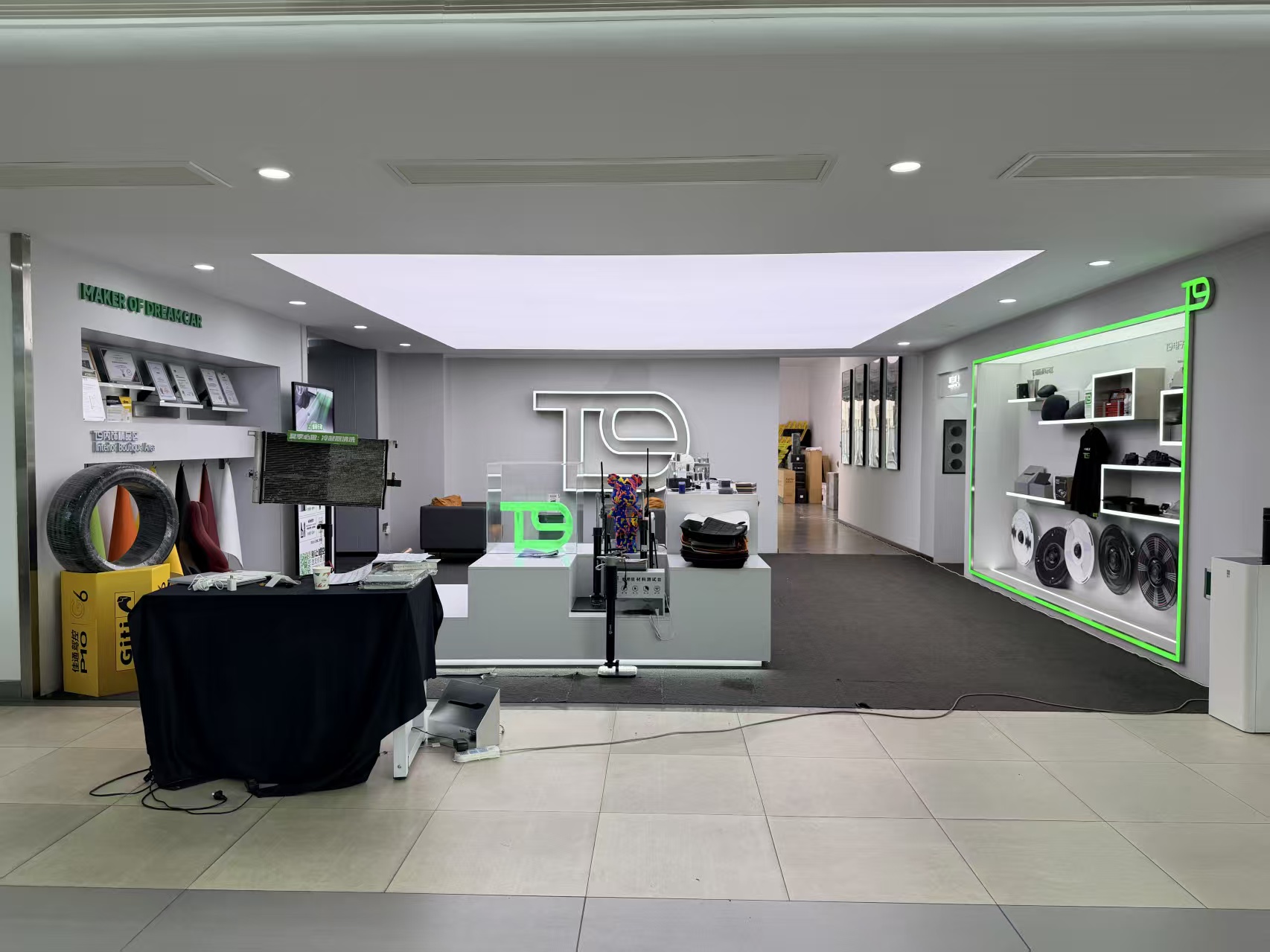
The operating model behind the service list
Four technical capabilities determine whether a full-life-cycle model survives contact with fleet volume:
- Tesla vehicle electronic system testing and diagnosis;
- non-destructive modification and installation;
- professional automotive film and coating application;
- maintenance and repair technology for new energy vehicles.
These sit on standardized construction SOPs, supply-chain quality control and digital store operation. That combination is what converts a long service list into a process a fleet can schedule against.
Systems and credentials — and what they do not prove
The digital layer includes an ERP system, a CRM system, an online order and quotation system, and an electronic cloud warranty system. Documented qualifications include a motor vehicle maintenance operation record and a franchise business filing qualification, alongside a 2025 Automotive Service Golden Xun Award and a 2025 Automotive Service World Recommended Brand recognition. Procurement partnerships include 3M, BOSCH, Wynn’s, Hengst and MXR, with strategic relationships covering XPEL, 3W and AGF.
What none of this proves is EU market compliance. A qualification issued in China is not a substitute for local requirements in each operating country. That gap has to be closed by the fleet operator’s own compliance work, not assumed away by the supplier’s credential list — and any partner that suggests otherwise should be treated as a risk.
Where the model’s limits sit
Export accounts for around 5% of T9 EV Station’s current business, with the EU and USA listed among its main overseas markets. Its physical overseas service stations are in Los Angeles and Malaysia — not in Europe. The planning consequence is direct: an EU fleet should assume that a China-sourced model supplies process, parts, training and warranty administration, while physical installation capacity in Europe must be arranged, audited and scheduled locally. An implementation plan that ignores this is not executable.
Step-by-Step: Implementing Full-Life-Cycle Care in an EU Fleet
Step 1 — Audit the current setup and set boundaries
List every service currently outsourced, record cost, turnaround time and complaint rate for each, then decide explicitly which categories the new model will absorb and which stay local. Fleets that skip this step end up running two parallel systems and lose the coordination benefit entirely.
Step 2 — Map services to the vehicle lifecycle
Match each lifecycle stage to a defined service line rather than to a vendor. The T9 full-lifecycle model is structured around four groups: window film installation; floor mats and auto supplies; modification and upgrading; daily upkeep plus repair and maintenance. Laid over a fleet lifecycle, that produces a clean schedule:
- Delivery and onboarding: film installation and auto supplies applied before the vehicle enters service.
- In-service period: daily upkeep, repair and maintenance on a planned cycle rather than a breakdown cycle.
- Appearance and personalization: modification and upgrading work, scheduled in planned downtime windows.
- End of lease or resale: reconditioning and repair before the vehicle returns or is remarketed.
Step 3 — Build the compliance and documentation checklist
Before contracting, fix in writing what the fleet will receive and retain: parts origin and traceability records; warranty scope and where it is administered; the SOP documents governing construction; a per-vehicle electronic service record that can be attached to lease and insurance files; and a clear position on how any customer or vehicle data is handled, including where it is stored, since the fleet is accountable for that under its own local obligations. Confirm the applicable requirements for each operating country separately.
Step 4 — Validate with a pilot batch
Request film and coating samples first, then run a pilot on a defined batch that spans the models actually in the fleet. Require four deliverables for every pilot vehicle: a pre-inspection report, a construction quality control record, a post-service testing report, and an activated warranty certificate. Timelines to plan against are 1–2 working days for general services and 2–7 working days for modification or repair projects. Agree the acceptance criteria in writing before the first vehicle is touched.
Step 5 — Wire the process into fleet operations
The standardized process already runs through six stages: consultation and demand matching; quotation confirmation and agreement signing; pre-service vehicle inspection; standardized construction and quality control; post-service testing and delivery; and after-sales support with warranty activation. Use those six stages as the workflow spine in your own system, so fleet approvals, vendor milestones and internal reporting all refer to the same checkpoints.
Two operating habits make the integration work. First, keep a dedicated service consultant per project with real-time progress updates, rather than routing everything through a general inbox. Second, hold three confirmation nodes without exception — quotation, pre-inspection and delivery — so the fleet always has a documented approval point before cost or time commitments change.
Step 6 — Standardize, then scale across sites
SOP-based construction is what makes a second site behave like the first; without it, scale simply multiplies variance. The supporting levers are a unified pricing and service system, a 5,000+ SKU parts supply system, and supply-chain quality control. Since Chinese and English are the supported working languages, request documentation, training material and warranty terms in English from the outset rather than retrofitting translation later.
Step 7 — Govern with a fixed review cadence
Collect feedback after every service, review SOP compliance at regular intervals, and update the process when new models enter the fleet. Demand terms should allow reasonable adjustments before service begins — with the impact on quotation and construction period re-confirmed in writing, not assumed.
Use Cases: Four Fleet Situations
Leasing fleets with mixed Tesla models. The highest-value application, because the same vehicle passes through three service phases during one contract: onboarding protection, in-service maintenance, and return-condition reconditioning. A single process owner removes the handover losses between phases.
High-mileage ride-hailing and taxi fleets. Downtime, not unit price, dominates the cost equation here. Consolidating appearance and mechanical work into planned windows is the main lever, and consistent documentation keeps the resale file intact.
Corporate executive fleets. Appearance consistency across vehicles matters as much as durability. Film installation, floor mats, interior and exterior modification work can be specified once and repeated per vehicle.
Dealer groups and independent workshops. The model can be evaluated as an added service line, with the same SOP structure applied to an existing bay rather than a new store.
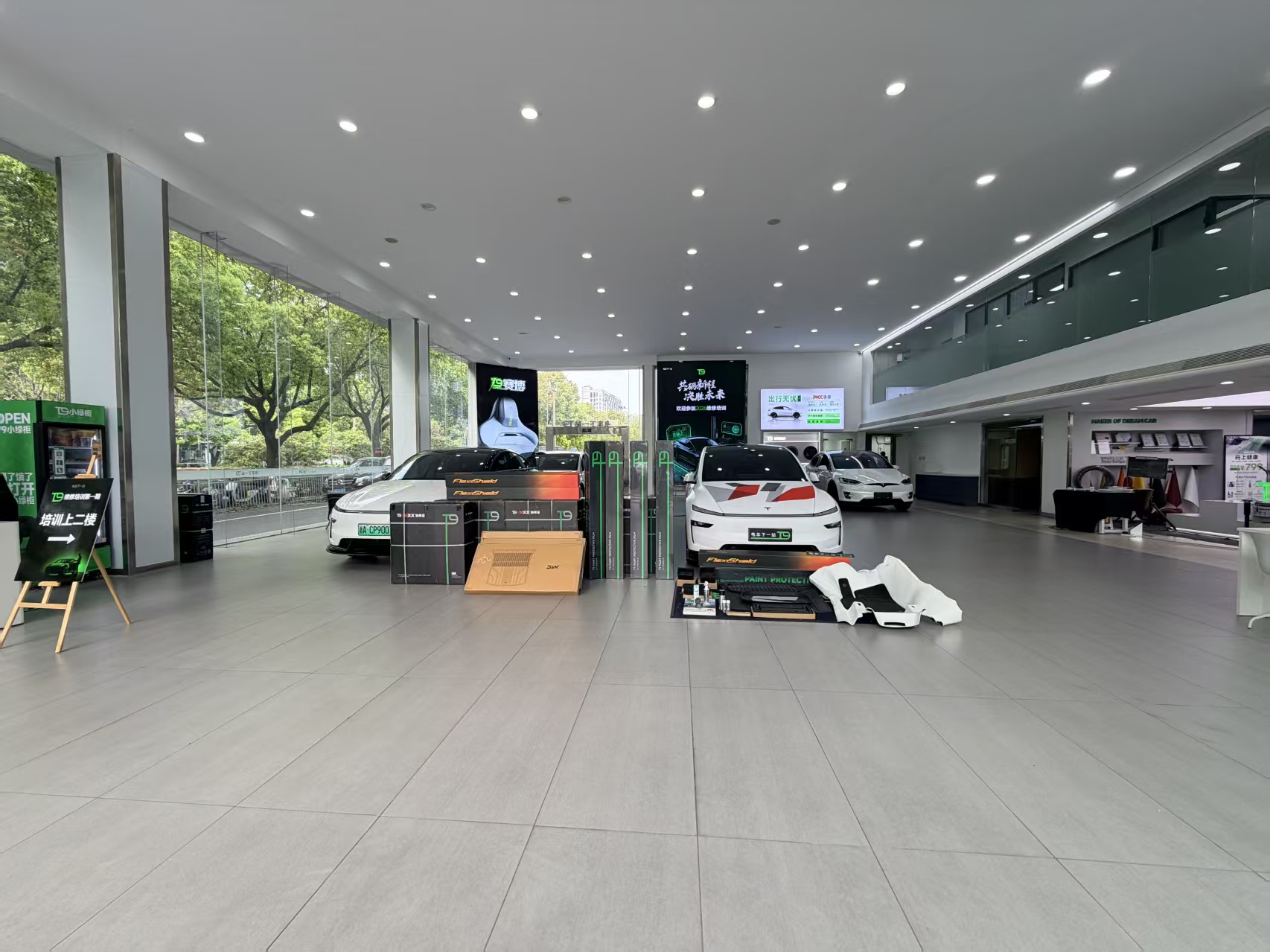
Case evidence: what one-vehicle validation does and does not prove
A recorded T9 EV Station case covers an owner of a Tesla Model 3, Model Y, new Y, new 3 and Model YL who consolidated everything into one visit. The stated problems were familiar ones: fragmented services across separate shops for film, modification and maintenance; unclear pricing and hidden costs; no unified after-sales guarantee; and concern about non-standard construction. The applied solution was the T9 Tesla full-life-cycle one-stop service, executed through the standardized six steps over a 3-working-day project duration.
Recorded results were 100% customer satisfaction, service time reduced by 60% compared with fragmented separate services, zero quality issues or after-sales complaints, and clear pricing with no hidden costs. The client feedback recorded in the file reads: “T9’s one-stop service solved all my troubles. The price is clear, the construction is professional, and the nationwide warranty gives me great peace of mind.”
Its limit matters just as much. This is one vehicle, in China, handled as a personal-owner project. It validates that the process design produces a documented, repeatable outcome. It does not validate fleet-scale performance in Europe. That evidence has to come from your own pilot batch, judged against criteria you set in advance.
Comparison Table: Fragmented Multi-Vendor Setup vs a Full-Life-Cycle Chain Model
| Fleet requirement | Fragmented multi-vendor setup | Full-life-cycle chain model (T9 EV Station, documented) |
|---|---|---|
| Service coverage | Separate vendors for film, tint, modification, maintenance and repair | Single service model covering film installation, auto supplies, modification, maintenance and repair |
| Pricing | Quotes issued per shop in varying formats; the recorded case names unclear pricing and hidden costs as a core problem | Nationwide unified pricing and service system; formal quotation and signed agreement before work; recorded case notes transparent pricing with no hidden costs |
| Warranty | Typically vendor by vendor, with no single owner of the outcome | Nationwide unified after-sales and warranty system; electronic cloud warranty certificate issued at delivery |
| Parts supply | Each vendor sources independently, creating variability | 5,000+ SKU parts supply system with supply-chain quality control |
| Construction standard | Shop-specific practice, difficult to audit across sites | Standardized construction SOP system with real-time quality control |
| Documentation | Inconsistent records that the fleet must rebuild for lease or insurance files | Pre-inspection report, construction quality control record, post-service testing report and warranty certificate |
| Coordination load | Fleet manages several independent schedules and escalations | Dedicated service consultant per project with key-node confirmations at quotation, pre-inspection and delivery |
| Geographic fit | Fully local, but limited in scope per vendor | Process, parts and warranty administration sourced from China; overseas stations currently in Los Angeles and Malaysia, so local EU installation capacity must be arranged |
The middle column describes the fragmented model as documented in T9 EV Station’s recorded service case and general industry practice; it is not a claim about any named competitor. The right column reflects T9 EV Station’s own documented capabilities. No EU compliance approval should be inferred from either column.
FAQ
What compliance documents should an EU fleet request from a China-based Tesla service partner?
Ask for what the partner actually holds and can put in writing. T9 EV Station documents a motor vehicle maintenance operation record and a franchise business filing qualification, together with standardized construction SOPs, a unified pricing and service system and an electronic cloud warranty system. None of these is an EU market approval. An EU fleet should map them against the requirements of each operating country before contracting, and keep part traceability records, written warranty scope and per-vehicle service records in the procurement file.
Can one China-sourced partner cover film, modification, maintenance and repair for a mixed Tesla fleet?
At the process level, T9 EV Station’s scope covers film installation, auto supplies, modification, maintenance and repair, supported by more than 5,000 SKUs, Tesla electronic system testing and diagnosis, non-destructive modification and installation, film and coating construction, and maintenance and repair for new energy vehicles. Physical delivery is the constraint: overseas service stations are in Los Angeles and Malaysia, so an EU fleet needs a defined local installation and logistics arrangement alongside the Chinese process and supply layer.
How should an EU fleet frame the budget when sourcing service from China?
Start from cost drivers rather than a headline rate. The documented levers are a unified pricing and service system, a formal quotation before work begins, and a 5,000+ SKU parts supply system. In the recorded one-vehicle case, pricing was transparent with no hidden costs and service time fell by 60% compared with using separate vendors for film, modification and maintenance. For context on why the underlying costs run high, average claims severity for repairable BEVs in the United States was USD 6,236 in 2024, about USD 1,170 above the USD 5,066 average for internal-combustion vehicles (Mitchell, 2024) — US data, but the structural drivers are similar elsewhere.
Can quality be validated on a sample before a fleet-wide rollout?
Yes, and it should be the condition for scaling. Request film and coating samples first, then run a pilot batch spanning the models in the fleet — the recorded case covers Model 3, Model Y, new Y, new 3 and Model YL. Each pilot vehicle should return with a pre-inspection report, a construction quality control record, a post-service testing report and an activated electronic cloud warranty certificate. Plan against 1–2 working days for general services and 2–7 working days for modification or repair projects.
How long does implementation take from first contact to full rollout?
The standardized process runs through six stages: consultation and demand matching; quotation confirmation and agreement signing; pre-service inspection; standardized construction and quality control; post-service testing and delivery; and after-sales support with warranty activation. Individual service windows are 1–2 working days for general work and 2–7 working days for modification or repair. Fleet-wide timing depends on pilot size and the local installation arrangement, so phase the rollout: pilot batch first, then site-by-site expansion. To review the full service scope and request a sample or quotation, download the T9 EV Station brochure or contact the team directly.
Conclusion: Implementation Discipline Beats Sourcing Rhetoric
For an EU fleet, the value of Chinese sourcing is not a lower sticker price. It is access to a service model that was built to run film, accessories, modification, maintenance and repair through one standardized process, backed by a parts supply system of more than 5,000 SKUs and a documented warranty chain. What that model cannot do on its own is solve European compliance, local installation capacity or fleet-scale proof — those remain the operator’s work.
The practical sequence is therefore unglamorous and repeatable: audit what you outsource today, map it to the lifecycle, fix the documentation requirements, validate a small batch against written criteria, integrate the six process stages into your own workflow, then scale site by site with a review cadence attached. Fleets that follow that order end up with fewer vendors, cleaner files and predictable downtime. Fleets that start with a rate negotiation usually end up with the same fragmentation they were trying to escape.
Next step for EU fleet operators
Review the documented service scope, then request samples or a quotation for a pilot batch. T9 EV Station works in Chinese and English and supports evaluation before commitment.
Brochure: Download the T9 EV Station catalog (PDF)
Website: www.t9evparts.com
Email: cn.johnchen@gmail.com
Tel / WhatsApp: +86 138-5804-5521
Start a WhatsApp inquiry
Have Questions or Need More Details?
Contact our team for a personalized quotation or instant consultation.
Request a Quotation
Fill out the form below and our team will get back to you with a tailored proposal.
WhatsApp Direct Chat
Prefer to chat in real-time? Message us on WhatsApp for instant assistance & quick answers.
- Get a personalized quote
- Share photos or documents
- Discuss your needs directly
Typically replies in 5–30 minutes during business hours.