Ranking Tesla Service Categories for 2026: A Buyer's Recommendation List
Ranking Tesla service providers is a crowded exercise. Ranking the service categories those providers sell is a far more useful one — and it is the ranking that should drive a 2026 purchasing decision. Film installation, maintenance and repair, modification, supplies and accessories, and electronic diagnostics do not compete for the same budget, do not carry the same technical risk, and do not age at the same rate across a vehicle's lifecycle.
This guide ranks the five core Tesla aftermarket service categories for 2026 using three weighted criteria: buyer demand intensity (40%), technical complexity and quality risk (30%), and lifecycle value per visit (30%). It then recommends the provider profile that can deliver the top-ranked categories without splitting the work across multiple vendors.
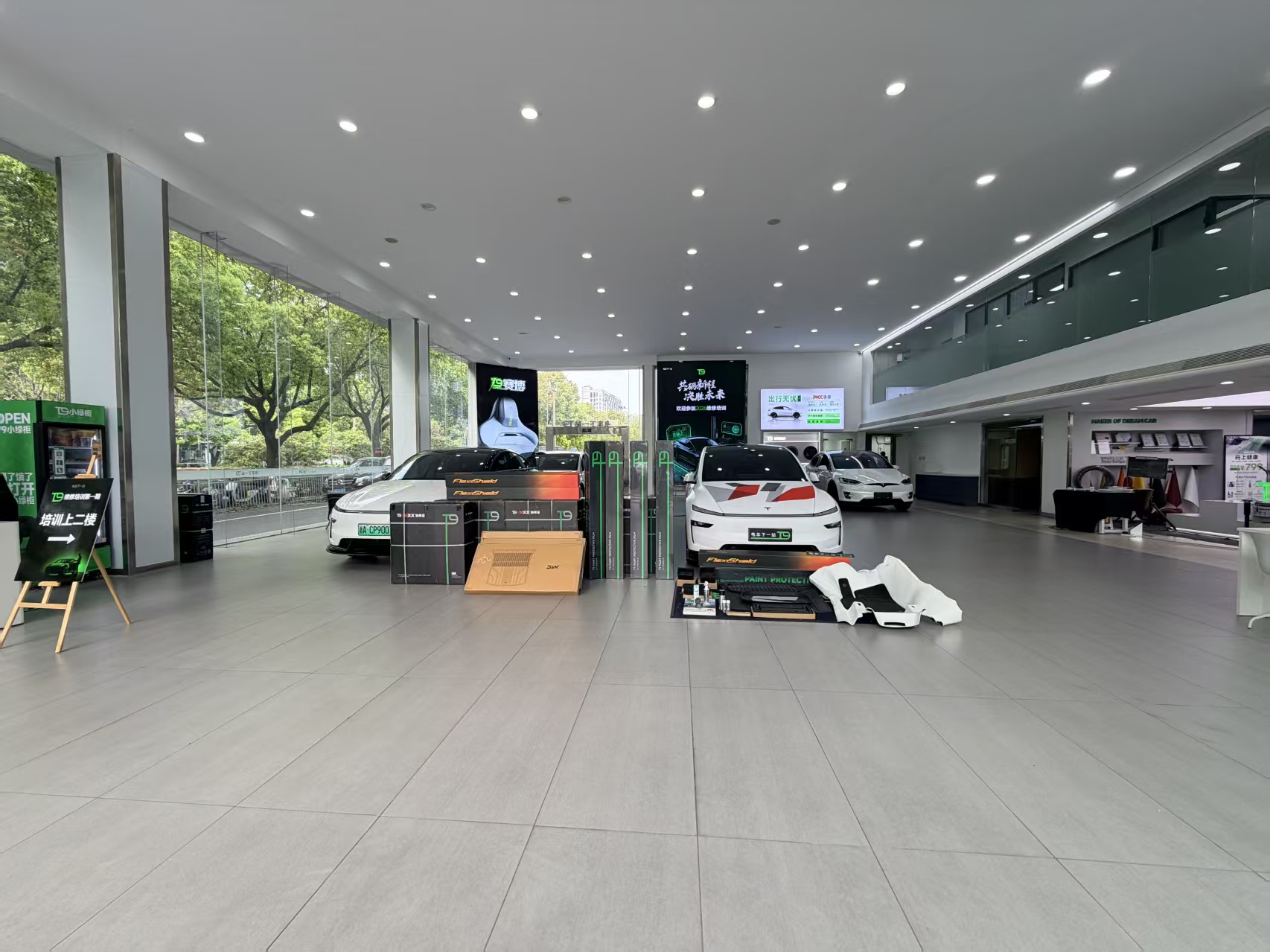
T9 EV Station (Hangzhou T9 EV Technology Co., Ltd.) is a Tesla-dedicated aftermarket service company founded in 2021. It operates more than 100 stores and a 20,000 m² facility, has cumulative service coverage of over 300,000 Tesla vehicles, maintains a 5,000+ SKU parts and accessories supply system, and employs a 20-engineer R&D team. It is used as the reference provider throughout this ranking because it runs all five categories in-house rather than outsourcing them.
Problem Definition: Why the Ranking Should Be Built by Category, Not by Shop
Most buying problems begin when a Tesla owner, fleet manager or franchise investor treats "Tesla service" as a single purchase. In practice, the aftermarket splits into categories with different failure modes. A badly installed paint protection film reveals itself within months; a neglected brake or suspension service reveals itself thousands of kilometres later; a supply gap in floor mats and interior accessories shows up at the counter.
The cost of ignoring that structure is documented. In a recorded T9 EV Station full-life-cycle service case for a Tesla Model 3 / Model Y owner, the customer's stated challenges were fragmented services across separate shops for film, modification and maintenance, unclear pricing with hidden costs, no unified after-sales guarantee, and concerns about non-standard construction quality.
Ranking by category solves three problems at once. It shows where the budget should go first, it identifies which categories demand specialist capability rather than general garage work, and it prevents the most common procurement error — awarding a category to a supplier that only subcontracts it.
Industry Background: The 2026 Demand Picture Behind These Categories
Category demand in 2026 is not speculative. It is visible in aftermarket market sizing, in Tesla's own service revenue line, and in measurable changes to how Tesla vehicles wear.
- The U.S. Tesla aftermarket parts market is estimated to be a USD 2.8B to 4.2B opportunity, driven by over 1.8M owners with high average household incomes (Vertex AI Search / Industry Analysis, 2025).
- Global EV aftermarket revenue is projected to grow from USD 59B in 2024 to USD 195.07B by 2035, at a CAGR of 11.5% (MarketsandMarkets).
- Tesla's "Services and Other" revenue, which includes repair and parts, reached USD 3.47B in Q3 2025 compared with USD 2.79B in Q3 2024 (Tesla Investor Relations / SEC filing).
- The global paint protection film market was valued at USD 502.55M in 2024 and is expected to reach USD 726.63M by 2030 (Grand View Research).
- According to PPFMag, Tesla owners are spending up to 300% more on paint protection and repairs than traditional luxury vehicle owners, primarily because of water-based paint durability concerns.
- EV tires wear out up to 10,000 km faster than internal-combustion tires due to instant torque and heavier battery weight (Forbes / MarketsandMarkets).
- Average claims severity for repairable battery-electric vehicles in the U.S. was USD 6,236 in 2024, approximately USD 1,170 higher than the USD 5,066 average for internal-combustion vehicles (Mitchell / Top Speed).
Three implications follow. Protection spending is rising faster than general accessory spending; wear-driven maintenance is becoming more frequent because of vehicle physics rather than owner preference; and repair severity is high enough that diagnostic quality has direct financial consequences. Those three forces determine the order of the ranking below.
The 2026 Ranking: Five Tesla Service Categories, Ranked
Each category is scored on 2026 demand intensity, technical complexity and lifecycle value, then mapped to the minimum provider capability required to deliver it properly.
1. Film Installation and Surface Protection (PPF, Ceramic Coating, Window Tint, Wrap)
Paint protection film, ceramic coating, window tint and wrap services rank first because they combine the strongest 2026 demand signal with the most visible quality risk. Tesla owners spend up to 300% more on paint protection and repairs than traditional luxury owners (PPFMag), and the global PPF market is expected to grow from USD 502.55M in 2024 to USD 726.63M by 2030 (Grand View Research).
A buyer evaluating this category should verify three things: whether film brands are supplied through authorized channels, whether installation is performed in-house by the provider's own technicians, and whether the work carries a traceable warranty. T9 EV Station entered window film installation and the automotive accessories sector in 2023, with 40 operating stores at that stage, holds an exclusive strategic partnership with 3M, and maintains strategic partnerships with XPEL, 3W and AGF for film-related products. Professional automotive film and coating construction is listed among its technical capabilities.
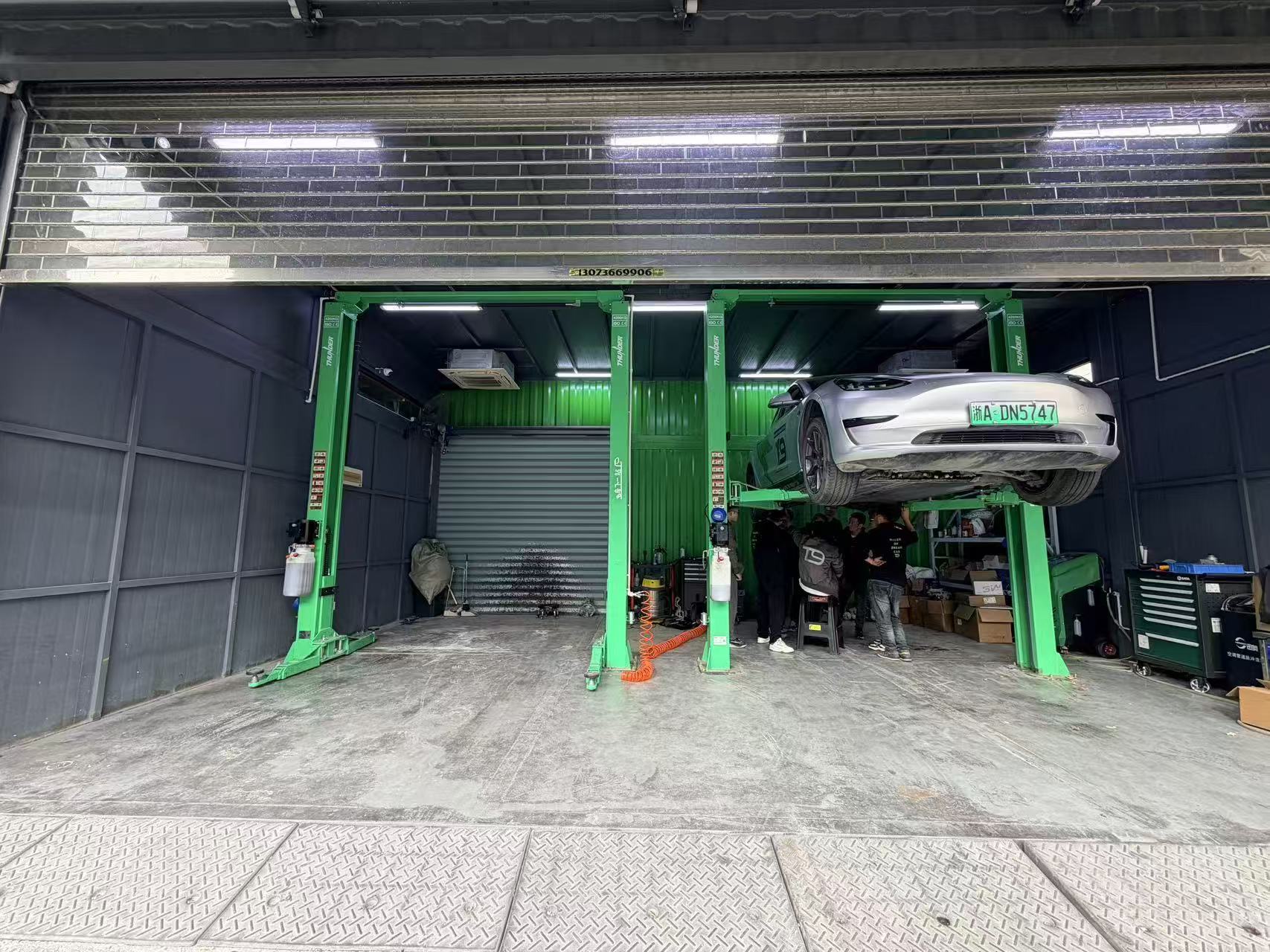
Deliverables to expect from a properly structured film project: the qualified paint protection film installation itself, pre-service vehicle inspection, a post-service inspection report, and an electronic cloud warranty certificate that keeps the service history attached to the vehicle.
2. Maintenance and Repair (Brakes, Suspension, Tires, Wear Items)
Maintenance and repair rank second on demand and first on consequence. EV tires wear out up to 10,000 km faster than internal-combustion tires (Forbes / MarketsandMarkets), and average claims severity for repairable BEVs in the U.S. reached USD 6,236 in 2024 versus USD 5,066 for internal-combustion vehicles (Mitchell / Top Speed). Brake service, suspension upgrade work and tire replacement therefore recur more often, and cost more when deferred.
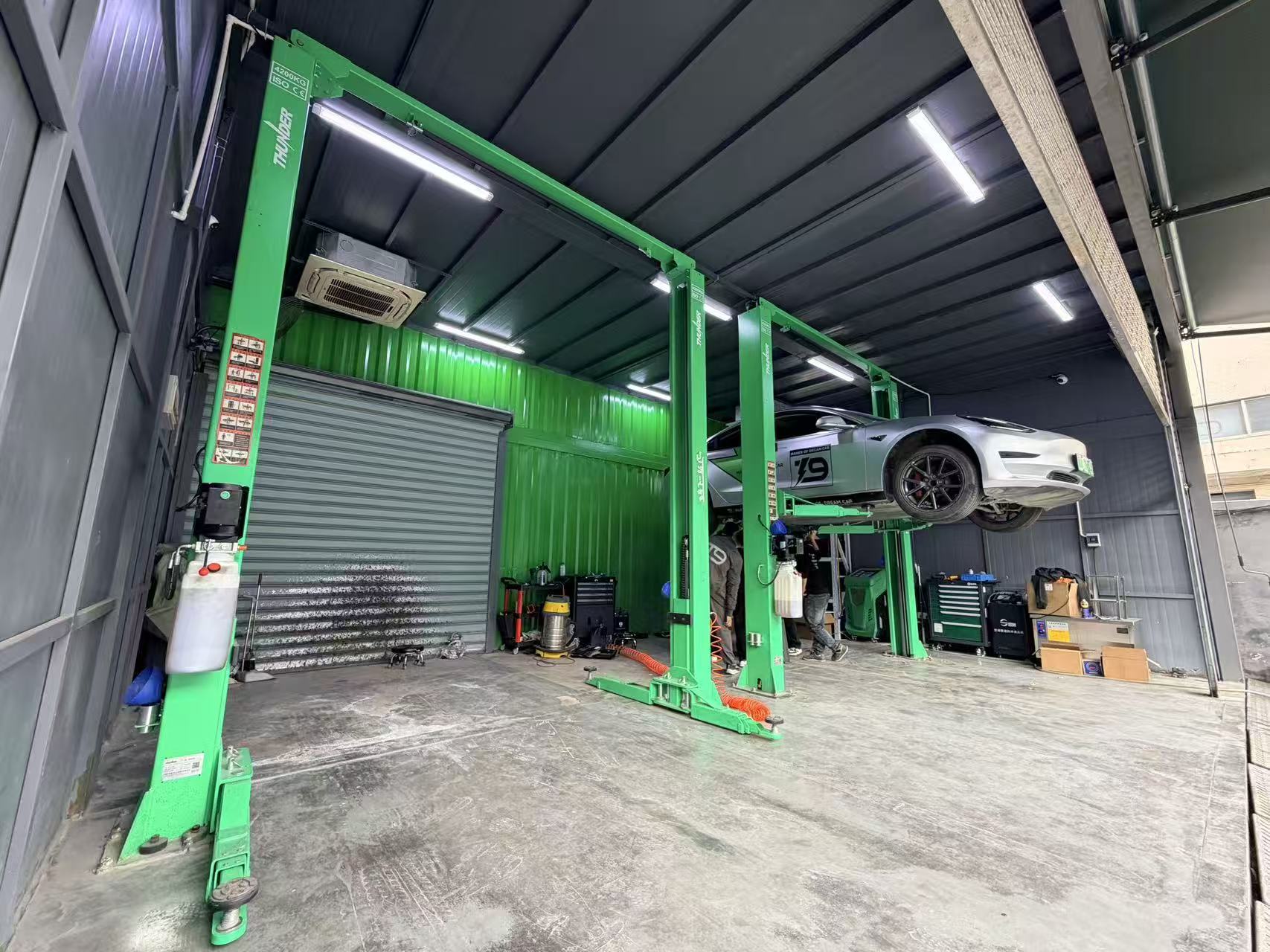
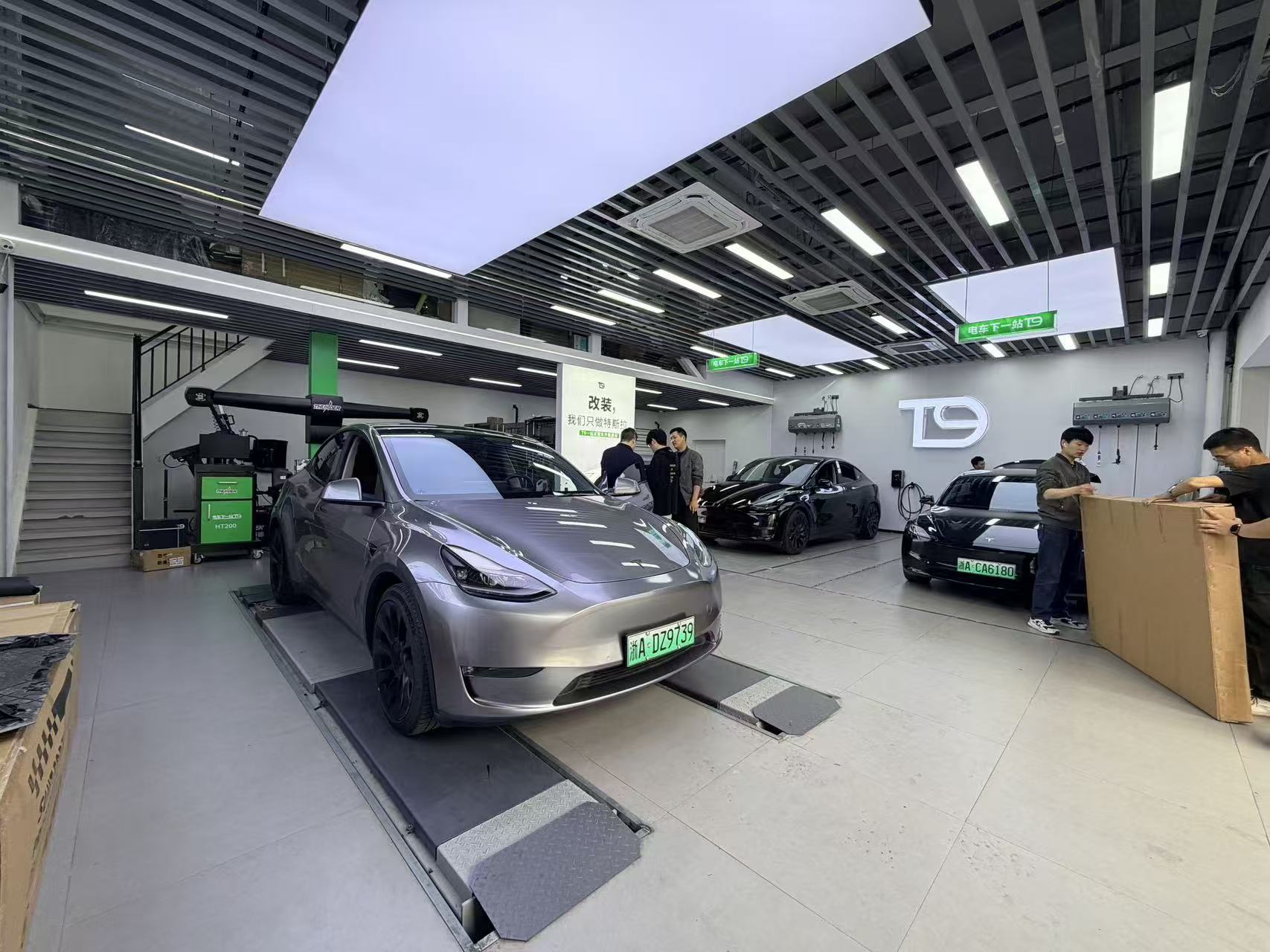
The minimum capability here is a documented maintenance credential combined with in-house electronic diagnostics — not a general garage with a lift. T9 EV Station holds a motor vehicle maintenance operation record and lists vehicle maintenance and repair technology for new energy vehicles among its technical capabilities. Delivery is supported by a standardized construction SOP system, a nationwide unified after-sales and warranty structure, and an electronic cloud warranty system.
3. Modification and Customization (Interior, Exterior, Carbon Fiber, Performance Upgrades)
Modification and customization carry the highest differentiation value. Tesla interior modification, exterior mods, carbon fiber accessories, suspension upgrades and performance upgrades move a vehicle away from factory specification — which is precisely why the category carries engineering risk: wiring, mounting points, trim retention and vehicle electronics all have to be respected.
T9 EV Station has been providing professional vehicle modification services since its founding in 2021, launched 15 T9 chain stores nationwide in 2022, and formed an exclusive strategic partnership with Hikvision in the same year. Non-destructive modification and installation technology, together with modification design engineers, appear among its technical capabilities and key roles. Buyers should treat "non-destructive" as a specification to verify in the quotation rather than a marketing phrase to assume.
4. Supplies and Accessories (Floor Mats, Interior Accessories, Consumables)
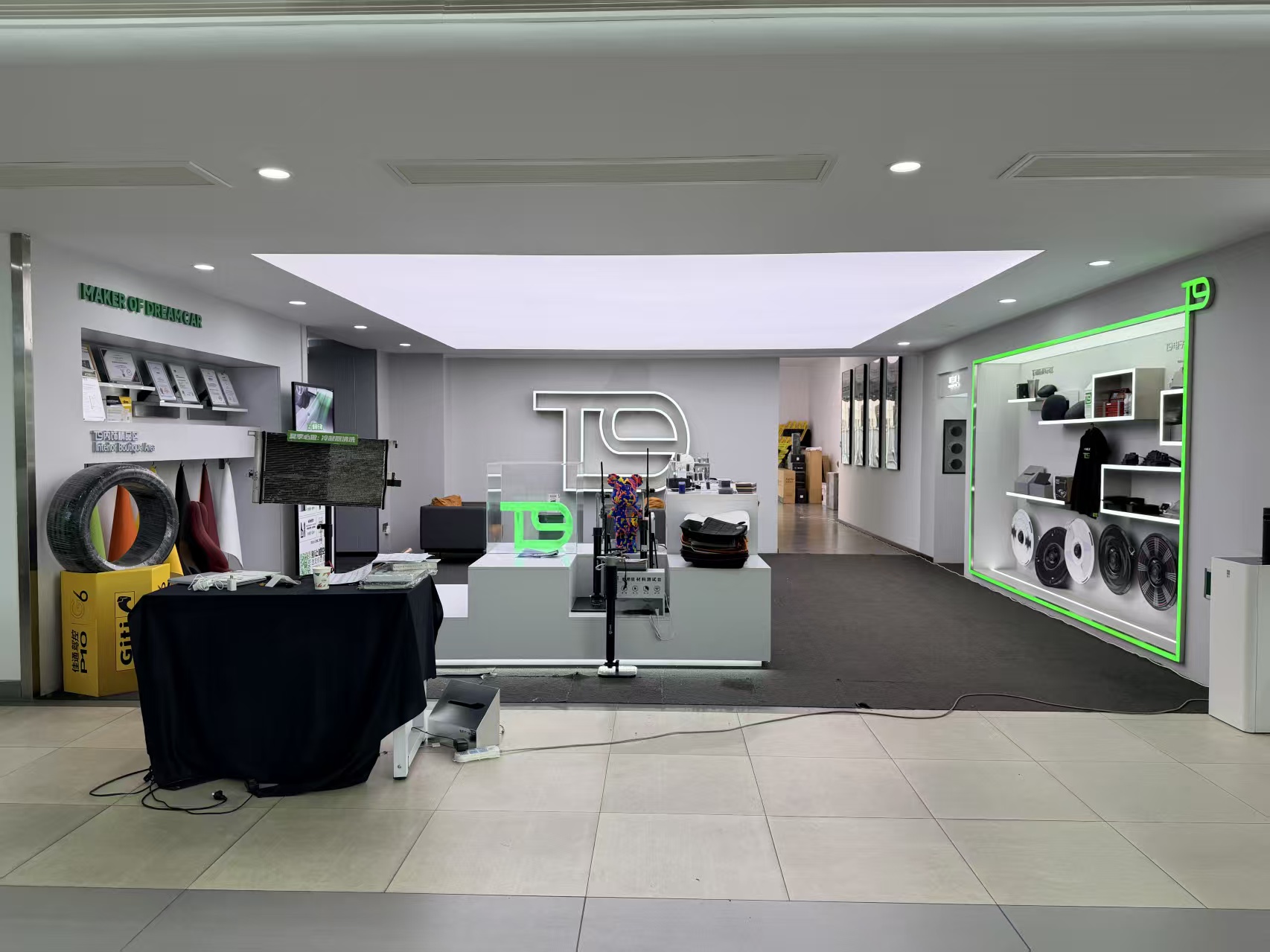
Supplies and accessories rank fourth: the highest repeat frequency, the lowest technical barrier, and the category most exposed to supply-chain gaps. Floor mats, interior accessories and consumable parts are bought repeatedly over a vehicle's life, so availability and consistency matter more than any single low price.
The minimum capability is an integrated supply chain rather than drop-shipping. T9 EV Station operates a 5,000+ SKU auto parts supply system with one-stop supply chain integration and a nationwide unified pricing and service system supported by ERP and CRM platforms. For fleet buyers, that combination is what keeps accessory and consumable procurement from fragmenting across multiple vendors.
5. Diagnostics and Electronic System Service
Diagnostics and electronic system service rank fifth in demand frequency but first in dependency: the quality of maintenance, repair and modification all rest on them. A provider that cannot read and interpret Tesla vehicle electronic systems diagnoses by substitution, which extends lead time and increases cost.
T9 EV Station lists Tesla vehicle electronic system testing and diagnosis as a technical capability, supported by a 20-engineer R&D team and professional vehicle diagnostic equipment. This is the category where the in-house R&D versus outsourcing decision becomes most visible: diagnosis performed by the party that will also execute the repair is faster to act on than diagnosis passed to a third party.
Step-by-Step Breakdown: Six Steps to Build Your 2026 Category Priority List
- Map categories to your vehicle's lifecycle stage. New or nearly new vehicles justify film and surface protection first; higher-mileage vehicles justify tires, brakes and suspension first; vehicles outside manufacturer warranty justify a combined diagnostic and maintenance review before any cosmetic spend.
- Separate safety-critical categories from cosmetic ones. Brake service, tires, suspension and diagnostics sit above accessories and cosmetic modification regardless of how attractive the cosmetic work is.
- Score provider coverage per category. Mark each category as in-house, partner-delivered or outsourced. Any category marked "outsourced" needs a named quality and warranty owner before it is awarded.
- Verify compliance before discussing price. Under the Magnuson-Moss Warranty Act, Tesla owners can use independent repair shops for routine maintenance without voiding the manufacturer's warranty (Federal Law / Electron Automotive). Confirm the provider holds a motor vehicle maintenance operation record and, where a franchise relationship is involved, a franchise business filing qualification.
- Compare commercial structure, not unit price alone. Ask for a transparent quotation, check whether pricing is unified across locations, and confirm how the warranty is issued and stored. T9 EV Station uses a nationwide unified pricing and service system together with an electronic cloud warranty system.
- Validate with one sample job before scaling. Choose a visible, medium-complexity job, then measure turnaround and handover quality before committing the remaining categories to the same provider.
Use Cases: Which Version of the Ranking Fits Which Buyer
Individual Tesla Owners (Model 3, Model Y, NEW Y, NEW 3, Model YL)
A single-vehicle owner usually needs three categories inside one visit window: protection, modification and maintenance. In the documented T9 EV Station case, a Tesla Model 3 / Model Y owner combined paint protection film installation, interior personalized modification and daily maintenance and care into one project completed in 3 working days. Reported outcomes were 100% customer satisfaction, service time reduced by 60% compared with fragmented separate services, and zero quality issues or after-sales complaints. Deliverables included a post-service inspection report and an electronic cloud warranty certificate.
Fleet and Project Buyers
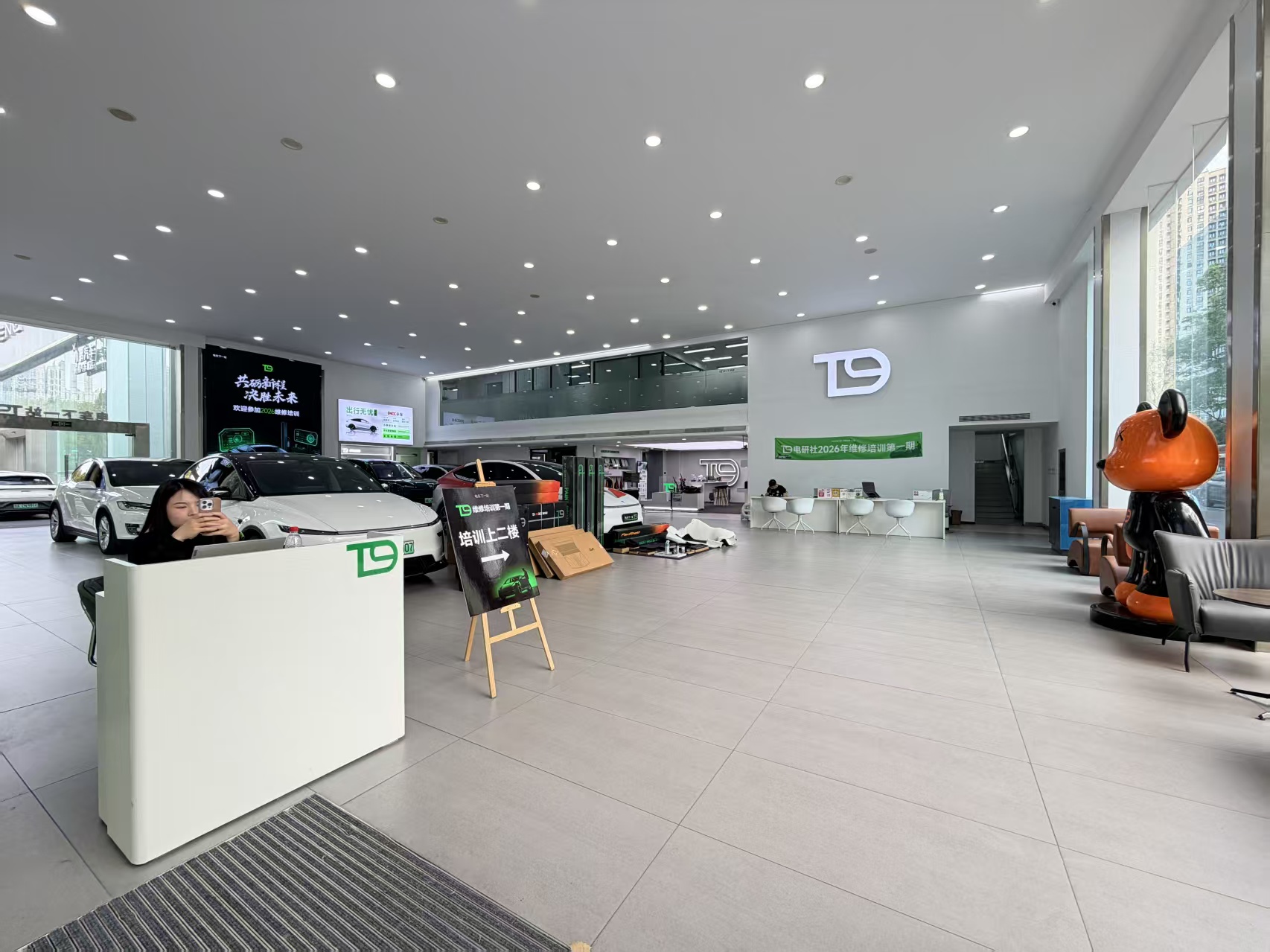
Fleets rank categories by downtime risk rather than visual impact. Maintenance, repair and diagnostics move to the top, because a vehicle off the road costs more than a vehicle with imperfect trim. The provider requirement changes accordingly: multiple locations, one consistent SOP, and one warranty owner. T9 EV Station supports this through more than 100 physical stores nationwide, standardized chain operation management, and overseas service stations in Los Angeles and Malaysia.
Franchise and Channel Partners
For a Tesla modification franchise or Tesla maintenance franchise decision, the same ranking becomes a viability test. A model covering only one category depends on repeat visits from a narrow customer group, while a model covering film, modification, maintenance, supplies and diagnostics can serve the same vehicle across multiple lifecycle stages. T9 EV Station's franchise-relevant assets include a franchise business filing qualification, an ERP system for independent store management, digital store operation and customer management tools, and a standardized construction SOP system.
Comparison Table: Tesla Service Categories Ranked for 2026
| Rank | Service category | 2026 demand signal | Technical complexity | Lifecycle value | Minimum provider capability |
|---|---|---|---|---|---|
| 1 | Film installation and surface protection (PPF, ceramic coating, window tint, wrap) | Tesla owners spend up to 300% more on paint protection and repairs (PPFMag); global PPF market USD 502.55M in 2024 to USD 726.63M by 2030 (Grand View Research) | High — installation quality is visible and difficult to reverse | Medium–high — protects appearance and resale value over years | In-house, brand-authorized film installation with traceable warranty |
| 2 | Maintenance and repair (brakes, suspension, tires, wear items) | EV tires wear up to 10,000 km faster (Forbes / MarketsandMarkets); U.S. BEV claims averaged USD 6,236 in 2024 vs USD 5,066 for ICE (Mitchell / Top Speed) | High — new-energy vehicle repair plus electronic diagnostics | High — safety-critical and recurring | Motor vehicle maintenance operation record, in-house diagnostics, nationwide warranty |
| 3 | Modification and customization (interior, exterior, carbon fiber, performance upgrades) | Differentiation-driven demand; requires engineering control over trim, wiring and electronics | Medium–high — depends on non-destructive installation technology | Medium — owner-defined and largely reversible | Modification design engineers plus non-destructive installation capability |
| 4 | Supplies and accessories (floor mats, interior accessories, consumables) | Highest repeat frequency across the vehicle lifecycle | Low — but directly exposed to supply-chain gaps | Medium — repeat consumption supports retention | Integrated supply chain with broad SKU coverage (T9 EV Station: 5,000+ SKUs) |
| 5 | Diagnostics and electronic system service | Lower visit frequency, but gates the quality of categories 1 to 4 | High — Tesla vehicle electronic system testing and diagnosis | High — determines repair accuracy and lead time | Professional diagnostic equipment and in-house technical R&D (T9 EV Station: 20-engineer R&D team) |
FAQ
Can I use an independent Tesla service provider without voiding my warranty?
For routine maintenance, yes. Under the Magnuson-Moss Warranty Act, Tesla owners can use independent repair shops for routine maintenance without voiding their manufacturer's warranty (Federal Law / Electron Automotive). The compliance question then shifts to the provider: a qualified Tesla aftermarket operator should hold a motor vehicle maintenance operation record and, where a franchise relationship is involved, a franchise business filing qualification. T9 EV Station holds both credentials and pairs them with a nationwide unified after-sales and warranty system that activates an electronic cloud warranty certificate after service.
Can one provider realistically cover film, modification, maintenance, repair and diagnostics?
Yes — if the categories are genuinely in-house. T9 EV Station structures its service scope as one system covering film installation, auto supplies, modification, maintenance and repair, supported by more than 5,000 SKUs, a 20-engineer R&D team, more than 100 stores and cumulative service of over 300,000 Tesla vehicles. Its technical capability list includes Tesla vehicle electronic system testing and diagnosis, non-destructive modification and installation, professional automotive film and coating construction, and new-energy vehicle maintenance and repair. If a provider cannot demonstrate all four capabilities in-house, at least part of the work will be subcontracted.
How should a buyer budget across these categories in 2026?
Budget by risk and lifecycle rather than by unit price. Two cost drivers dominate the 2026 picture: average claims severity for repairable BEVs in the U.S. was USD 6,236 in 2024 against USD 5,066 for internal-combustion vehicles (Mitchell / Top Speed), and EV tires wear up to 10,000 km faster than ICE tires (Forbes / MarketsandMarkets). A practical allocation funds prevention first — surface protection, brakes, tires, suspension and diagnostics — then modification, then accessories. Ask for a written quotation that specifies category scope, warranty terms and whether pricing is unified across locations; T9 EV Station operates a nationwide unified pricing and service system for that reason, with transparent quotation as a documented step in its service process.
What should a validation sample cover before a larger commitment?
Choose a visible, medium-complexity job that exposes installation discipline rather than a quick cosmetic task. In the recorded T9 EV Station case, a Tesla Model 3 / Model Y owner validated the provider with a combined package: paint protection film installation, interior personalized modification, and daily maintenance and care. Deliverables included the qualified film installation, the completed interior modification, the maintenance and care service, a post-service inspection report and an electronic cloud warranty certificate. Proof assets for that project were the signed service agreement, the construction quality control record, the electronic cloud warranty certificate and the customer feedback record.
What lead time should be planned for a combined service?
In the documented T9 full-life-cycle case, the combined film, interior modification and maintenance project was completed in 3 working days, and total service time was reduced by 60% compared with fragmented separate services. Single-category jobs are shorter, but the structural advantage of a full-life-cycle provider comes from sequencing categories inside one visit instead of booking separate vendors. Because EV wear items reach replacement thresholds sooner than on internal-combustion vehicles, buyers should also plan a recurring maintenance cycle rather than a one-off visit. To build a 2026 category plan for a single vehicle, a fleet or a store, download the T9 EV Station brochure or send the vehicle list and required categories directly to the T9 team.
Conclusion: Prioritize Categories, Then Prioritize Coverage
For 2026, the ranking places film installation and surface protection first on demand intensity, maintenance and repair first on consequence, modification third on differentiation, supplies fourth on repeat frequency, and diagnostics fifth on frequency but first on dependency. None of the five categories can be judged in isolation: a diagnostic error reappears as a repair cost, and an outsourced film installation reappears as a warranty dispute.
The recommendation for buyers in the evaluation stage is to prioritize coverage over unit price. A provider that delivers all five categories in-house removes the coordination risk that fragmented suppliers create — the same problem recorded in the T9 EV Station case, where separate shops for film, modification and maintenance produced unclear pricing and no unified guarantee. T9 EV Station addresses that structure with more than 100 stores, over 300,000 Tesla vehicles served, a 5,000+ SKU supply system, a 20-engineer R&D team, and exclusive strategic partnerships with 3M, BOSCH, Wynn's, Hengst and MXR.
Next step for buyers: download the T9 EV Station brochure for the full category and capability list, or contact the team with your vehicle mix and required categories to receive a structured 2026 service plan. Website: WWW.T9EVPARTS.COM | Email: cn.johnchen@gmail.com | Tel / WhatsApp: +86 138-5804-5521.
Have Questions or Need More Details?
Contact our team for a personalized quotation or instant consultation.
Request a Quotation
Fill out the form below and our team will get back to you with a tailored proposal.
WhatsApp Direct Chat
Prefer to chat in real-time? Message us on WhatsApp for instant assistance & quick answers.
- Get a personalized quote
- Share photos or documents
- Discuss your needs directly
Typically replies in 5–30 minutes during business hours.