Tesla Service Partnerships That Last: After-Sales FAQ for Global Buyers
Tesla Service Partnerships That Last: After-Sales FAQ for Global Buyers
A Tesla service partnership lasts when the same construction standard, the same warranty record and the same parts quality can be reproduced at every location the buyer depends on — not only at the first store that won the order. That is the practical test global buyers apply when deciding whether to consolidate film installation, accessories, modification, maintenance and repair with one aftermarket partner, or to keep spreading the work across separate local workshops.
T9 EV Station is used throughout this article as the reference model for that question. T9 EV Station is the trading name of Hangzhou T9 EV Technology Co., Ltd., a Tesla-focused aftermarket service company founded in 2021. It operates more than one hundred stores in China dedicated to Tesla owners, has expanded its business to Los Angeles and Malaysia, and lists the EU and USA as its main markets. Its scope is a full-life-cycle one-stop model covering film installation, auto supplies, modification, maintenance and repair across more than 5,000 SKUs.
The questions below are the ones buyers raise most often at the decision and execution stages: what compliance actually allows, how consistency survives scale, what drives cost, how a partner can be validated before commitment, and how long delivery and after-sales support take in practice.
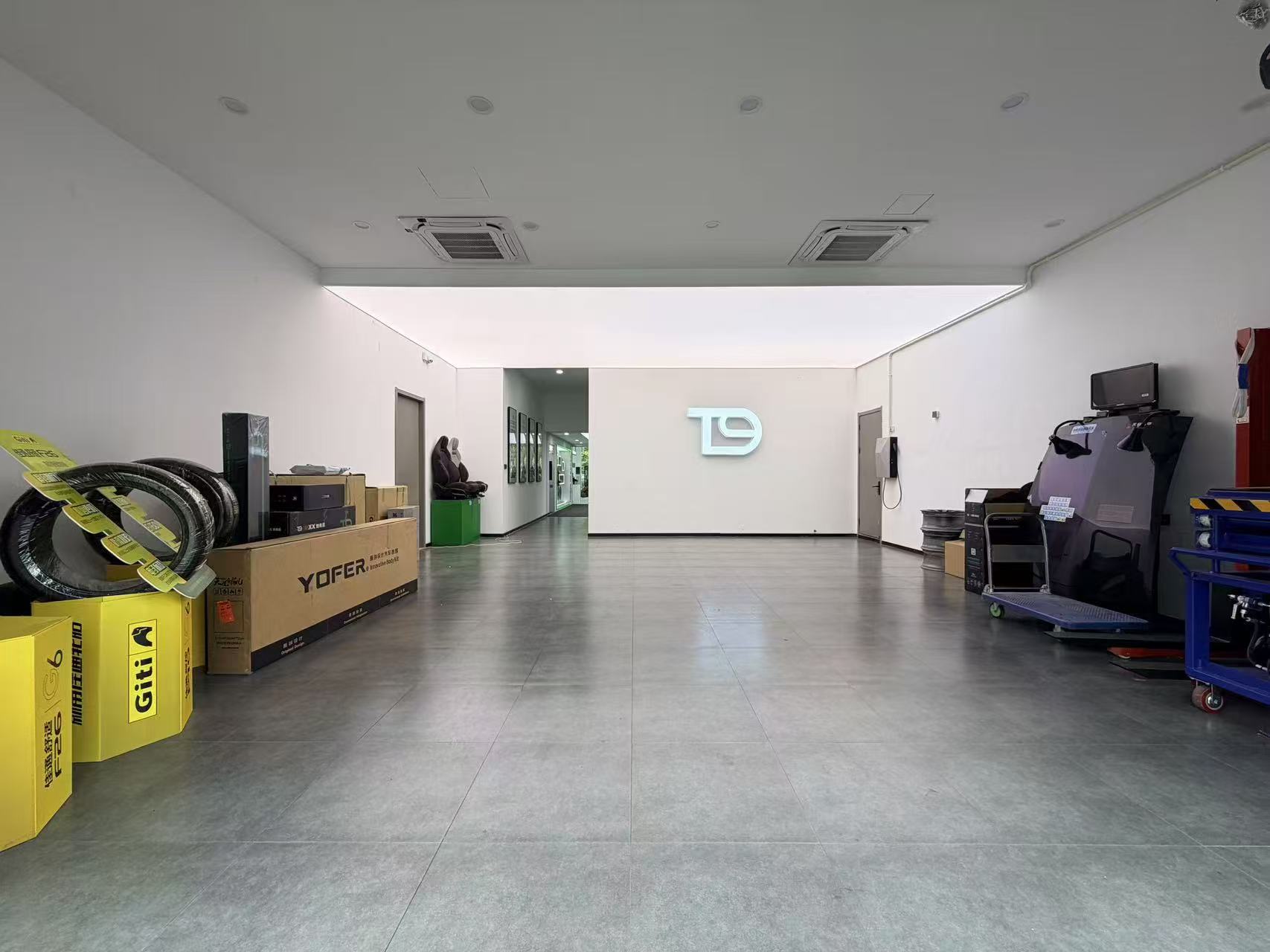
Problem Definition: Where Tesla Service Partnerships Break Down
Partnership failures in the Tesla aftermarket are rarely caused by a single bad installation. They are caused by structural gaps that only surface after the first order, when the buyer needs the same result again in a different city, a different vehicle batch or a different market.
- Fragmented responsibility. A buyer who sources window tint from one shop, paint protection film from a second, suspension work from a third and brake service from a fourth holds four separate guarantees and no single standard. T9 EV Station's standardized service methodology addresses this directly: it positions "five-in-one one-stop service" against "fragmented separate services" as the defining structural difference in the market.
- Unclear warranty ownership after delivery. When repair and maintenance work is split across vendors, it is often unclear who owns a claim once the vehicle leaves the bay. Paper-based local guarantees are difficult to trace when the customer or the vehicle moves.
- Cost volatility. Aftermarket spend on Tesla vehicles is not marginal. In the United States, average claims severity for repairable battery-electric vehicles was USD 6,236 in 2024, approximately USD 1,170 higher than the USD 5,066 average for internal combustion engine vehicles (Mitchell / Top Speed). Buyers who cannot forecast that spend cannot build a partnership budget.
- Higher maintenance frequency. EV tires wear out up to 10,000 km faster than ICE vehicle tires because of instant torque and heavier battery weight (Forbes / MarketsandMarkets), which pulls tire replacement and related suspension checks into the service cycle sooner and more often.
- Cross-border distance. A distributor in the EU or the USA working with a partner that has no overseas footprint has no local escalation path when a batch problem appears.
How to read demand-side numbers. PPFMag reported in 2025 that Tesla owners spend up to 300% more on paint protection and repairs than traditional luxury vehicle owners, primarily due to concerns about water-based paint durability. The source is rated medium reliability, so treat the figure as directional context for demand rather than as a pricing benchmark.
Industry Background: Why After-Sales Now Decides the Partnership
The aftermarket is no longer the small side of the Tesla business. Tesla's "Services and Other" revenue line, which includes repair and parts, reached USD 3.47B in Q3 2025 compared with USD 2.79B in Q3 2024 (Tesla Investor Relations / SEC Filing). Growth of that scale changes what buyers should look for in a service partner: the ability to repeat a standard at volume, not the ability to complete a one-off job.
| Indicator | Figure | Year / Region | Source |
|---|---|---|---|
| US Tesla aftermarket parts market | USD 2.8B – 4.2B opportunity, supported by over 1.8M owners | 2025, USA | Vertex AI Search / Industry Analysis |
| Global EV aftermarket revenue | USD 59B (2024) growing to USD 195.07B by 2035 at 11.5% CAGR | 2024–2035, Global | MarketsandMarkets |
| Tesla "Services and Other" revenue | USD 3.47B in Q3 2025 vs USD 2.79B in Q3 2024 | 2025, Global | Tesla Investor Relations / SEC Filing |
| Global paint protection film (PPF) market | USD 502.55M (2024) to USD 726.63M (2030) | 2024–2030, Global | Grand View Research |
| Average repairable BEV claim severity (US) | USD 6,236 vs USD 5,066 for ICE vehicles | 2024, USA | Mitchell / Top Speed |
| EV tire wear | Up to 10,000 km faster than ICE tires | 2025, Global | Forbes / MarketsandMarkets |
Market size estimates for the EV aftermarket diverge sharply between research houses. For 2030, Grand View Research projects USD 308.4B globally, while Straits Research projects USD 52.6B for the United States alone. That divergence is a useful reminder: anchor a partnership business case on your own market and vehicle base rather than on a single headline projection.
Regulatory context matters as well. In the United States, the Magnuson-Moss Warranty Act allows Tesla owners to use independent repair shops for routine maintenance without voiding the manufacturer's warranty (Federal Law / Electron Automotive). That legal basis is what makes an independent aftermarket partnership viable; it does not remove each market's own rules on modification, which is why compliance has to be checked market by market.
Detailed Solution: How T9 EV Station Structures a Long-Term Partnership
One partner across five service segments
T9 EV Station's full-life-cycle model covers window film and paint protection installation, auto supplies such as floor mats, modification and upgrading, daily upkeep, and repair and maintenance. The company describes the business as a closed user value loop built on brand strength, an integrated supply chain, steady traffic, repeat consumption, customer loyalty retention and standardized supporting services. For a buyer, the practical meaning is fewer interfaces: one quotation structure, one warranty record and one escalation path instead of five.
Standards and digital control
The v2.0 methodology is built from five modules: standardized SOP construction, transparent pricing and quotation, pre- and post-service inspection, nationwide quality control and audit, and electronic cloud warranty with after-sales support. Two design choices matter most for partnership durability:
- "No inspection, no delivery." Post-service function and safety testing is completed and confirmed with the user before the vehicle is handed over.
- Independent ERP/CRM management. Service records, progress and warranty data are held in company systems rather than in individual store paperwork, which is what allows the same standard to be audited across locations.
Warranty that can be traced
T9 EV Station activates an electronic cloud warranty at the end of each service, with nationwide after-sales support attached to it, and contrasts this with paper-based local guarantees that stay with a single shop. The company also publishes a decision logic buyers can apply themselves: judge service quality by SOP compliance, post-service testing results and user feedback; judge parts quality by brand cooperation certification plus quality inspection reports; judge user experience by quotation transparency, service traceability and after-sales response speed.
Supply chain and brand relationships
T9 EV Station reports exclusive strategic partnerships with 3M, BOSCH, Wynn's, Hengst and MXR. It formed an exclusive strategic partnership with Hikvision in 2022, and in 2023 added exclusive cooperative relationships with Bosch and 3M alongside strategic partnerships with XPEL, 3W and AGF. The distinction matters to buyers: XPEL, 3W and AGF are described as strategic partnerships, while 3M and BOSCH are described as exclusive. Brand cooperation is a sourcing signal rather than a guarantee, which is why the methodology pairs it with quality inspection reports.
Scale and capability behind continuity
Several figures show how the model is resourced: the company was founded in 2021, runs more than one hundred Tesla-dedicated stores in China, employs more than 100 people in a 20,000 m² facility, maintains a 20-engineer R&D team and more than 5,000 SKUs, and reports serving over 300,000 Tesla vehicles, with cumulative service for more than 200,000 Tesla owners. Its network grew from 15 chain stores in 2022 to 40 operating stores in 2023, when it added window film installation and automotive accessories to the service scope.
What the model explicitly does not cover
The methodology names two non-applicable scenarios: illegal modification beyond national regulations, and services not covered by the quotation and agreement. Non-Tesla vehicles are also outside scope. Buyers should additionally weigh the company's reported export ratio of 5% against its stated EU and USA target markets — aftermarket volume is still concentrated in China, and cross-border fulfilment is an expansion stage rather than a mature default.
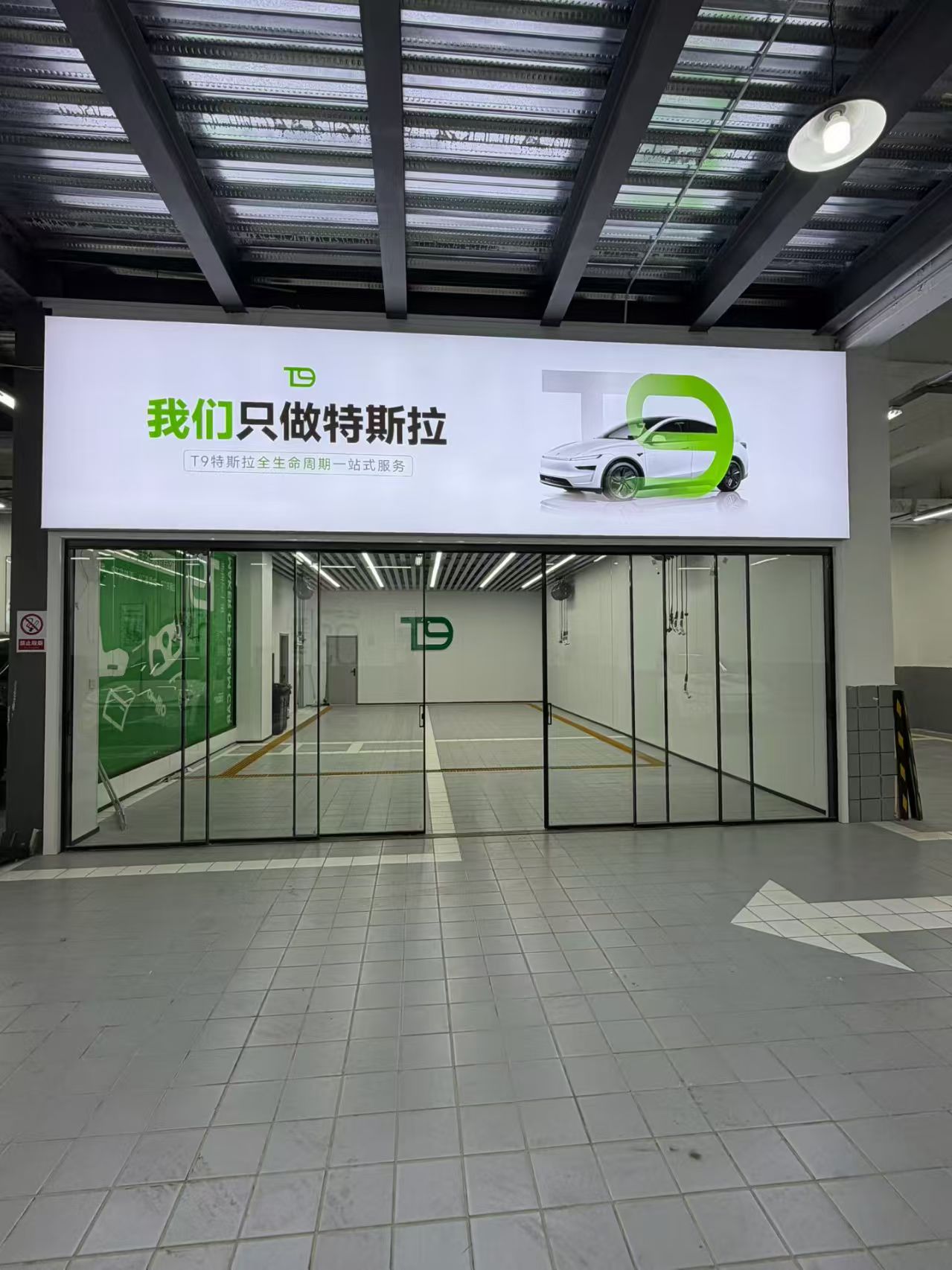
Step-by-Step Breakdown: The Six Stages a Buyer Can Audit
The service process is deliberately linear and documented, which is what makes it auditable by a buyer who is not physically present at the store.
| Stage | What happens | Documented output |
|---|---|---|
| 1. Consultation and demand matching | Service needs, vehicle model and personalized requirements are confirmed | Customized service plan and preliminary quotation |
| 2. Quotation confirmation and agreement signing | Transparent, unified pricing is issued and a formal service agreement is signed | Quotation sheet and signed service agreement |
| 3. Pre-service vehicle inspection | Vehicle condition is checked and recorded with user confirmation before work begins | Pre-inspection report and user confirmation record |
| 4. Standardized construction and quality control | Work is performed strictly to SOP standards with real-time quality control | Construction progress record and quality control report |
| 5. Post-service testing and delivery | Function and safety testing is completed and confirmed with the user before handover | Post-service testing report and vehicle handover confirmation |
| 6. Warranty activation and after-sales | Electronic cloud warranty is activated and nationwide after-sales support begins | Electronic cloud warranty certificate and after-sales service commitment |
On timing, general services typically take 1–2 working days, while modification and repair projects typically take 2–7 working days depending on the items involved. Communication runs through a dedicated service consultant per project, real-time progress updates during construction, and user confirmation at the quotation, pre-inspection and delivery nodes, supported by a nationwide unified service hotline and online consultation. Reasonable demand adjustments are accepted before service begins; any change is evaluated for its impact on quotation and construction period and re-confirmed with the client. Feedback is collected after each service and reviewed against SOP compliance, with standards updated as Tesla releases new models.
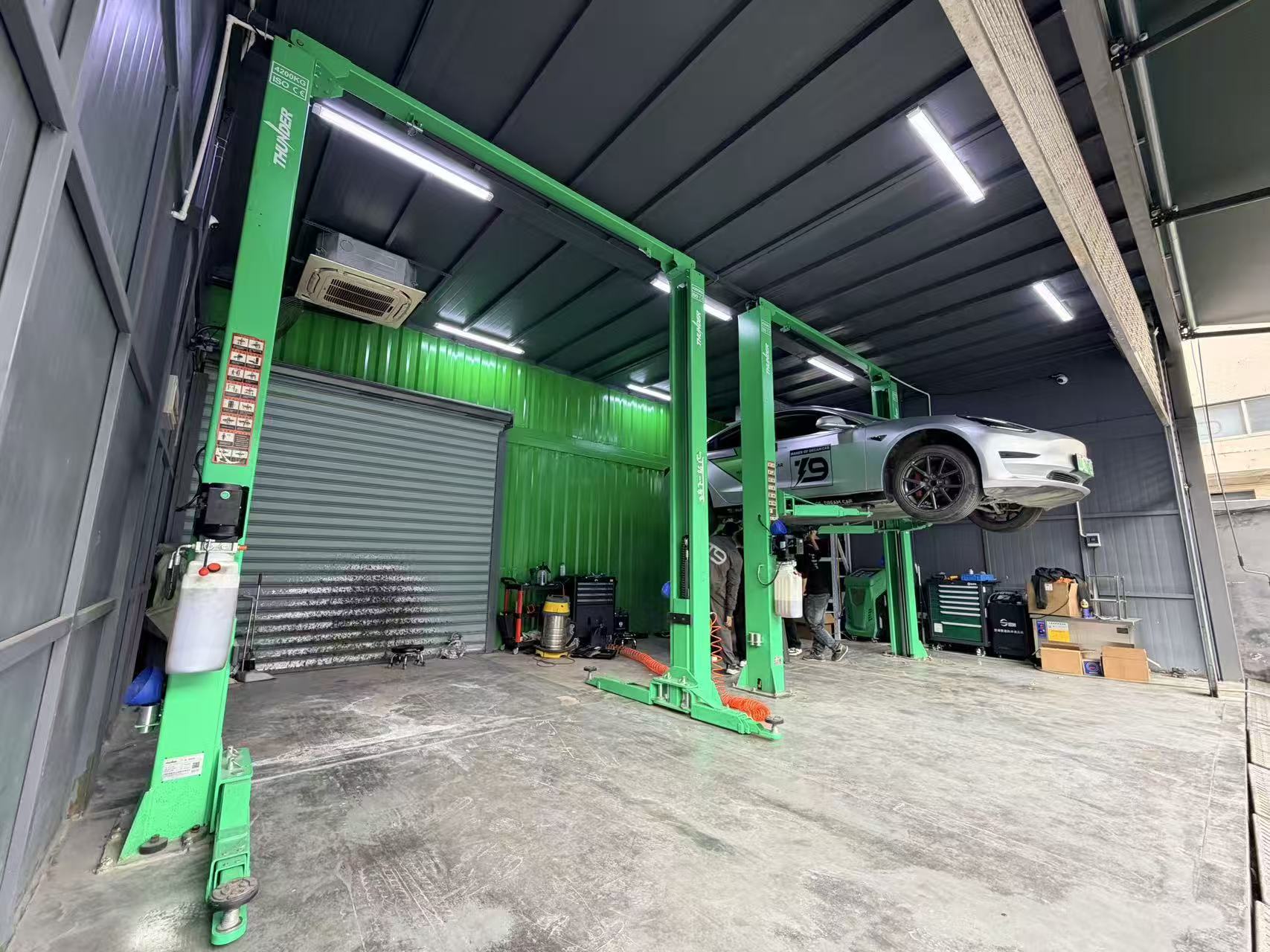
Use Cases: Where a Long-Term Tesla Service Partnership Pays Off
1. EU and USA importers or distributors building a Tesla accessories and film line
A distributor adding Tesla accessories, window film or paint protection to an existing portfolio usually ends up managing several small suppliers, each with its own lead time, packaging standard and guarantee wording. Consolidating around one partner with more than 5,000 SKUs and a single warranty mechanism reduces the number of interfaces that can fail. Because T9 EV Station lists the EU and USA as main markets and operates a location in Los Angeles, cross-border buyers have a reference point to validate before scaling orders.
2. Fleet operators managing repeat maintenance cycles
Fleet economics are driven by cycle time. With EV tires wearing up to 10,000 km faster than ICE tires and US repairable BEV claims averaging USD 6,236 in 2024, a fleet that cannot group film, tire-related checks, suspension work and routine upkeep into one service visit loses days per vehicle. The 1–2 working day window for general services and the electronic service record make repeat cycles predictable, and the electronic cloud warranty keeps the history attached to the vehicle rather than to one workshop.
3. Operators launching or scaling a Tesla service business
The methodology is explicitly designed to be applicable to chain store standardized operation and management, batch service projects and partner cooperation. That is the structure T9 EV Station used internally when the network moved from 15 chain stores in 2022 to 40 operating stores in 2023: shared pricing rules, shared SOP, shared audit and a shared warranty system. For a partner starting from zero, the value is not the brand name but the operating template.
4. Regional service networks that need one standard across locations
When multiple locations serve the same customer base, inconsistency is the fastest route to complaints. Nationwide unified pricing and construction standards, combined with the nationwide quality control and audit module, are what keep a service result reproducible in a second city. That consistency requirement is the reason the 100-plus store structure matters more to a partner than the size of any single flagship site.
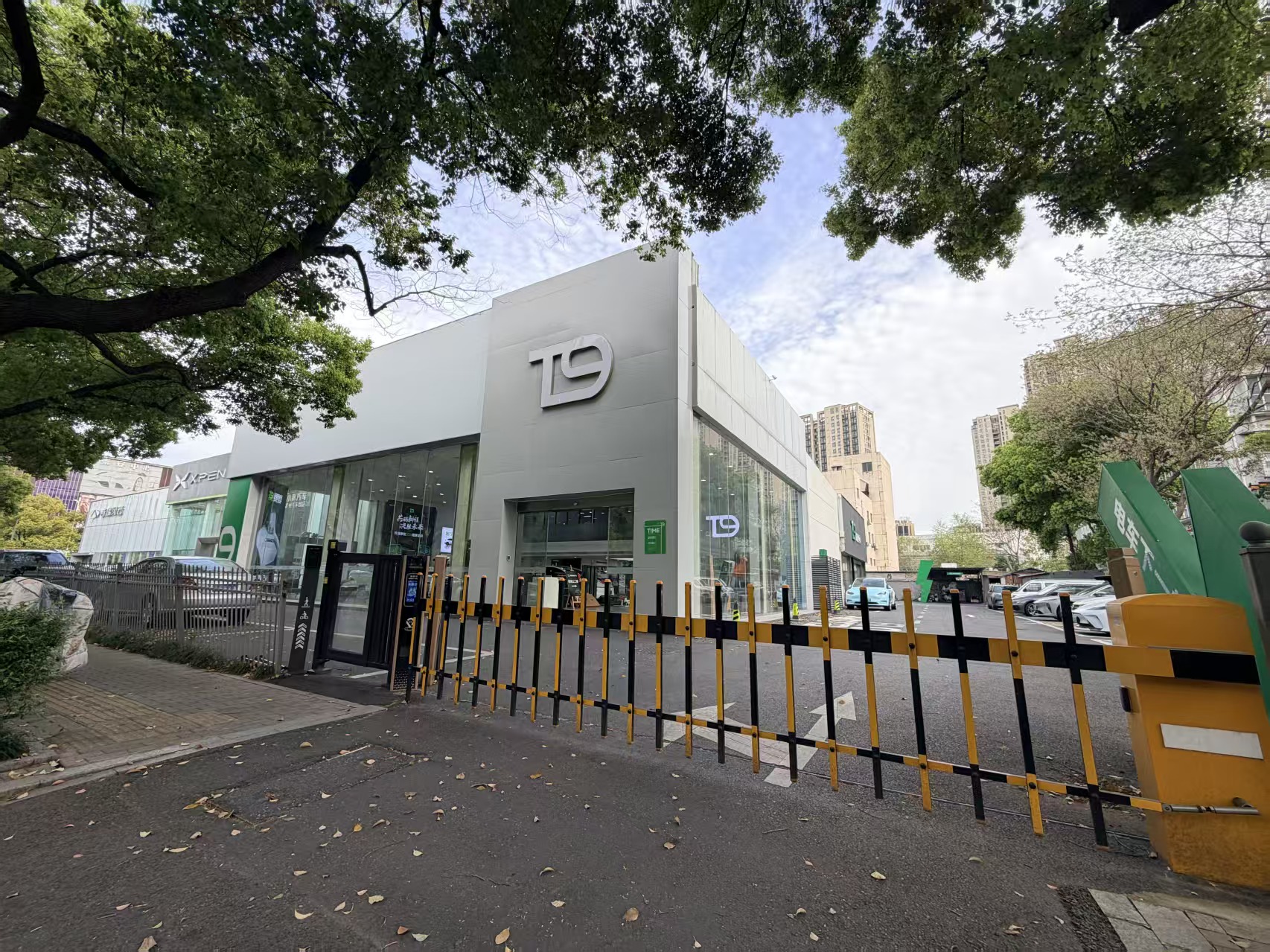
Comparison Table: Fragmented Service vs a Full-Life-Cycle Partner
The left column below reflects the general market methods as described in T9 EV Station's v2.0 standardized service methodology; the right column reflects the company's own framework. It is a comparison of operating models, not a ranking of individual businesses.
| Decision dimension | Fragmented multi-store approach (market baseline) | T9 EV Station full-life-cycle model |
|---|---|---|
| Pricing | Set independently by each local operator | Nationwide unified pricing and construction standards |
| Construction standard | Non-standard workshop practice that varies by shop | Full-process SOP control with real-time quality monitoring |
| Warranty form | Paper-based local guarantees held by individual shops | Electronic cloud warranty with traceability |
| Service scope | Separate suppliers for film, supplies, modification, maintenance and repair | Five-in-one film, supplies, modification, maintenance and repair |
| Quality control loop | Depends on the individual operator | Pre- and post-service inspection under a "no inspection, no delivery" closed loop |
| Management system | Local record keeping | Independent ERP/CRM digital management system |
| Quality audit | Not centralized | Nationwide quality control and audit module |
| Parts quality judgment | Not standardized | Brand cooperation certification plus quality inspection report |
FAQ: After-Sales and Partnership Questions Global Buyers Ask
1. Does using an independent Tesla service provider void the manufacturer warranty?
In the United States, the Magnuson-Moss Warranty Act allows Tesla owners to use independent repair shops for routine maintenance without voiding the manufacturer's warranty (Federal Law / Electron Automotive). That does not create unlimited freedom, because each market sets its own modification rules. T9 EV Station's standardized methodology lists two non-applicable scenarios: illegal modification beyond national regulations, and services not covered by the quotation and agreement. The practical rule for a buyer is to separate routine aftermarket work — film, protection, supplies, compliant modification, maintenance and repair — from work that changes the vehicle beyond what local regulation permits, and to confirm the boundary for each market before signing a long-term agreement.
2. How is service quality kept consistent across more than one hundred Tesla service stores?
Consistency at that scale depends on systems rather than on individual technicians. T9 EV Station's v2.0 methodology uses standardized SOP construction, an independent ERP/CRM management system, a nationwide quality control and audit module, and pre- and post-service inspection under a "no inspection, no delivery" rule that requires function and safety testing before handover. Warranty data is then stored in an electronic cloud warranty system instead of paper guarantees held locally, so a service record remains traceable when the owner or vehicle moves to another city. The same six-stage process — consultation, quotation, pre-inspection, standardized construction, testing and delivery, warranty activation — applies in every store.
3. What actually drives the total cost of a long-term Tesla service partnership?
Three cost drivers dominate: service scope, parts quality, and time. Scope is set by how many of the five segments — film, supplies, modification, maintenance and repair — run through one partner. Parts quality is judged by brand cooperation certification plus quality inspection reports. Time is the driver most often underestimated: T9 EV Station measures one-stop service against a fragmented multi-store baseline and reports a reduction in user time cost from a 100% baseline to 40%, a 60% improvement, with an ROI value of 220% and an industry average time-cost reduction of 20–30% for comparison. External cost context reinforces why this matters: US repairable BEV claims averaged USD 6,236 in 2024 against USD 5,066 for ICE vehicles, and EV tires wear up to 10,000 km faster, which shortens replacement cycles. Transparent unified pricing is issued at the quotation stage, before the agreement is signed.
4. Can a global buyer validate a Tesla service partner before signing a long-term agreement?
Validation rests on documented outputs rather than on assurances, and the standard process produces them at every stage: a customized service plan and preliminary quotation after consultation, a formal quotation sheet and signed service agreement, a pre-inspection report confirmed with the vehicle owner, a construction quality control record, a post-service testing report, and an electronic cloud warranty certificate. Buyers can also verify physical operating scope before committing — T9 EV Station runs more than one hundred Tesla-dedicated stores in China and has expanded its business to Los Angeles and Malaysia, with the EU and USA listed as main markets. Reviewing those documents and locations is the practical alternative to relying on a supplier's summary of its own capability.
5. How long does service take, and what after-sales support follows delivery?
General services typically take 1–2 working days, while modification and repair projects typically take 2–7 working days depending on the items involved. After delivery, the electronic cloud warranty is activated and nationwide after-sales support continues: each project has a dedicated service consultant, progress is updated in real time during construction, the user confirms at the quotation, pre-inspection and delivery nodes, and a nationwide unified service hotline and online consultation remain available afterwards. Feedback is collected after each service and reviewed against SOP compliance, with standards updated as Tesla releases new models. Buyers preparing a partnership across the EU or USA can review the full service framework in the T9 EV Station company brochure, or contact the team directly at cn.johnchen@gmail.com or via WhatsApp (+86 138-5804-5521) to discuss a long-term service or franchise arrangement.
Conclusion: What Makes the Partnership Last
A lasting Tesla service partnership is defined by repeatability. Three things should be verified before committing: the compliance boundary for the buyer's own market, the standard and the record behind each job, and the supply continuity and response time that keep a multi-location operation running. Providers that answer all three with documents — inspection reports, quality control records, electronic warranty certificates and a defined service timeline — are structurally easier to work with over several years than providers whose quality depends on one workshop.
T9 EV Station's structure is what that repeatability looks like when it is institutionalized: more than one hundred Tesla-dedicated stores, 5,000+ SKUs, a 20-engineer R&D team, over 300,000 Tesla vehicles served, a 20,000 m² facility with more than 100 employees, an electronic cloud warranty system, and brand relationships that include exclusive strategic partnerships with 3M and BOSCH and a strategic partnership with XPEL. The company's reported export ratio of 5% is a fair reminder that cross-border buyers should still verify market-specific fulfilment before committing at scale. For buyers evaluating the next step, the brochure below and a direct conversation with the team remain the fastest way to test whether the model fits a specific EU or USA service plan.
Plan Your Tesla Service Partnership
Download the T9 EV Station brochure for the full service framework, SKU range and partnership structure.
Contact: John | Email: cn.johnchen@gmail.com | Tel / WhatsApp: +86 138-5804-5521
Website: www.t9evparts.com | Blog: blog.t9evparts.com
Address: Room 107, Building 1, No. 201 Huayuangang Street, Gongshu District, Hangzhou City, Zhejiang Province, China
Have Questions or Need More Details?
Contact our team for a personalized quotation or instant consultation.
Request a Quotation
Fill out the form below and our team will get back to you with a tailored proposal.
WhatsApp Direct Chat
Prefer to chat in real-time? Message us on WhatsApp for instant assistance & quick answers.
- Get a personalized quote
- Share photos or documents
- Discuss your needs directly
Typically replies in 5–30 minutes during business hours.