Tesla Accessory Regulations in the US and EU: What Importers Must Know
Compliance is a filter you apply before the purchase order exists — not a folder of certificates you collect afterwards. For an importer moving Tesla accessories into the United States or the European Union, the deciding question is rarely whether the product works. It is whether you can demonstrate, to a customs authority, a marketplace, or an end customer, that the product was permitted to be sold in that market in the first place.
The two markets do not answer that question the same way. The European Union has consolidated consumer product safety expectations behind one regulation: the General Product Safety Regulation (EU) 2023/988, applying since 13 December 2024, which introduces mandatory safety requirements for all consumer products sold in the EU — Tesla aftermarket accessories included. The United States has no equivalent single gateway. Obligations sit with different agencies, and what applies to you depends heavily on what the accessory is made of and how it is used.
This guide is written for importers, distributors and private-label buyers sourcing Tesla accessories into the US and EU. It covers the demand behind the category, where the two regulatory approaches genuinely diverge, and a six-step compliance review you can run against any supplier — using Hangzhou T9 EV Technology Co., Ltd., trading as T9 EV Station, as a reference case for what documented sourcing looks like in this industry.
The Problem: One Cart, Many Rulebooks
A single Tesla accessories order rarely stays inside one product category. The same shipment can carry interior trim pieces, exterior attachments, electronic modules, window film and protective coatings. Those five items belong to different compliance logics, different testing expectations and different documentation paths. Preparing “one certification” for the whole container is how importers end up exposed on one line item while feeling covered on the rest.
Demand-side pressure makes that gap harder to ignore. Tesla accessory purchasing is unusually digitized — 78% of transactions happen online, compared with 23% across the wider automotive industry (Shopify / Hedges Company). Cross-border fulfilment means product compliance is tested at the moment of sale, on the listing page, not only at the port.
The spending pattern reinforces it. Tesla owners in the United States spend an average of USD 800 to USD 1,200 per year on aftermarket accessories, roughly 40% more than owners of typical luxury vehicles (Hedges Company). Around 72% of Tesla owners buy at least one aftermarket accessory within the first six months of delivery (Tesstudio). By volume, interior accessories — floor mats, organizers, screen protectors — hold the largest share of the Tesla aftermarket, with Tesla Model Y the highest-growth segment (Dataintelo / Accio).
The structural issue: high purchase intent meets a category that spans materials, electronics and coatings, and that is sold predominantly online across borders. Compliance gaps appear fastest where listing speed outruns documentation.
Industry Background: Why This Category Is Under Regulatory Attention
A US importer is working in a market large enough to justify doing compliance properly. Against a base of more than 1.8 million Tesla owners, the US Tesla aftermarket opportunity has been estimated at between USD 2.8 billion and USD 4.2 billion (Hedges Company / Technavio). That demand is not one-off: it renews with every vehicle delivered and every model-year update, which is precisely why documentation discipline matters more than a one-time sales pitch.
Europe changed structurally in 2024. With GPSR (EU) 2023/988 applying from 13 December 2024, the EU sets a unified safety baseline for consumer products sold in the union, including Tesla aftermarket accessories. For importers, the practical consequence is that safety compliance becomes a catalogue-wide expectation rather than something negotiated category by category. The regulation is not aimed at Tesla accessories specifically — it simply stops treating them as a special case.
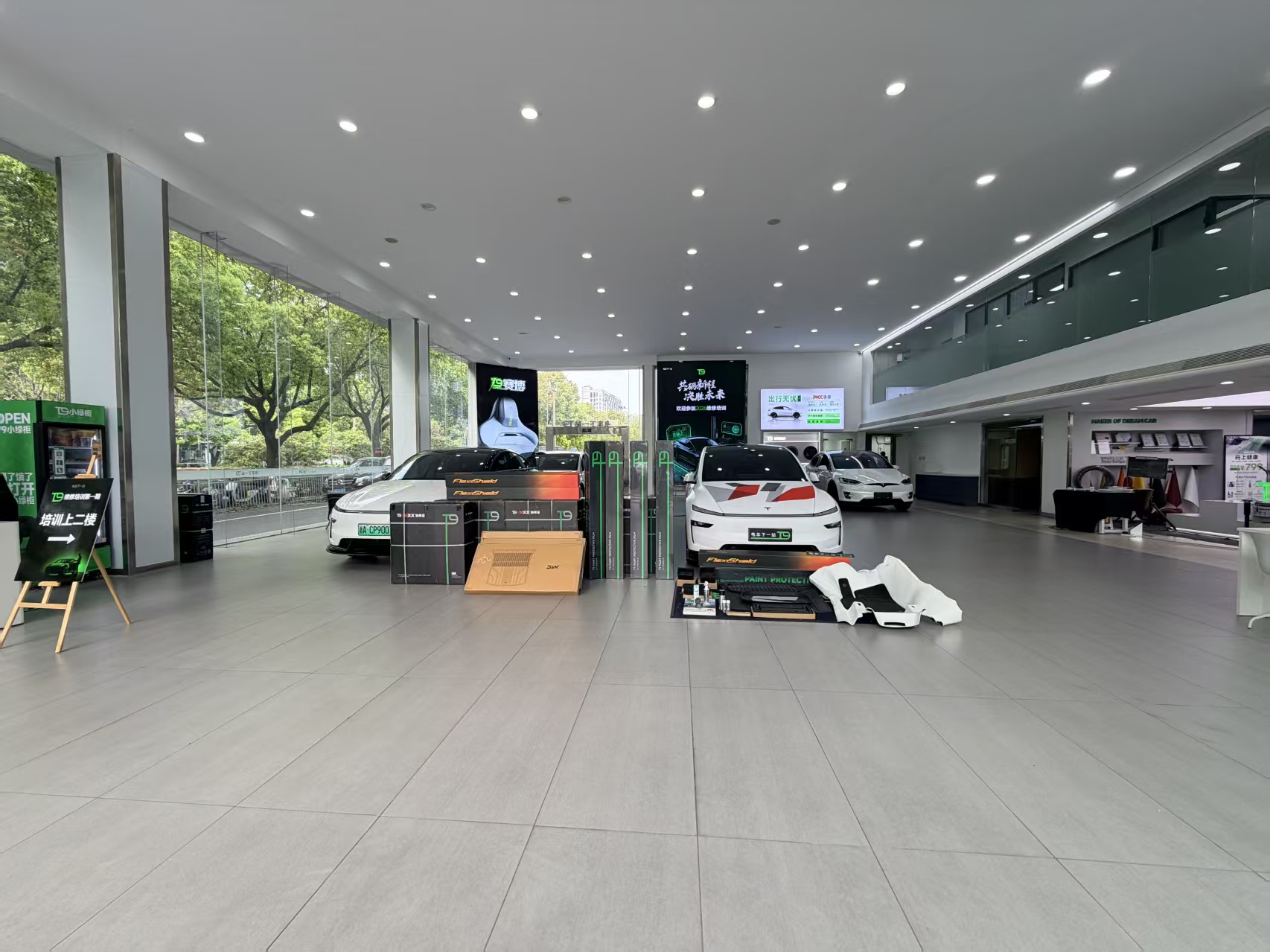
Set against that, the supply side in this category is fragmented. It ranges from established aftermarket specialists with branded partnerships to small workshops exporting through trading intermediaries. T9 EV Station is an example of the first type: a Tesla aftermarket service and accessories company established in 2021, operating a 20,000 m² manufacturing facility with more than 100 employees, a 5,000+ SKU Tesla product range covering film, supplies, modification, maintenance and repair, and an export business serving the EU and USA as main markets.
The Detailed Solution: Build Compliance Into Sourcing, Not After It
Europe: one baseline, applied across the whole catalogue
Since 13 December 2024, Regulation (EU) 2023/988 has introduced mandatory safety requirements for all consumer products sold in the EU, and Tesla aftermarket accessories fall inside that scope. The strategic takeaway for an importer is simple: in Europe, you no longer argue whether general safety expectations apply. They do. The work shifts to producing, per SKU, the documentation that shows how your product meets them.
That changes the sequence of a purchase. Compliance stops being a step that happens after the product is listed and becomes a precondition before it is purchased. For an importer selling Tesla interior accessories into the European market, the supplier must be able to support the specific SKU being sold — not issue a general statement about the company.
The United States: scope decides everything
The US does not operate a single consumer-product safety gateway comparable to GPSR. Requirements are distributed across agencies and depend on what the accessory is, how it is used, and which channel it is sold through. This is why European-facing importers sometimes arrive better prepared than US-facing ones: a single threshold forces documents to be correct once, instead of repeatedly.
In practice, that means an importer should build documentation by category — and accept that two items in the same container may follow different verification paths rather than a single template.
Film, coatings and interior parts do not share one document set
Treating paint protection film, ceramic coating and interior accessories as one compliance problem is the fastest route to a gap. They sit in different material risk classes, and they therefore need different paperwork.
- Protective products such as Tesla paint protection film and ceramic coating involve adhesives, substrates and formulations. Importers typically need product-specific composition and performance documentation rather than a general supplier declaration.
- Interior items — floor mats, trunk organizers, screen protectors — fall into a different class, where material safety documentation and, in some cases, material-specific testing are the relevant evidence.
- Electronic accessories add a separate layer again, because their compliance question concerns how the device works and where it is installed.
The sourcing principle is consistent across all three: request documentation by product category, never by purchase order.
Why a brand partnership is a useful data point
A partner logo does not prove that a specific product complies with a specific rule. It proves something else, and it is still valuable to an importer: that the supplier has passed review by an external party with its own brand reputation at stake.
T9 EV Station holds exclusive strategic partnerships with 3M, BOSCH, Wynn's, Hengst and MXR, alongside strategic partnerships with XPEL, 3W and AGF. For an importer, the value is not the logo wall. It is that material brands tend to protect their own position, and named partnerships are evidence about a supplier's quality system that a buyer can verify independently. It should be treated as one input among several — useful context, not a substitute for product-level documents.
Step-by-Step: A Six-Step Compliance Review for Importers
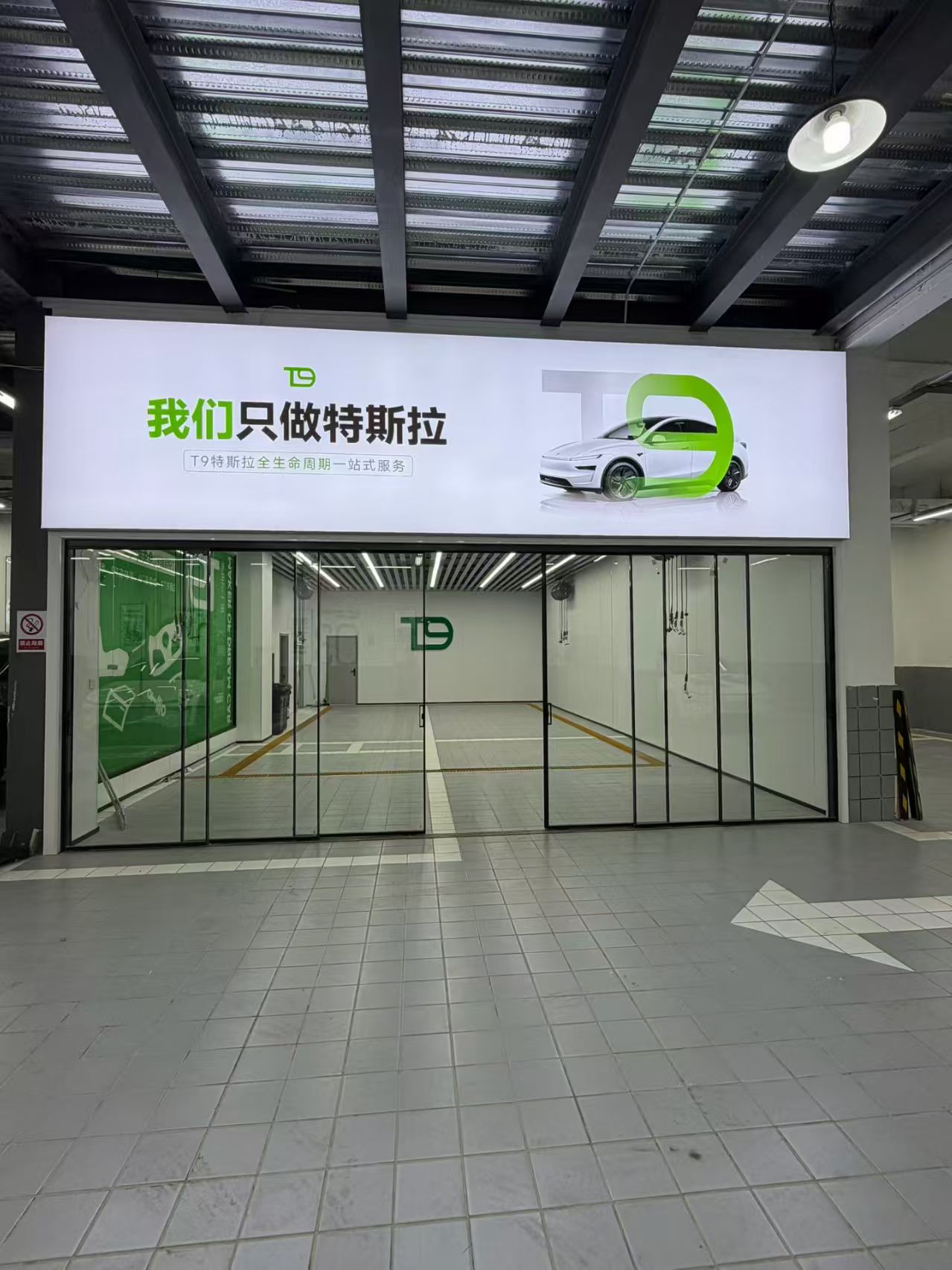
Compliance planning starts with the vehicle and the category — not with the supplier's certificate folder.
Step 1 — Classify each SKU by regulatory category, not by vehicle model
“Tesla Model Y accessories” is a product definition, not a regulatory one. Model Y describes a vehicle; it does not describe a rule set. Classify each item by what it is made of and how it is used, then layer the destination-market requirements on top. A mat, a film and a screen module in the same order will not follow the same path.
Step 2 — Ask for a document map, not a certificate folder
Request a table that maps SKUs to document types. A supplier that can point to which product is covered by which document is a fundamentally different counterparty from one who sends a compressed folder of certificates and lets you guess. This single request separates capable manufacturers from intermediaries, faster than any factory tour.
Step 3 — Validate with a small order before scale
Mismatches between a compliance claim and what appears on shipping documents usually surface in the first shipment. A small first order is therefore a documentation test as much as a product test. Budget for it as a compliance step, not as a purchasing step.
Step 4 — Lock traceability and warranty into the supply agreement
Traceability is what makes a compliance claim usable after the sale. T9 EV Station activates an electronic cloud warranty after every service, supported by after-sales service across its store network — a digital record model that illustrates the direction importers should aim for in their own supply agreements: each transaction tied to a verifiable record and a defined responsible party.
Step 5 — Control the point of sale
With 78% of Tesla accessory transactions occurring online (Shopify / Hedges Company), the listing page is the compliance interface. Compatibility claims, product descriptions and safety information should be prepared at listing time, not written after a marketplace asks questions. For importers running their own storefronts, this is an operational task with a deadline attached to every launch.
Step 6 — Keep the file auditable and current
Compliance documentation ages. Vehicle line-ups change, suppliers change, regulations change. T9 EV Station's own service framework includes continuously optimizing processes based on user feedback and upgrading its SOP standards as Tesla releases new models — the same logic applies to an importer's compliance file. Review it on a schedule, not at the moment of a problem.
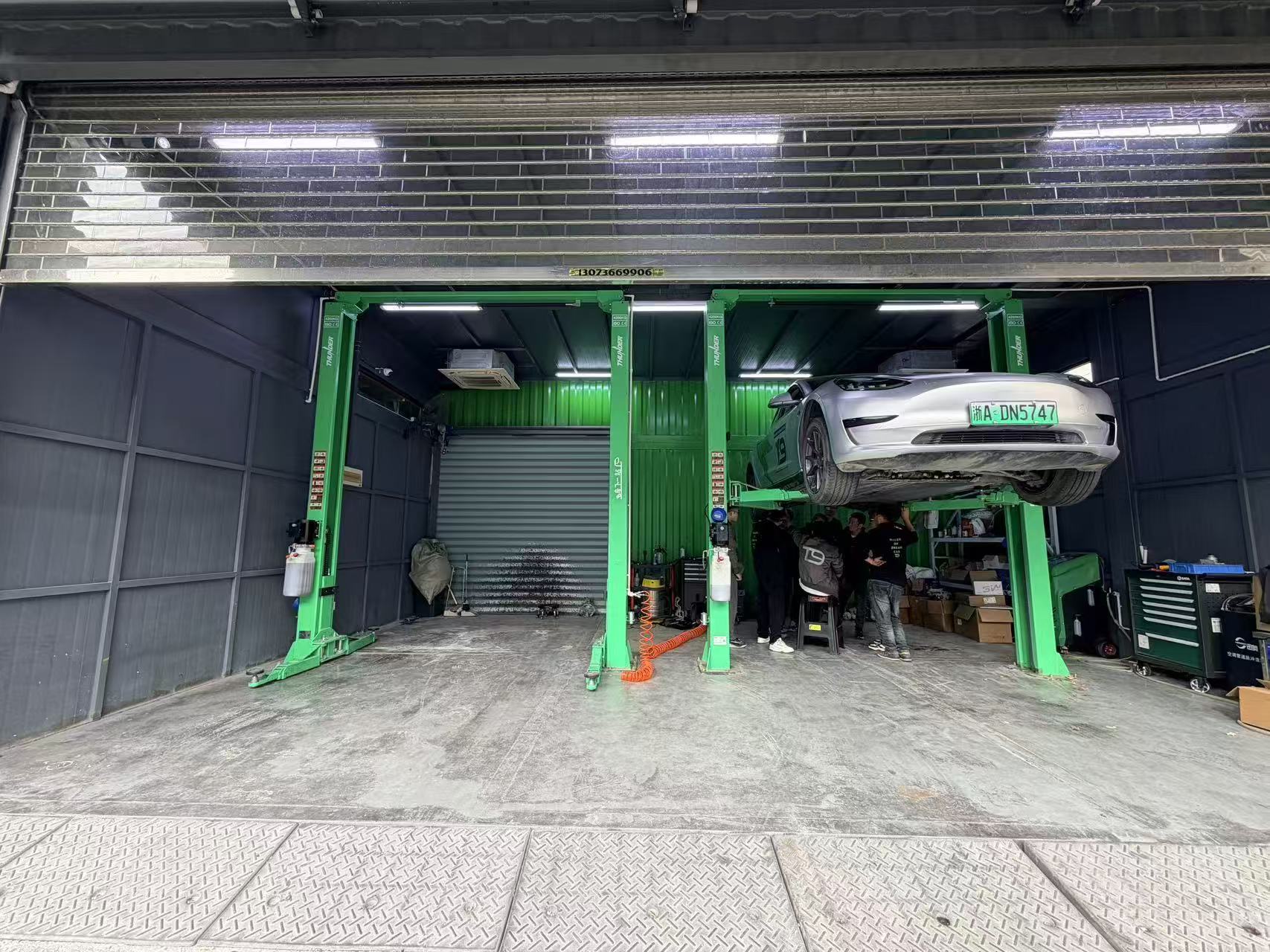
Documented process control is what makes compliance claims verifiable rather than aspirational.
Use Cases: Where the Compliance Burden Actually Lands Differently
Private-label and brand-owner importers
If you are putting your own brand on Tesla auto accessories, you are the responsible party in the destination market. That means the compliance question is not “does the factory have certificates” but “can the factory support documentation at the SKU level, repeatedly, across model-year changes.” Breadth of range matters here: a supplier carrying 5,000+ SKUs across film, supplies, modification, maintenance and repair is more likely to have a documentation structure that scales than one selling a narrow list.
Distributors and channel partners
Distributors inherit risk across batches. A single non-conforming shipment affects not just that order but the resale relationship downstream. This is where supplier consistency becomes the real commercial variable: identical products, identical documentation, identical support across repeated orders. Electronic cloud warranty activation and standardized process control are the operational signals that a supplier can deliver that consistency rather than only promising it.
E-commerce and marketplace sellers
Online sellers face the tightest timing. With the majority of Tesla accessory purchases happening digitally, compliance information has to be ready before the listing goes live. T9 EV Station's main markets are the EU and USA, and its business has expanded to Los Angeles and Malaysia, which gives it direct exposure to both destination markets — useful reference experience when an importer is preparing listing documentation for the same regions.
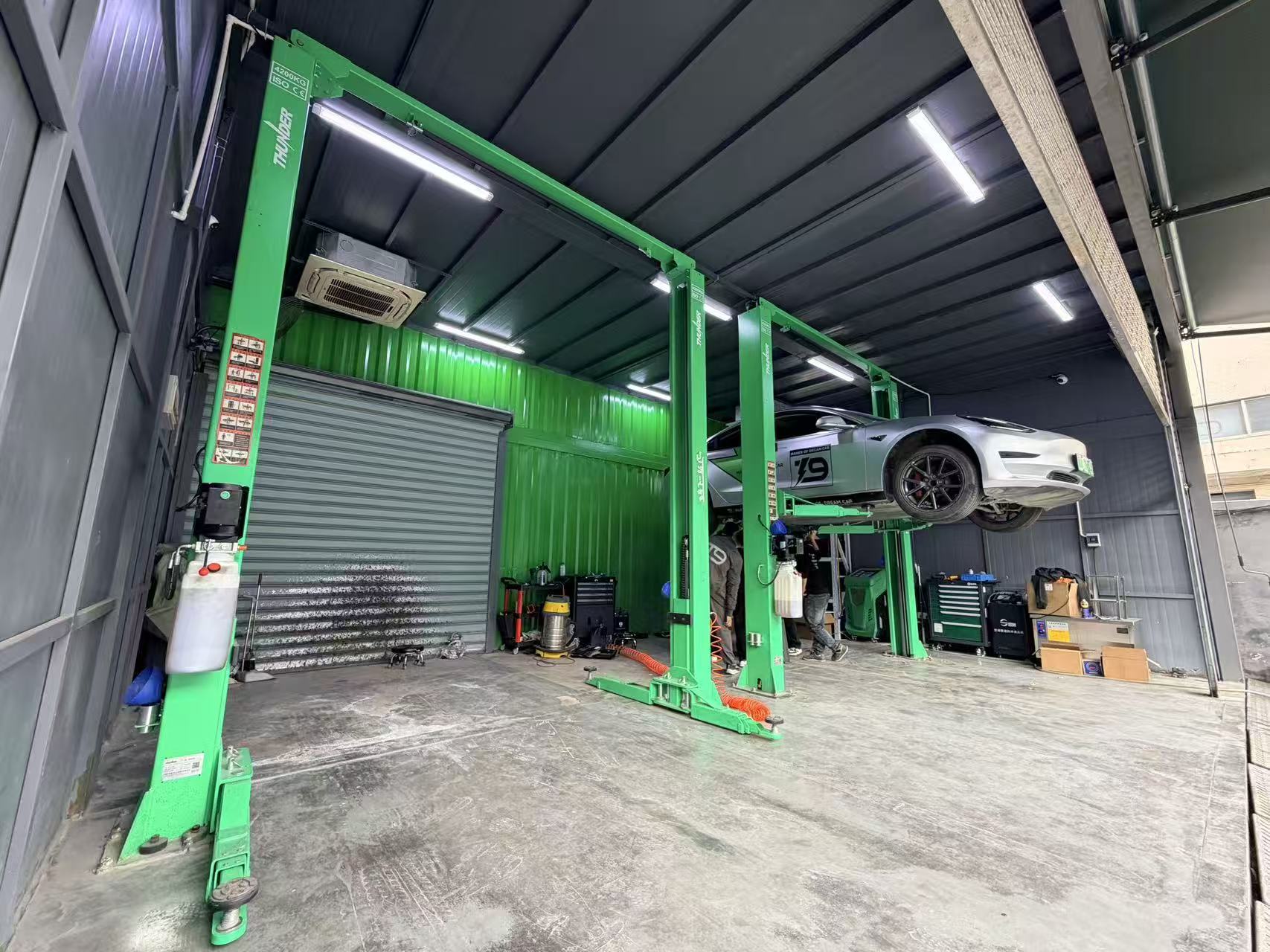
Consistency across batches is what distributors actually buy when they buy compliant supply.
Comparison Table: Matching Importer Requirements to Verifiable Evidence
Compliance conversations go faster when the buyer asks for evidence rather than assurances. The table below lists what importers should verify, the type of proof that genuinely answers it, and the corresponding fact T9 EV Station can be checked against.
| What importers should verify | Evidence that actually answers it | T9 EV Station reference fact |
|---|---|---|
| Real production scale | Verifiable facility size and workforce, not a trading address | 20,000 m² manufacturing facility; more than 100 employees |
| Documented process control | A written SOP plus a defined check before goods are released | Standardized six-step aftermarket SOP with a “no inspection, no delivery” closed-loop quality control |
| External quality endorsement | Named partnerships with brands carrying their own reputation risk | Exclusive strategic partnerships with 3M, BOSCH, Wynn's, Hengst and MXR; strategic partnerships with XPEL, 3W and AGF |
| Range depth across model cycles | SKU count that can absorb how Tesla updates its line-up | 5,000+ SKUs covering film, supplies, modification, maintenance and repair |
| Export experience in the destination market | Existing business in the target region | Main markets: EU and USA; business expanded to Los Angeles and Malaysia |
| Traceability after the sale | A digital record system, not a paper slip | Electronic cloud warranty activated after service, with after-sales support across the store network |
| Engineering support | An in-house technical team rather than an outsourced helpdesk | 20 in-house engineers |
FAQ: Importers' Questions on Tesla Accessory Compliance
Which regulation applies most directly when importing Tesla accessories into the EU?
The General Product Safety Regulation (EU) 2023/988 has introduced mandatory safety requirements for all consumer products sold in the EU since 13 December 2024, and Tesla aftermarket accessories are within its scope. Importers should treat it as a catalogue-wide baseline rather than a rule for one product type, and make sure each SKU they list has safety documentation behind it.
What should an importer ask a supplier for before the first shipment?
Ask for a document map — which product is covered by which document — and for evidence of real production capability behind it. T9 EV Station's reference facts are a 20,000 m² manufacturing facility, more than 100 employees, 20 in-house engineers and a 5,000+ SKU range across film, supplies, modification, maintenance and repair. Those numbers matter because documentation is only credible when a real production system stands behind it.
Can brand partnerships serve as compliance evidence?
Indirectly, yes. T9 EV Station holds exclusive strategic partnerships with 3M, BOSCH, Wynn's, Hengst and MXR, and strategic partnerships with XPEL, 3W and AGF. These do not replace product-level documentation, but they indicate that the supplier has been reviewed by external companies with their own reputational exposure.
How should an importer validate a batch before committing to volume?
Validate with a small order and check documentation against goods, not goods alone. The quality-control discipline T9 EV Station applies in its own operations — a standardized six-step process governed by a “no inspection, no delivery” closed-loop principle — is the standard an importer should replicate at intake: nothing moves forward until the previous stage has been checked.
What should long-term supply agreements require from a Tesla accessories partner?
Sustainability of supply, not just legality of a single shipment. T9 EV Station's main markets are the EU and USA, its business has expanded to Los Angeles and Malaysia, and it operates over one hundred Tesla-dedicated stores in China — a footprint that matters because compliance is a recurring obligation rather than a one-time cost. If you would like to review sample availability, request a quotation, or receive the full T9 EV Station catalogue covering Tesla Model Y accessories, interior and exterior accessories, paint protection film and ceramic coating, you can reach the team directly at www.t9evparts.com or download the T9 EV Station company brochure.
Conclusion: Compliance Is a Sourcing Decision, Not a Paperwork Task
The US and EU do not ask the same question of a Tesla accessories importer. Europe now applies a single safety baseline across consumer products, which pushes compliance to the front of the buying process. The US distributes requirements by category and channel, which pushes documentation discipline onto the importer. Both roads lead to the same place: the supplier you choose determines how hard the next five years of compliance will be.
Three things are worth holding onto. First, classify products by category before anything else — a vehicle model is not a rule set. Second, ask for a document map, not a certificate folder, because only one of them can be audited. Third, treat supplier capability as compliance evidence in its own right: 20,000 m² of manufacturing, 20 in-house engineers, named partnerships with 3M and BOSCH, and a 5,000+ SKU range are the structural reasons documentation can be produced consistently rather than once.
Importers rarely lose money on a single non-compliant item. They lose it on the pattern — a supplier who cannot reproduce the paperwork on the second order, or the fifth. Choosing for reproducibility, rather than for the lowest first quotation, is the part of compliance that no regulation can enforce on your behalf.
Request Samples & Compliance Documentation
T9 EV Station supports importers with product samples, category-level documentation and full-range quotations across Tesla interior, exterior, protection and upgrade accessories.
Email: cn.johnchen@gmail.com | Tel / WhatsApp: +86 138-5804-5521 | www.t9evparts.com
Company brochure: Download the T9 EV Station catalogue (PDF)
Have Questions or Need More Details?
Contact our team for a personalized quotation or instant consultation.
Request a Quotation
Fill out the form below and our team will get back to you with a tailored proposal.
WhatsApp Direct Chat
Prefer to chat in real-time? Message us on WhatsApp for instant assistance & quick answers.
- Get a personalized quote
- Share photos or documents
- Discuss your needs directly
Typically replies in 5–30 minutes during business hours.