Tesla Service Packages Compared: Film-Only vs. Maintenance-Only vs. Full-Lifecycle
Short answer: film-only and maintenance-only packages are the sensible choice when your needs sit inside a single category and you want the smallest possible commitment. A full-lifecycle package is built for owners and procurement buyers who would otherwise hand the same car to three or four different shops, and who want one intake, one quotation, one quality record and one responsible party across film, accessories, modification, upkeep and repair. Full-lifecycle service is not automatically cheaper per job; its value shows up in the handoffs it removes. The comparison below sets out where each model stops, who owns the vehicle at each stage, and what fragmentation actually costs in time and risk.
"Tesla service" describes work that happens in very different buildings. A paint protection film installer, a suspension specialist and a high-voltage repair bay rarely share a roof, so most Tesla owners default to buying three separate packages from three separate vendors without ever comparing them as one decision. That default is rarely examined, and it is where avoidable cost and avoidable risk accumulate.
This guide treats the three package shapes as comparable products. Scope, handoff points, time windows, cost structure and the risk of fragmented service are assessed on the same dimensions, and the full-lifecycle side is anchored to a real operating model: T9 EV Station, a Tesla-only aftermarket chain with more than 100 stores in China, a 5,000+ SKU supply chain and over 300,000 Tesla vehicles served.
What film-only, maintenance-only and full-lifecycle packages actually cover
A Tesla service package is defined by where its scope stops, not by how many items it lists on a menu. The three package shapes on the market succeed or fail for quite different reasons.
Film-only packages: surface and appearance
Film-only packages cover paint protection film (PPF), window tint, ceramic coating and vinyl wraps. The work happens in a bay, the car is usually returned the same day or the next, and the commercial relationship ends at handover. Scope stops at the surface: a film installer will not diagnose a suspension noise, and generally should not try. This model suits new-car owners protecting paint before the first stone chip, owners refreshing a wrap, and lessees who must return a vehicle in original condition. Buyers searching for Tesla paint protection film, Tesla window tint, Tesla ceramic coating or Tesla wrap services are shopping almost entirely inside this category.
Maintenance-only packages: condition and function
Maintenance-only packages cover the mechanical side — scheduled upkeep, brake service, suspension work, diagnostics and general repair. The deliverable is condition, not appearance. Scope stops where a body shop or an upholstery specialist would begin, which means cosmetic and trim work sits outside the agreement even when it is caused by the same incident. This model suits out-of-warranty owners managing wear items, high-mileage drivers, and fleets tracking cost per vehicle. Searches for Tesla maintenance services, Tesla repair service, Tesla brake service or Tesla suspension upgrade sit here.
Full-lifecycle packages: one structure, five categories
A full-lifecycle package places film, accessories, modification, upkeep and repair under one service structure rather than one invoice. T9 EV Station runs five categories inside that structure: film installation, automotive supplies and accessories, modification and personalized upgrades, daily maintenance and care, and vehicle repair and maintenance. The differentiator is not the length of the menu — it is the number of times the vehicle changes hands, and whether one party holds the record from intake to aftercare.
Why fragmentation, not service quality, is the real problem
Most Tesla owners do not buy a bad service. They buy three good services from three vendors and then absorb the cost of coordinating them. That coordination cost is invisible on any single invoice, which is why it survives comparison shopping.
Each vendor optimises inside its own category: the film shop optimises lift time and bay throughput, the maintenance shop optimises diagnostic turnaround, the modification shop optimises fitment. Nobody optimises the vehicle's overall schedule, and nobody is accountable for the gap between categories. When a panel is filmed and later needs paint correction, or a suspension change alters geometry that a maintenance shop then attributes to wear, the default outcome is a shared bill and a delayed car.
The surrounding market explains why this pattern is so common. The global electric vehicle aftermarket was valued at USD 82.08 billion in 2025, according to Fortune Business Insights' September 2026 industry study — a market broad enough that no single shop type serves all of it. On the capacity side, ScrapeHero's location report counted 232 official Tesla Service Centers in the United States as of 21 August 2026. A broad multi-category aftermarket alongside a finite number of official locations is the environment in which single-category specialists multiply. Neither figure says anything about service quality; together they explain why multi-vendor purchasing became the default rather than a deliberate choice.
Where the handoffs happen: three points worth counting
A handoff is any point where the vehicle, its records or its warranty passes to a different responsible party. Fragmented Tesla service reliably creates at least three.
- Intake and records. Every new shop re-inspects the car and starts its own file. Panel condition, previous film installation, torque values and prior repairs are re-established from scratch, or not at all.
- Technical boundaries. A film installer is not equipped to trace a rattle, and a maintenance bay is not equipped to judge whether a wrap lifted because of surface preparation. Work that crosses the boundary is either declined or subcontracted, and subcontracting adds a fourth party without adding accountability.
- Warranty boundaries. This is where fragmentation becomes expensive. If film was applied over a panel that later requires paint correction, or a modification changed a component that a maintenance provider then treats as wear, responsibility is disputed by default — and the owner carries the vehicle in between.
Decision rule: count the handoffs before you compare prices. A package that removes two handoffs is not competing on price with a package that keeps them; it is selling a different product.
Time and cost trade-offs, compared honestly
Time is easier to compare than price, because time can be estimated from a documented workflow while price depends on market, model, specification and material grade. Any provider that quotes one headline number for "a Tesla" across all markets is simplifying something.
On the time side, T9's standardized process estimates 1–2 working days for general services and 2–7 working days for modification and repair projects. Those are per-booking windows for a single provider handling a defined scope. Splitting the same scope across vendors does not shorten the actual work; it adds a separate booking wait, a separate intake and, usually, transport between locations for each category.
On the cost side, three fragmentation costs rarely appear on any invoice: repeat inspection labour, transport between locations, and idle days while one vendor waits for another. A film quote cannot show them because they are incurred elsewhere. In T9's documented Model 3 project — paint protection film, interior personalization, maintenance and aftercare warranty completed in one booking — the recorded result was a 3-working-day duration and a 60% reduction in service time compared with using separate shops for each category. That is a single case record for one vehicle, not a promise for every configuration or market. The useful part is the mechanism: the saving came from sequence and intake consolidation, not from faster hands.
What a full-lifecycle provider can legitimately do is make the cost comparable. T9 operates a nationwide unified pricing and service system and signs a formal quotation before work begins, which means the film job, the maintenance job and the modification job appear in one agreed scope instead of three estimates arriving at different times. That is a comparison aid, not a claim that a combined package undercuts every single-service quote you could collect.
What full-lifecycle delivery looks like in practice at T9 EV Station
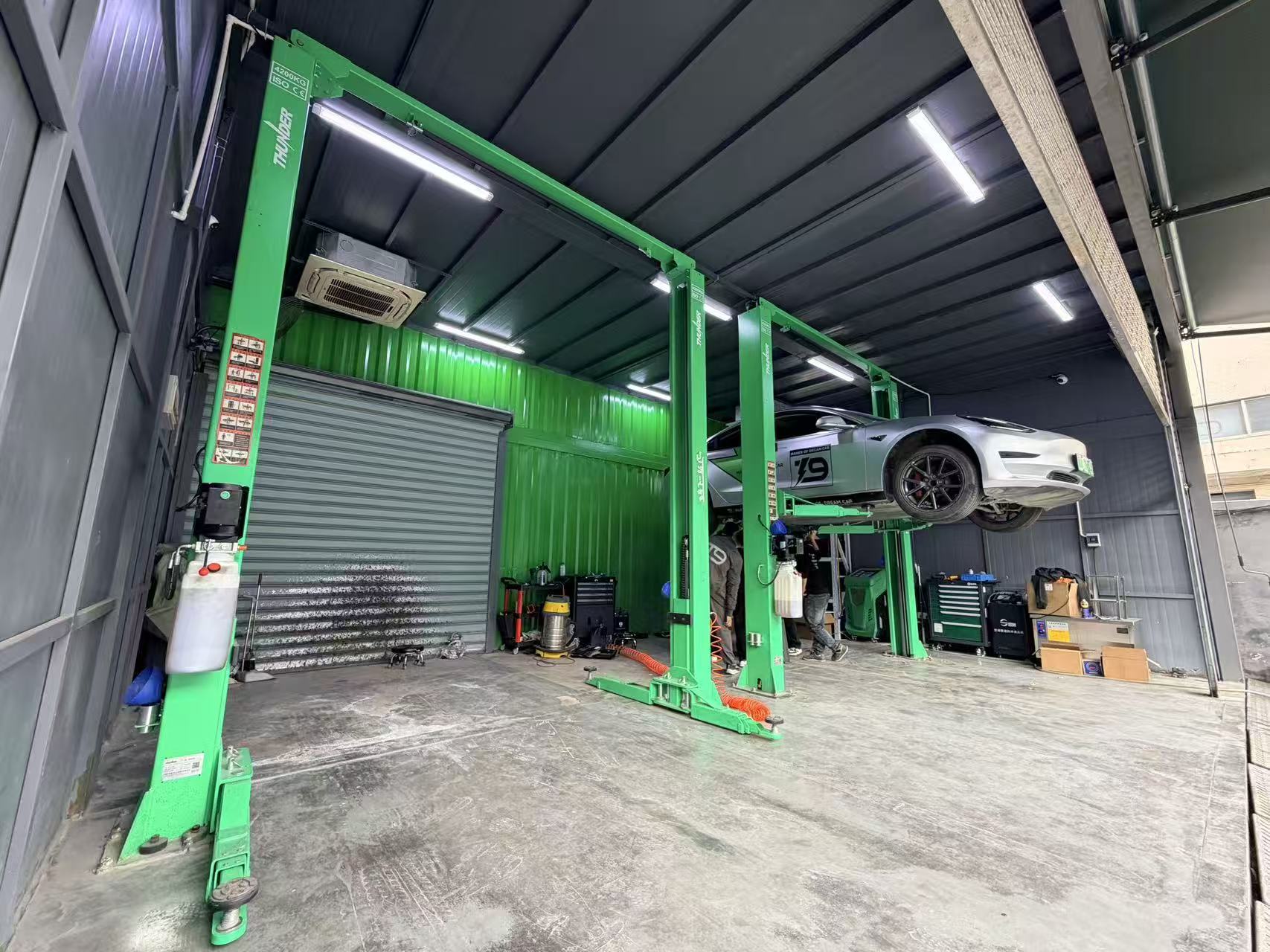
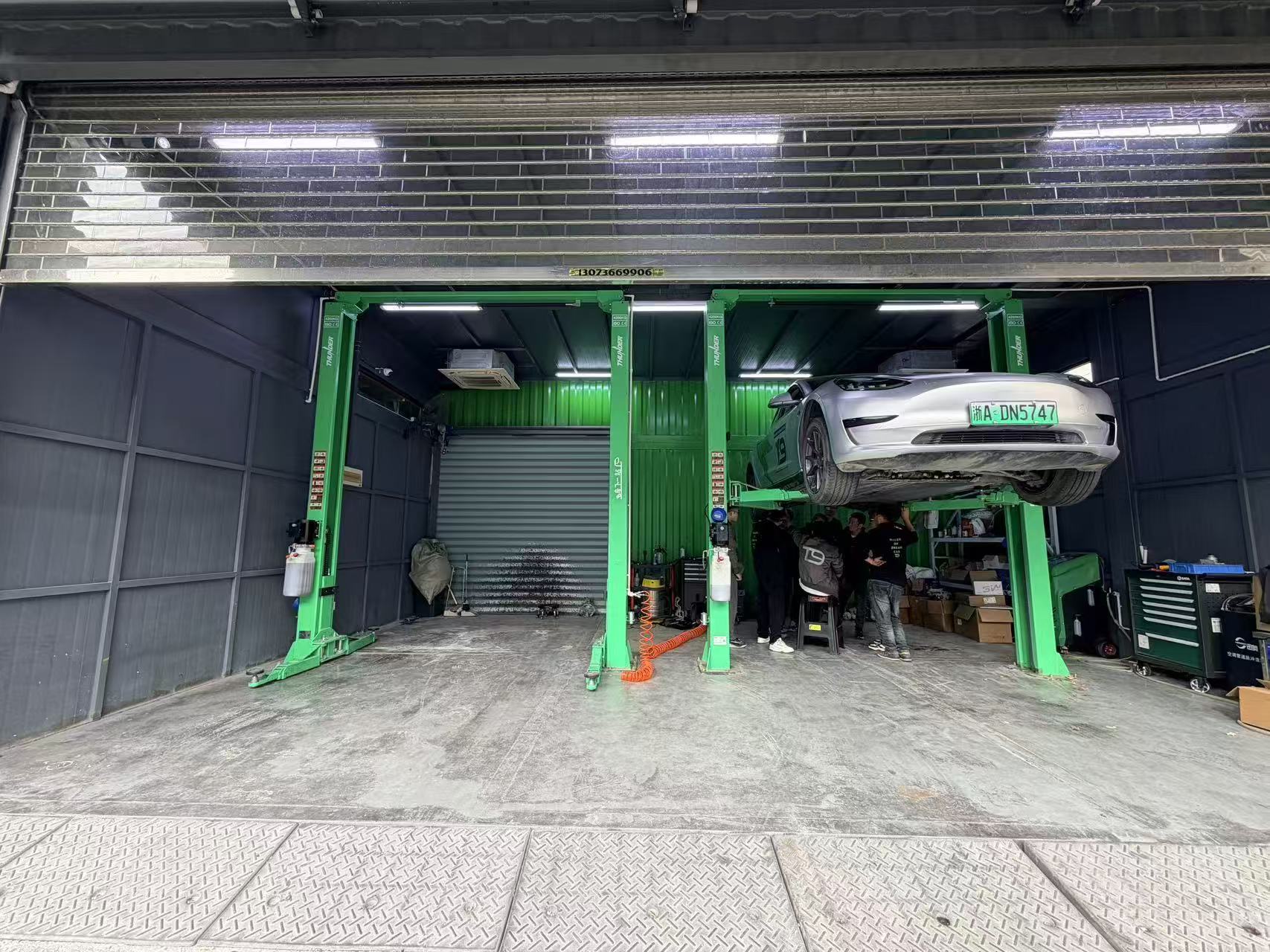
T9 EV Station is the Tesla-only aftermarket service brand operated by Hangzhou T9 EV Technology Co., Ltd., established in 2021. It runs more than 100 stores across China dedicated exclusively to Tesla vehicles, alongside service stations in Los Angeles and Malaysia, and reports over 300,000 Tesla vehicles served since founding.
The capacity behind that network is what decides whether a package can actually be delivered rather than merely advertised: a 20,000 m² facility, more than 100 employees including a 20-engineer research and development team, and a 5,000+ SKU parts and accessories supply chain spanning films, floor mats, modification parts, upkeep items and repair components. SKU depth is the quiet constraint in full-lifecycle service. A provider that cannot stock the trim clip, the specific film roll or the model-specific component ends up ordering it — and the handoff returns through the back door.
Material sourcing is the second constraint. T9 states exclusive strategic partnerships with 3M, BOSCH, Wynn's, Hengst and MXR, and strategic partnerships with XPEL, 3W and AGF. For a buyer, the practical reading is narrow but useful: film and chemical inputs come through named suppliers rather than an unnamed pool, which is what makes a consistent specification possible across a store network. It does not by itself prove installation quality — that is what the standardized construction SOP and the post-service inspection are for.
Standardization is the third layer. T9 works to a nationwide unified pricing and service system, a standardized construction SOP, an electronic cloud warranty, and ERP/CRM-based store operations. The company lists a motor vehicle maintenance operation record and a franchise business filing qualification among its credentials, together with the 2025 Automotive Service Golden Xun Award and 2025 Automotive Service World Recommended Brand. Buyers outside China should treat these as the provider's own disclosures and check the equivalent local requirements for their market before signing.
The full-lifecycle workflow, step by step
A full-lifecycle package is only as strong as its process. T9's six-stage sequence shows what a consolidated job looks like when the handoffs are internal rather than external.
- Consultation and demand matching. Vehicle model, current condition and intended outcome are confirmed; the output is a service plan and a preliminary quotation.
- Quotation confirmation and agreement. Transparent, unified pricing is issued and a formal service agreement is signed before any work starts.
- Pre-service vehicle inspection. Condition is checked and recorded with the owner's confirmation — the step that prevents most later disputes about pre-existing damage.
- Standardized construction and quality control. Film, modification and maintenance work is executed to SOP with real-time quality control and a written construction record.
- Post-service testing and delivery. The finished vehicle is tested and handed over against a written inspection report.
- After-sales support and warranty activation. An electronic cloud warranty certificate is issued and supported through the nationwide network.
Each stage produces a document. That chain of documents — plan, signed quotation, pre-inspection report, construction record, test report, warranty certificate — is precisely what a three-vendor purchase cannot assemble, because no single vendor holds the middle of it.
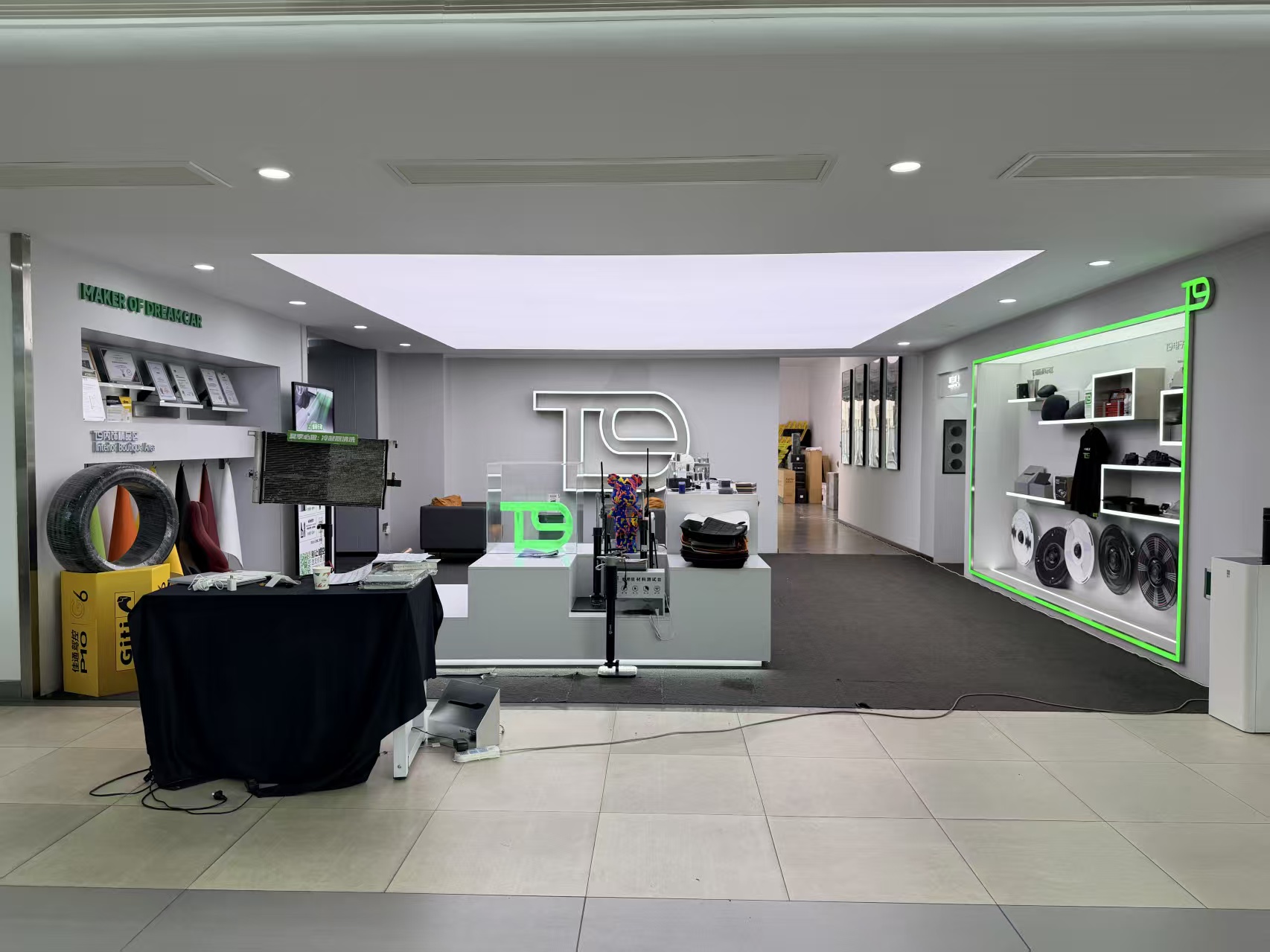
Film-only vs. maintenance-only vs. full-lifecycle: side-by-side comparison
| Comparison dimension | Film-only package | Maintenance-only package | Full-lifecycle package |
|---|---|---|---|
| Primary scope | PPF, window tint, ceramic coating, wraps | Scheduled upkeep, brakes, suspension, diagnostics, repair | Film, accessories, modification, upkeep and repair under one structure |
| Where the vehicle changes hands | Once, and again for every additional category | Once, and again for every additional category | Once, at intake and at delivery |
| Typical time window | Single-booking bay work | Single-booking mechanical work | 1–2 working days for general services; 2–7 working days for modification and repair |
| Cost structure | One quoted job, simple to budget, silent on everything outside film | One quoted job, silent on cosmetic and trim work | One agreed scope; repeat intake absorbed rather than billed separately |
| Records and warranty | Shop-level warranty on the film | Shop-level warranty on the repair | One electronic warranty record covering the executed scope |
| Main risk | Boundary disputes when mechanical work follows | Boundary disputes when cosmetic work follows | Provider dependency — the whole record sits with one party |
| Best fit | New-car surface protection, lease returns, wrap refreshes | Out-of-warranty wear management, high-mileage cars | Owners planning film plus modification plus long-term upkeep; fleets and procurement buyers |
Which package fits which owner or buyer
The right choice follows from what you intend to do with the car, not from which package sounds most complete.
- You only need surface protection on a new car. Film-only is the correct scope and the cheapest way to test an installer. Ask for the pre-inspection record and the film brand authorization anyway; those two documents are what you will rely on if a panel lifts.
- You are managing wear on a car outside warranty with no appearance spend planned. Maintenance-only is appropriate. Confirm the diagnostic process and whether the shop records torque and alignment values, because that record is what a later buyer or another workshop will ask for.
- You are planning film, accessories and a suspension or interior change, and expect to keep the car. This is the profile that benefits most from a full-lifecycle structure, because at least three handoffs disappear and one warranty record covers the whole job.
- You are procuring for a fleet. Multi-vehicle operations should demand one warranty document and one price list before comparing rates, and should keep a specialist vendor only where the main provider genuinely lacks a capability. Consolidation without standardization simply moves the coordination cost inside one contract.
- You are an operator or distributor evaluating the model. Compare SKU depth, store standardization and warranty administration rather than the length of the service menu. T9's relevance here is structural: more than 100 Tesla-only stores, a 5,000+ SKU supply chain and an electronic cloud warranty describe an operating system, not a promotion.
A seven-point checklist before you sign any Tesla service package
- Count the handoffs. If the answer is more than two, price the transport and idle time before you compare quotations.
- Ask who owns the vehicle record from intake to aftercare, and ask to see a sample record.
- Request the pre-inspection report and the post-service test report formats — not just the promise that they exist.
- Read the warranty document: what it covers, for how long, and which locations will honor it.
- Confirm the time window for the combined job, not per line item. Per-item windows hide the gaps between them.
- Check SKU and material availability for your exact model, year and trim before committing to a date.
- Verify whether the same price list applies in every store, and whether the quotation is signed before work starts.
FAQ: choosing between Tesla service packages
What documentation should I check before choosing a third-party Tesla service package?
Film, modification, maintenance and repair sit under different rules, so the documents differ by category. For maintenance and repair work, request the provider's motor vehicle maintenance operation record and its business filing qualification; T9 lists both. For film and appearance work, request the product brand authorization and the installation SOP the shop follows. For any package that includes a warranty, request the warranty document itself — what it covers, how long, and which locations honor it. T9 issues an electronic cloud warranty certificate on completion and supports it through its network. Buyers operating outside China should also confirm local requirements for window tint and structural modification before signing.
Can a single provider realistically handle both film work and mechanical service?
Yes, if the provider is built for it rather than reselling it. T9 runs five service categories under one structure — film installation, automotive supplies and accessories, modification and personalized upgrades, daily maintenance and care, and vehicle repair and maintenance — backed by 5,000+ SKUs, a 20,000 m² facility, a 20-engineer R&D team and more than 100 Tesla-only stores in China. The condition is that the same provider performs the work under its own SOP and records it in one system. A broker that subcontracts each category returns you to the handoff problem with an extra layer of margin.
Is a full-lifecycle package more expensive than buying film and maintenance separately?
There is no single answer, and a provider quoting one number for every Tesla is simplifying something. What can be compared is cost structure. A film-only purchase is one quoted job with one intake; adding maintenance and modification as separate purchases adds a second and third intake, transport between locations, and repeat inspection time — costs that rarely appear on any invoice but are paid in days. T9 addresses the comparison side by publishing unified pricing and signing a formal quotation before work begins, which puts the whole scope in one agreed document. Whether your total is lower depends on what you would otherwise buy; the structural difference is fewer billable handoffs.
Can I start with one category and expand to a wider package later?
Yes, and it is the lower-risk way to evaluate a provider. T9's process begins with consultation and demand matching, then a pre-inspection report and a signed quotation, so a first film or maintenance job produces the evidence you need: construction quality, record keeping, delivery inspection and warranty activation. If those hold, the same provider can take on modification and repair later without a new vendor qualification cycle. The documented Model 3 case shows the combined version of that path — paint protection film, interior personalization, maintenance and aftercare warranty completed as one project over three working days.
How long does a full-lifecycle job take compared with separate bookings?
T9's standardized process estimates 1–2 working days for general services and 2–7 working days for modification and repair projects, counted as one booking. Splitting the same scope across vendors does not shorten the work itself; it adds a separate booking wait, a separate intake and usually transport time between locations for each category. In the documented Model 3 case, the combined project was completed in 3 working days, with a recorded 60% reduction in service time against fragmented separate services. Treat that as one case record, and confirm the schedule for your own configuration before committing.
Conclusion: choose the package by the number of handoffs you are willing to manage
Film-only, maintenance-only and full-lifecycle packages are not three quality tiers of the same product. They are three different answers to the question of who owns your Tesla between jobs. Film-only and maintenance-only packages are efficient, honest purchases when your need sits inside one category — and both become expensive the moment a second category enters, because the cost moves into intake, transport and disputed responsibility rather than into the quoted price.
A full-lifecycle package earns its place when the vehicle will receive more than one type of work and you would rather manage one record than three. That is the structure T9 EV Station operates: more than 100 Tesla-only stores in China, service stations in Los Angeles and Malaysia, a 5,000+ SKU supply chain, over 300,000 Tesla vehicles served, and a six-stage process that ends in an electronic warranty certificate rather than a verbal handshake. Whether it fits your specific car, market and timeline is a question worth answering with documents in hand — start with the scope you actually need, and add categories only after the first job's records hold up.
Next step
Review the full service scope, store network and package structure in the T9 EV Station company brochure, then match it against the checklist above before you commit to a single-category or combined package.
Have Questions or Need More Details?
Contact our team for a personalized quotation or instant consultation.
Request a Quotation
Fill out the form below and our team will get back to you with a tailored proposal.
WhatsApp Direct Chat
Prefer to chat in real-time? Message us on WhatsApp for instant assistance & quick answers.
- Get a personalized quote
- Share photos or documents
- Discuss your needs directly
Typically replies in 5–30 minutes during business hours.