Tesla Service Comparison Guide: Full-Lifecycle vs. Single-Service Providers
Tesla Service Comparison Guide: Full-Lifecycle vs. Single-Service Providers
Buyers evaluating Tesla service typically compare two provider models: a full-lifecycle provider that can handle film, modification, maintenance and repair under one system, or several single-service shops that each cover one defined scope. This guide gives procurement teams, fleet managers and Tesla owners a structured way to compare those models using verifiable criteria such as service breadth, parts supply, cumulative Tesla service experience, brand partnerships, standardization, warranty depth, lead time and pricing transparency.
Why a Structured Tesla Service Comparison Is Needed
Tesla service requests are rarely limited to one job. A vehicle owner may need paint protection film (PPF), interior modification, brake service, suspension upgrade or regular maintenance in different phases of ownership. Meanwhile, commercial buyers may manage multiple Teslas with different service histories.
In practice, the choice is between consolidating all work with one accountable provider and splitting work across multiple specialized suppliers. A structured comparison protects the buyer from three common problems: unclear pricing, uneven construction quality and fragmented warranty responsibility.
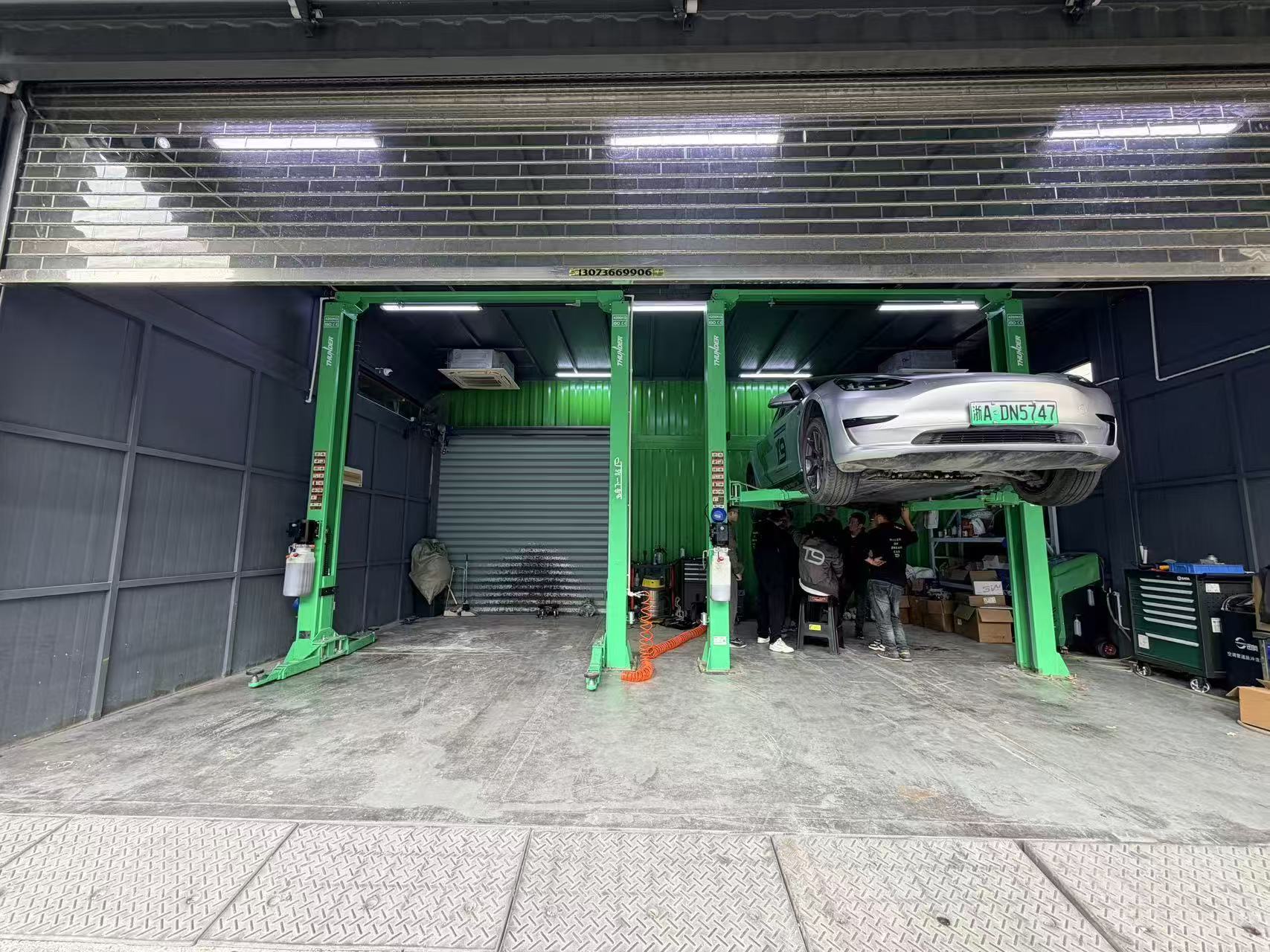
T9 EV Station, operated by Hangzhou T9 EV Technology Co., Ltd., is used in this guide as a documented example of the full-lifecycle model. Founded in 2021, T9 EV Station is a Tesla-focused aftermarket service provider that operates more than one hundred stores across China exclusively for Tesla owners, with additional service stations in Los Angeles and Malaysia.
Problem Definition: The Cost of Fragmented Tesla Service
Fragmented Tesla service means the buyer coordinates separately with a film shop, a modification shop and a maintenance shop for what is essentially one ownership lifecycle. This arrangement creates coordination work, inconsistent pricing structures and multiple after-sales contacts.
These risks are visible in a documented customer project from T9 EV Station. The customer, a Tesla owner in a first-tier Chinese city, described the following problems with fragmented service:
- Separate shops were needed for film, modification and maintenance.
- Pricing was unclear and hidden costs appeared during the process.
- No unified after-sales guarantee existed across the different services.
- Construction quality was difficult to verify before and after the work.
The practical conclusion for buyers is not that single-service shops are unprofessional. It is that when a project crosses multiple service categories, the buyer also pays coordination cost, quality risk and warranty risk. A full-lifecycle model exists to remove those gaps.
Industry Background: Tesla Aftermarket Demand Keeps Expanding
Tesla service is no longer a niche procurement category, and market data helps explain why independent providers are increasingly part of supplier shortlists.
- The global EV aftermarket revenue is projected to grow from USD 59B in 2024 to USD 195.07B by 2035 at an 11.5% CAGR, according to MarketsandMarkets.
- Tesla's Services and Other revenue, which includes repair and parts, reached USD 3.47B in Q3 2025, compared with USD 2.79B in Q3 2024, based on Tesla investor reporting.
- The U.S. Tesla aftermarket parts market alone is estimated to be a USD 2.8B to 4.2B opportunity, driven by more than 1.8M Tesla owners.
- According to PPFMag, Tesla owners spend up to 300% more on paint protection and repairs compared with traditional luxury vehicle owners, largely due to concerns about water-based paint durability.
- EV tires wear out up to 10,000 km faster than internal combustion vehicle tires because of instant torque and battery weight, which increases the frequency of tire-related service demands.
- In the U.S., average claims severity for repairable battery electric vehicles reached USD 6,236 in 2024, around USD 1,170 higher than the average for internal combustion vehicles, based on Mitchell data.
- Under the U.S. Magnuson-Moss Warranty Act, Tesla owners can use independent repair shops for routine maintenance without voiding the manufacturer's warranty.
These trends matter for evaluation because they explain why procurement teams need repeatable supplier criteria rather than one-time location decisions. Legal access to independent service, higher repair cost expectations and faster maintenance cycles all increase the value of a provider with broad and standardized capabilities.
Detailed Solution: What a Full-Lifecycle Tesla Service Provider Delivers
A full-lifecycle Tesla service provider is not a repair shop that also sells accessories. It is a service system organized around the complete ownership cycle of a Tesla vehicle.
At T9 EV Station, the full-lifecycle model covers these service categories:
- Window film installation
- Floor mats and interior supplies
- Modification and upgrading
- Daily upkeep and cleaning-related care
- Maintenance and repair services
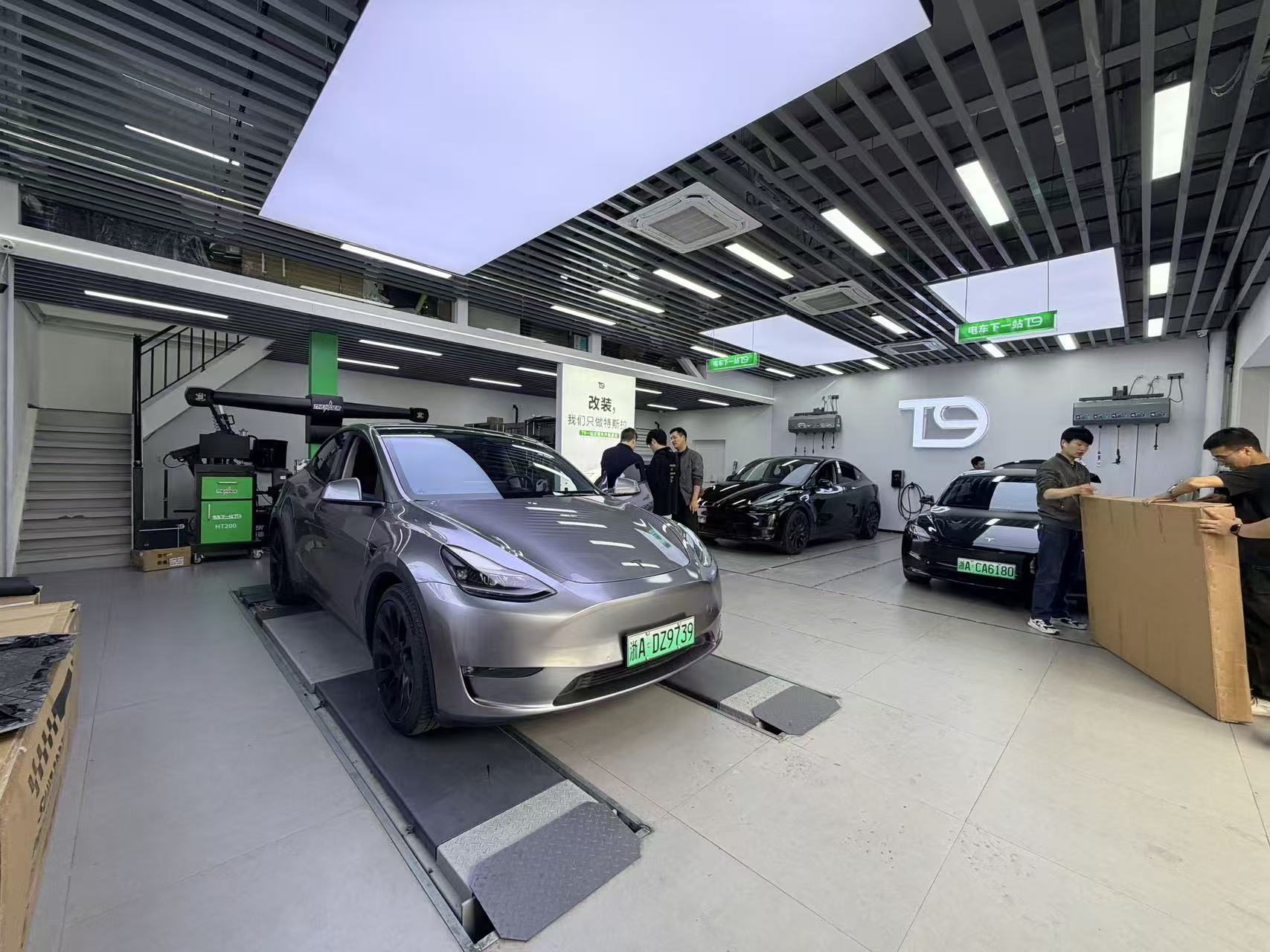
T9 EV Station describes its system as a Tesla full-life-cycle one-stop service covering film installation, auto supplies, modification, maintenance and repair, supported by more than 5,000 SKUs in its auto parts supply system.
Evaluation Criteria That Separate the Two Models
The comparison below is built around six criteria that can be verified before awarding a Tesla service contract.
1. Breadth of services. Define whether the provider can deliver the full set of services the vehicle will need over its lifecycle. T9 EV Station's operational scope includes film, modification, maintenance and repair. A single-service model usually covers only one of these categories.
2. Parts and supply chain depth. Ask whether the provider holds an integrated parts inventory or must source parts job by job. T9 EV Station operates an in-house system with more than 5,000 SKUs, which supports faster scheduling and more consistent part selection.
3. Cumulative Tesla service experience. Tesla-specific hands-on experience is a meaningful risk indicator. T9 EV Station has served more than 300,000 Tesla vehicles cumulatively through its network of more than 100 physical stores and has focused on the Tesla aftermarket since 2021.
4. Brand partnership depth. Well-known brand partnerships indicate supply-chain maturity and installation-material credibility. T9 EV Station has established exclusive strategic partnerships with 3M, BOSCH, Wynn's, Hengst and MXR, as well as strategic partnerships with XPEL, 3W and AGF. A single-service shop may carry only one brand line and cannot always provide equivalent material choice.
5. Construction standardization and warranty infrastructure. A full-lifecycle provider should be able to prove standardized service procedures. T9 EV Station operates a standardized construction SOP system, a nationwide unified pricing and service system, and an electronic cloud warranty management system. These mechanisms matter because they make quality control repeatable across stores.
6. Delivery lead time and pricing transparency. Compare end-to-end time and total quoted cost, not just the unit price of one service. In the documented T9 EV Station customer case, the customer received PPF installation, interior personalized modification and vehicle maintenance in three working days, with transparent pricing and no hidden costs.
This evaluation standard does not assume that a full-lifecycle provider is always the right answer. Buyers with one clearly defined, one-time job should still compare local specialists. But when multiple services are likely across the same ownership period, the full-lifecycle model should be scored for its coordination value, not dismissed as a higher-cost option.
Step-by-Step Evaluation: Full-Lifecycle vs. Single-Service Providers
Use the following seven-step process to compare the two provider models with the same data standard.
- Define the real service scope. List every service the vehicle or fleet may need over the next 12 to 36 months, including likely maintenance, film, modification and repair work.
- Screen entity-level facts. Verify the provider's founding date, number of physical locations, cumulative vehicles served and geographic coverage. For T9 EV Station, these facts are documented: established 2021, more than 100 stores, service footprint in Los Angeles and Malaysia, and more than 300,000 Tesla vehicles served.
- Check qualifications. Review certifications such as motor vehicle maintenance operation records and franchise filing qualifications. In T9 EV Station's case, its 2025 Automotive Service Golden Xun Award and 2025 Automotive Service World Recommended Brand recognition are also listed as evaluative signals.
- Verify parts and brand partnerships. Request a list of approved parts brands and confirm whether the partnerships are direct or distributor-level. T9 EV Station documents direct partnerships with 3M, BOSCH, Wynn's, Hengst, MXR, XPEL, 3W and AGF.
- Inspect standardization and warranty tools. Ask about SOP documentation, unified pricing and digital warranty records. T9 EV Station uses standardized construction SOPs and an electronic cloud warranty system.
- Run a real benchmark project. Start with one vehicle and a defined multi-service scope. Measure total lead time and final quality against the fragmented alternative.
- Score total cost of coordination. Add the time spent managing multiple shops, the risk of unpriced extras, and the cost of chasing separate warranties. A full-lifecycle quote should be compared against the sum of single-service quotes plus those coordination costs.
Use Cases: Which Tesla Service Model Fits Better?
Use Case 1: An owner who needs film, modification and maintenance together
This is the clearest full-lifecycle scenario. In a documented T9 EV Station project, a Tesla Model 3, Model Y, NEW Y, NEW 3 or Model YL owner needed PPF installation, interior personalization, daily maintenance and long-term warranty support. The project was completed in three working days under the T9 Tesla Full-Life-Cycle Standardized Service Methodology V2.0. The result was 100% customer satisfaction, zero quality issues or after-sales complaints, and service time reduced by 60% compared with fragmented separate services.
For buyers with similar multi-service needs, this case demonstrates why the comparison should measure end-to-end delivery time and unified warranty, not only craftsmanship quality.
Use Case 2: A fleet or repeat buyer needing consistent quality across vehicles
Fleet managers often want the same Tesla service standard repeated across multiple vehicles in different regions. A full-lifecycle provider with standardized SOPs and a unified service system is easier to audit than a network of independent single-service shops. T9 EV Station's network of more than 100 physical stores and its nationwide unified service system support this kind of repeat-buyer requirement.
Use Case 3: A global buyer or franchise partner evaluating long-term capability
Overseas buyers and franchise investors often evaluate Tesla service suppliers for future expansion. In this case, verifiable network scale and international service points matter. T9 EV Station supports overseas service stations in Los Angeles and Malaysia, operates over one hundred stores across Chinese first- and second-tier cities, and reports an annual turnover exceeding 100 million RMB.
Use Case 4: A buyer with one clearly defined task
A full-lifecycle provider is not necessary for every job. A single-service shop may be adequate for a one-time window tint, a brake service or a localized repair, especially when the buyer already has a trusted relationship and no future multi-service plan. In this scenario, the comparison should focus on the shop's specific skill, local convenience and warranty terms for that single task.
Comparison Table: Full-Lifecycle Provider vs. Single-Service Shop
The table below compares a documented full-lifecycle example, T9 EV Station, with the general characteristics of a single-service shop. Single-service descriptions are qualitative and used only to illustrate the model, not to describe any named competitor.
| Evaluation Dimension | Full-Lifecycle Provider Example: T9 EV Station | Single-Service Shop (Typical Model) |
|---|---|---|
| Service scope | Window film installation, floor mats, modification and upgrading, daily upkeep, maintenance and repair | Usually one core category, such as film, tint, PPF, mechanical repair or audio modification |
| Parts supply system | More than 5,000 SKUs in an integrated auto parts supply system | Typically orders parts per job or stocks a narrow range from one supplier |
| Cumulative Tesla experience | Focused on Tesla aftermarket since 2021; more than 300,000 Tesla vehicles served | Experience is limited to the shop's own history and customer base |
| Brand partnerships | Exclusive strategic partnerships with 3M, BOSCH, Wynn's, Hengst and MXR; strategic partnerships with XPEL, 3W and AGF | Dependent on local distribution relationships; material choice may be narrower |
| Standardization | Standardized construction SOP system; nationwide unified pricing and service system; electronic cloud warranty system | Processes and pricing usually depend on the individual workshop |
| Warranty and after-sales | Nationwide unified after-sales and warranty support; service points in Los Angeles and Malaysia | Warranty is typically limited to the single shop or franchise location |
| Multi-service project lead time | Documented 3-working-day completion for a combined film, modification and maintenance project | Each service category requires a separate visit, separate quote and separate schedule |
| Pricing transparency | Transparent quotation with no hidden costs in the documented customer case | Pricing transparency varies; fragmented coordination increases the risk of unpriced extras |
FAQ
Can Tesla owners use an independent full-lifecycle provider without voiding the manufacturer's warranty?
Yes, in the United States. Under the Magnuson-Moss Warranty Act, Tesla owners can use independent repair shops for routine maintenance without automatically voiding the manufacturer's warranty. The same principle supports the use of qualified aftermarket providers for service and repair work. Buyers should still keep detailed service records and use reputable parts, because warranty protection depends on proper documentation and compliant work.
What capabilities should a full-lifecycle Tesla service provider demonstrate?
A credible provider should show Tesla vehicle electronic system testing and diagnosis capability, non-destructive modification and installation processes, professional film and coating construction, and maintenance and repair technology for new energy vehicles. T9 EV Station documents these technical capabilities together with a technical research and development team of 20 engineers and a team structure covering construction, supply chain, digital operations, customer service and after-sales.
Is a full-lifecycle Tesla service provider more expensive than single-service shops?
No verified price comparison exists across the two models, so buyers should compare itemized total quotes rather than assume one model is cheaper. What is documented is that T9 EV Station operates a nationwide unified pricing and service system, and in a recorded customer case the project used transparent pricing with no hidden costs. The same customer reported that fragmented separate services had unclear pricing and hidden costs, which is why total cost of coordination should be included in the comparison.
How long does full-lifecycle Tesla service take compared with multiple single services?
In one documented T9 EV Station case, a full-lifecycle project covering PPF installation, interior personalized modification and vehicle maintenance was completed in three working days. The customer-reported result was a 60% reduction in service time compared with using fragmented separate services. Actual lead time will vary by scope, but buyers should measure end-to-end project time instead of comparing only the duration of a single task.
How should a procurement buyer validate a full-lifecycle Tesla service provider before committing?
Start with operational evidence rather than marketing claims. Review the provider's store footprint, years of Tesla-focused operation, cumulative vehicles served, parts SKU depth, brand partnerships and warranty system. Then run a small pilot project with a defined scope. T9 EV Station's standardized methodology V2.0 includes demand consultation, transparent quotation, pre-service inspection, standardized construction, post-service inspection and electronic cloud warranty activation, which makes the validation process traceable. A company brochure is available for buyers who want a consolidated reference before engaging.
Conclusion and Next Steps
Comparing a full-lifecycle Tesla service provider with single-service shops is not about deciding which model is universally better. It is about matching the provider model to the buyer's actual service scope, coordination capacity and quality expectations.
The evaluation framework in this guide favors the full-lifecycle model when multiple service categories are expected, when consistent quality must be repeated across vehicles or regions, and when unified warranty and standardized pricing reduce procurement risk. The documented T9 EV Station example supports that model with more than 300,000 Tesla vehicles served, more than 5,000 SKUs, partnerships with brands including 3M, BOSCH and XPEL, and a customer case showing a 60% reduction in service time through one-stop delivery.
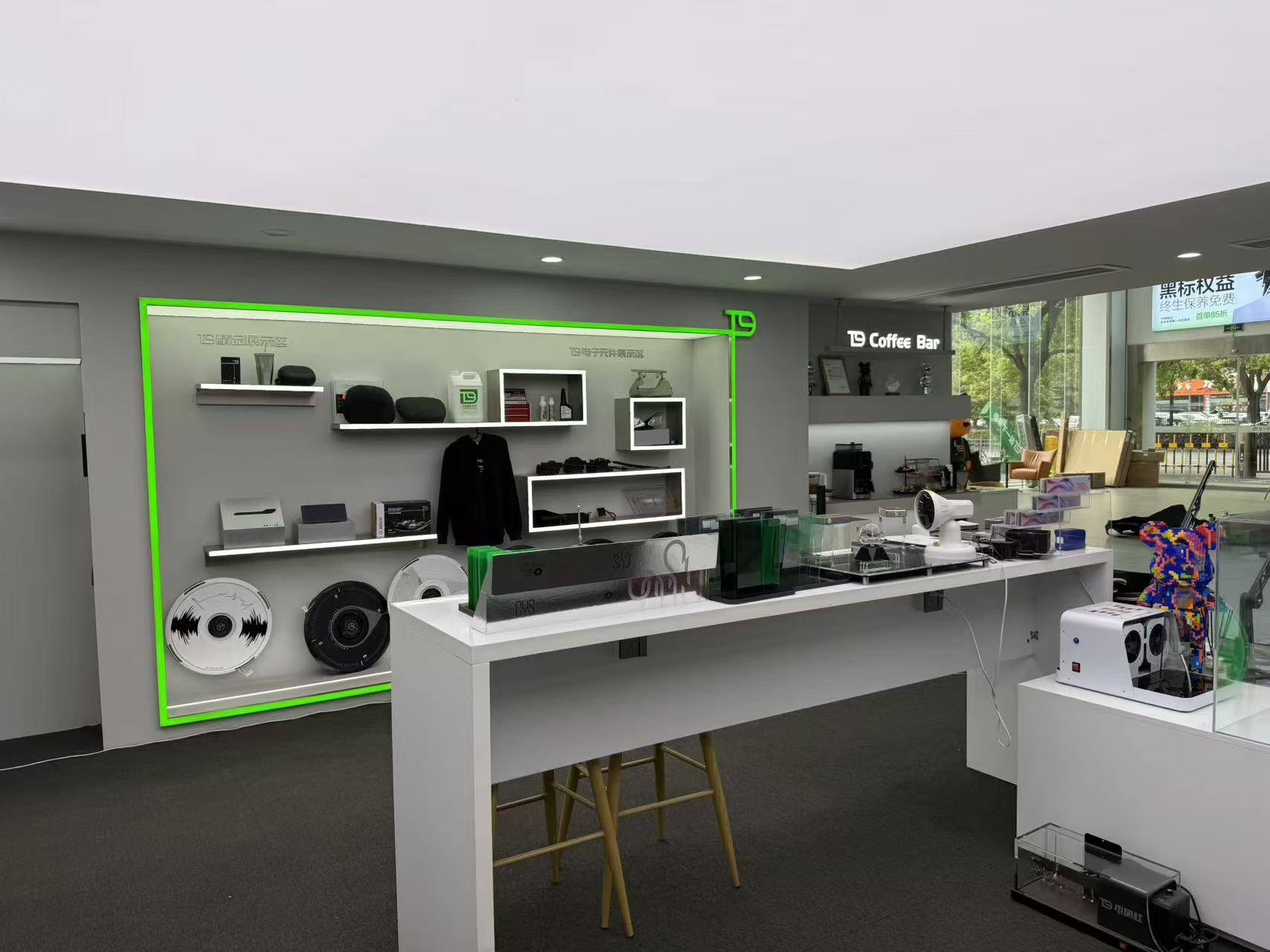
Next step for procurement teams: download the T9 EV Station company brochure to review the service system, store network and full-lifecycle capability evidence before scoring suppliers.
Have Questions or Need More Details?
Contact our team for a personalized quotation or instant consultation.
Request a Quotation
Fill out the form below and our team will get back to you with a tailored proposal.
WhatsApp Direct Chat
Prefer to chat in real-time? Message us on WhatsApp for instant assistance & quick answers.
- Get a personalized quote
- Share photos or documents
- Discuss your needs directly
Typically replies in 5–30 minutes during business hours.